
India’s digital payment ecosystem is booming, driven by Unified Payments Interface (UPI), tokenized credit card transactions, and cross-border digital trade. For startups, digital payment aggregators, fintech innovators, and online retail platforms, securing customer financial records is mandatory under Reserve Bank of India (RBI) directives and global card brand mandates.
However, when growing businesses search for affordable PCI DSS audit services in India, they often encounter high quotes from multinational audit firms, opaque pricing models, and inflated scoping that drains engineering budgets.
Getting PCI DSS compliance does not have to use up your budget. With the right network setup and a certified local QSA partner like KavachOne, you can meet requirements, protect your payment systems, and manage costs.
What is PCI DSS and Who Needs Certification in India?
PCI DSS is a globally recognized baseline created by card networks (Visa, Mastercard, RuPay, American Express) to safeguard cardholder data (CHD) and sensitive authentication data (SAD) against breaches and fraud.
If your company stores, processes, or transmits cardholder payment details, you must comply with PCI DSS.
Typical Indian Entities Requiring PCI DSS:
Fintech Startups & Neo-banks: Firms that issue virtual cards, run wallet ecosystems, or provide Pos integrations.
Payment Gateways & Aggregators: entities that act as intermediaries to route the merchant's payment and authorize the card.
E-Commerce Merchants & D2C Brands: Online retailers with direct checkout options or their own custom web forms.
SaaS Providers & Cloud Platforms: B2B providers who provide financial services, invoicing workflows, and subscription engines.
Call Centers (BPOs/KPOs): Support operations capturing payment card information over IVR or live phone lines.
Compliance Requirements Under PCI DSS v4.0.1
The PCI Security Standards Council (PCI SSC) requires compliance with PCI DSS v4.0.1. This version focuses on ongoing validation instead of one-time checks and asks organizations to meet 12 main requirements grouped into 6 security areas:
PCI DSS Pillar | Core Requirement | Practical Implementation |
Build & Maintain a Secure Network | Requirements 1 & 2 | Maintain perimeter firewalls, segment networks, and change vendor-supplied system defaults. |
Protect Account Data | Requirements 3 & 4 | Encrypt stored cardholder data (AES-256) and secure transmissions across public networks (TLS 1.3). |
Maintain a Vulnerability Management Program | Requirements 5 & 6 | Deploy updated anti-malware, manage software patches, and secure client-side scripts against Magecart/formjacking attacks. |
Implement Strong Access Controls | Requirements 7, 8 & 9 | Restrict data access via Role-Based Access Control (RBAC), enforce Multi-Factor Authentication (MFA) everywhere, and restrict physical access. |
Regularly Monitor & Test Networks | Requirements 10 & 11 | Centralize automated log audits, conduct Approved Scanning Vendor (ASV) vulnerability scans, and schedule annual penetration testing. |
Maintain an Information Security Policy | Requirement 12 | Perform formal Targeted Risk Analyses (TRA), manage vendor risks, and conduct ongoing security awareness programs. |
Why Audit Costs Escalate (And How to Keep Them Down)
The cost of a PCI DSS audit is largely determined by the size and complexity of your Cardholder Data Environment (CDE). The larger your scope, the more billable hours an auditor must spend reviewing logs, firewall rules, application source code, and employee access.
Major Drivers of High Audit Costs:
Flat Network Architectures (Scope Creep): If development clusters, corporate HR systems, and marketing analytics reside on the same network subnet as your payment checkout server, the entire company falls in scope for the audit.
Global Consulting Markups: Retaining Tier-1 overseas advisory firms often results in billing for international travel and out-of-scope manual advisory services.
Disjointed Regulatory Silos: Running separate, isolated audits for PCI DSS, the Digital Personal Data Protection Act (DPDP Act 2023), and RBI Data Localization mandates results in duplicate work and compounding vendor invoices.
Proven Scoping Tactics to Cut Costs by Up to 50%:
Aggressive Network Segmentation: Keep your CDE on separate subnets, use micro-segmented virtual private clouds (VPCs), and set strict firewall rules for incoming and outgoing traffic.
Tokenization & Hosted Fields: Outsource card capture to compliant payment processors using iFrames or tokenized SDKs. This can shift your audit qualification from a complex Level 1 audit or extensive SAQ D down to a lightweight SAQ A or SAQ A-EP.
Unified Compliance Audits: Align your PCI DSS requirements with ISO 27001, SOC 2, and DPDP mandates to consolidate auditor sampling and evidence collection.
Where to Find Affordable PCI DSS Audit Services in India: Choosing KavachOne
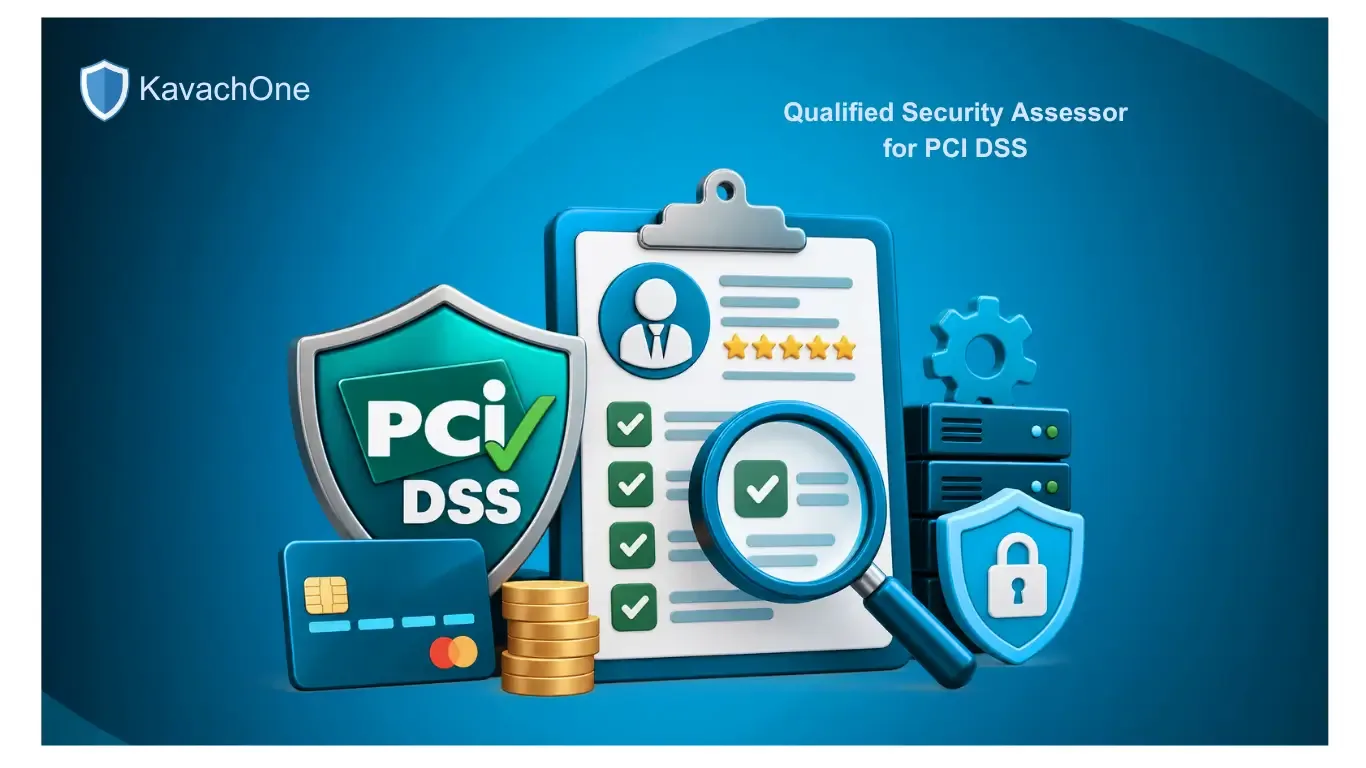
If you are looking for affordable PCI DSS audit services in India, KavachOne is a top local choice. KavachOne is an accredited PCI DSS Qualified Security Assessor (QSA) company that provides full compliance services for Indian businesses, fintechs, and SMEs.
Key Solutions and Technical Features of KavachOne:
Accredited PCI QSA Assessments: KavachOne’s certified QSA assessors conduct comprehensive evaluations to issue official Reports on Compliance (RoC) and Attestations of Compliance (AoC) accepted by acquiring banks and card networks worldwide.
Approved Scanning Vendor (ASV) Enablement: Integrated external vulnerability scanning and quarterly ASV scans required to satisfy Requirement 11.
Architectural Scope Optimization: Before commencing the audit, KavachOne's team analyzes your system topology and recommends segmentation and tokenization pathways that directly reduce your CDE scope and cut total audit costs.
PCI DSS v4.0.1 Ready: Full technical verification for new v4.0.1 controls, including client-side payment page script protections, automated anti-phishing controls, and customized Targeted Risk Analysis (TRA) matrices.
Unified Framework Mapping: KavachOne matches PCI DSS controls to local rules like the DPDP
2023 and RBI data localization, eliminating the pitfalls of cornering with KavachOne:
Predictable, Transparent Pricing: Eliminates the hidden add-ons common with legacy consulting firms, offering affordable packages tailored for Indian startups and established enterprises alike.
Streamlined Audits: Avoid compliance bottlenecks that disrupt product release cycles.
Hands-on Remediation Guidance: Rather than delivering an uncontextualized spreadsheet of vulnerabilities, KavachOne provides concrete, code-level guidance to rapidly resolve security gaps.
Continuous Year-Round Readiness: Through quarterly checks and automated tracking, maintain an audit-ready state that prevents last-minute scrambles before annual renewals.
Secure Your Payments Without Overspending
When looking for affordable PCI DSS audit services in India, you do not have to choose between expert security and fair pricing. With a certified QSA partner like KavachOne, your business gets trusted audit results, help with reducing scope, and a clear path to PCI DSS v4.0.1 compliance.
Ready to streamline your compliance timeline and minimize audit expenses? Reach out to KavachOne to schedule your initial gap assessment and scope evaluation.
Frequently Asked Questions (FAQs)
KavachOne Editorial Team
Cybersecurity & Compliance Experts