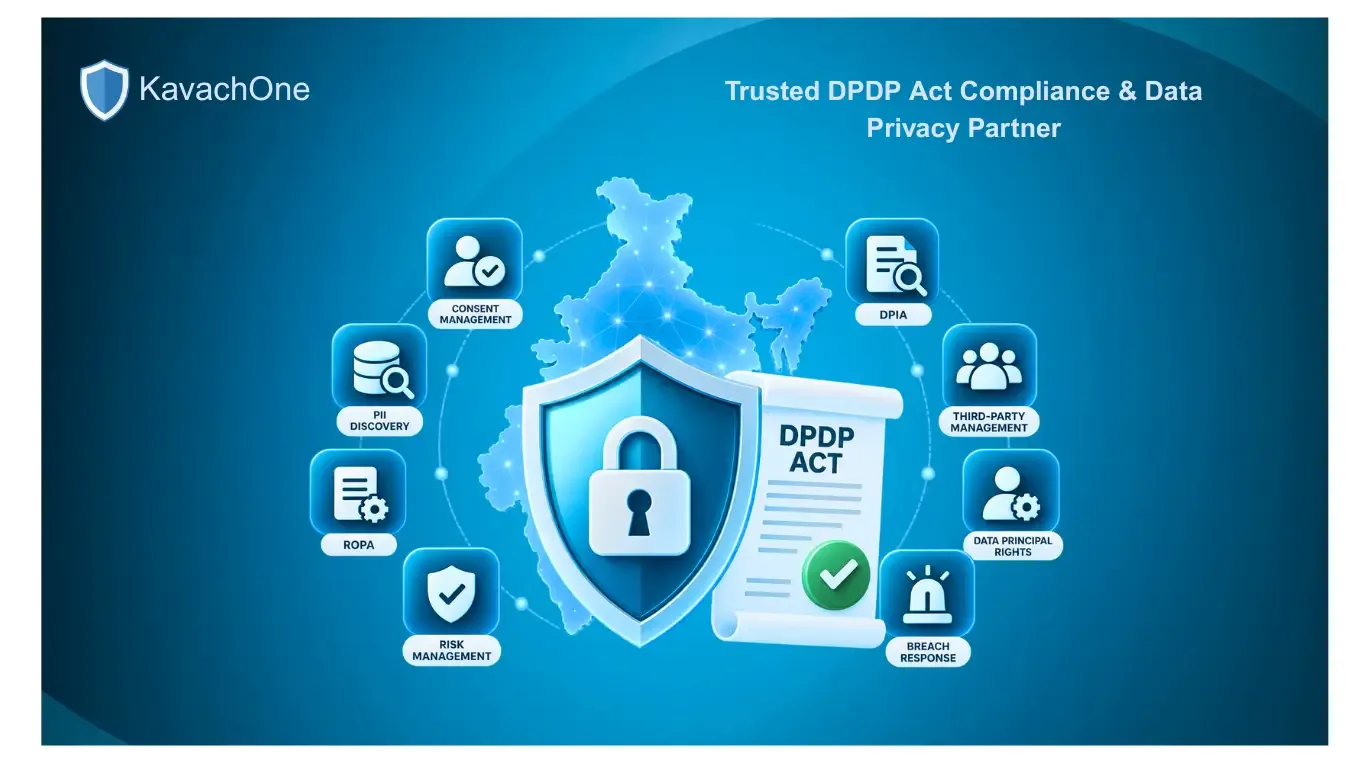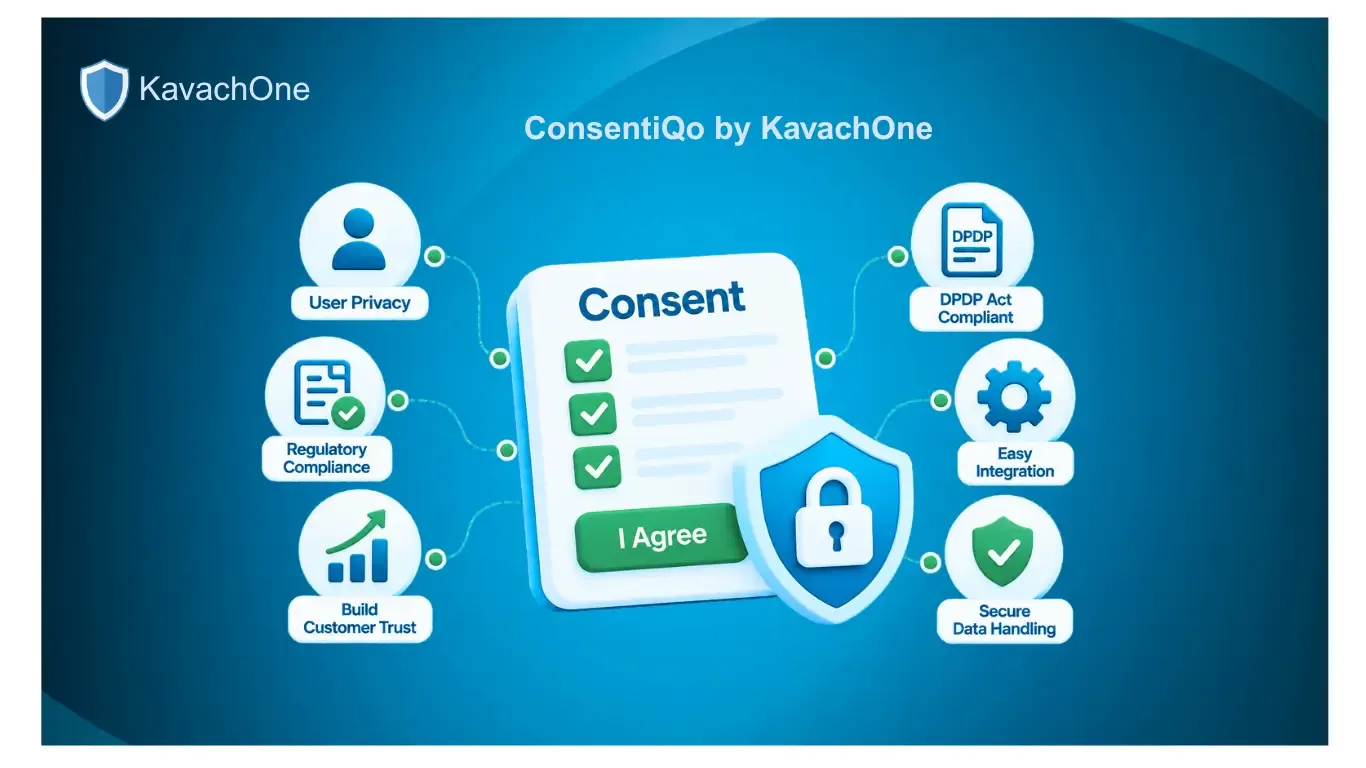

Today, businesses are deeply connected, and your security depends on your most vulnerable vendor. If you use cloud hosting, outside payroll services, or marketing platforms, you are letting outsiders into your operations.
Data privacy rules are getting stricter around the world. Local laws like India’s Digital Personal Data Protection (DPDP) Act now bring heavy penalties for mistakes by third-party vendors. Managing vendor risk is now essential for business survival.
If your team still uses messy Excel sheets and long email chains to track vendor security, you are taking a big risk. Here’s why you should switch to a modern vendor risk management tool and how KavachOne can help protect your business.
What is a Vendor Risk Management Tool?
A vendor risk management tool is software that helps you find, assess, monitor, and reduce risks when working with third-party vendors. It is often part of a larger Third-Party Risk Management (TPRM) system.
Instead of tracking each vendor by hand, an automated tool centralizes everything. It handles security questionnaires when you onboard vendors and keeps checking their compliance over time.
Many organizations delay upgrading to a dedicated TPRM platform because "the spreadsheet works for now." However, manual tracking exposes you to major operational bottlenecks:
The Questionnaire Black Hole: Sending long PDF security assessment results in delayed vendor onboarding, slowing down critical business projects.
Point-in-Time Blindness: A vendor who passed a security check six months ago could have a major data breach today. Spreadsheets do not provide real-time alerts.
Regulatory Compliance Friction: Under regulations such as the DPDP Act, RBI directives, and SEBI mandates, companies are directly accountable for how their data processors handle data. Manual tracking makes audit-readiness incredibly difficult.
Key Features to Look for in a Vendor Risk Management Tool
When choosing the right vendor risk management software, look for features that scale with your growth rather than creating more administrative work.
1. Automated Risk Assessments & Questionnaires
The software should have ready-made, industry-standard compliance templates such as ISO 27001, SOC 2, or custom privacy questionnaires that vendors can complete online.
2. Centralized Vendor Dashboard
You need a single pane of glass to view all your vendors, along with their current risk scores, pending assessments, and compliance gaps, at a glance.
3. Continuous Monitoring & Alerts
Threat landscapes shift daily. The ideal tool continuously monitors your vendors' security postures, flashing alerts if a vendor falls out of compliance or experiences a vulnerability exposure.
4. Audit-Ready Reporting
When regulators or auditors ask for proof, you should be able to quickly create detailed third-party compliance reports to show you have done your due diligence.
Streamlining Your Vendor Risk Lifecycle
Managing vendor security effectively requires a structured, repeatable framework. A modern platform automates this entire sequence to prevent human error:
1. Vendor Inventory & Categorization:
Onboarding.
Centralize your vendor list and categorize vendors by criticality. A vendor with access to core PII (Personally Identifiable Information) requires much stricter scrutiny than a generic office utility app.
2. Automated Risk Assessment:
Evaluation.
Send out automated, targeted security questionnaires based on each vendor’s level. The system tracks answers and highlights anything that does not meet your security standards.
3. Remediation & Mitigation:
Correction.
Collaborate directly with the vendor within the tool to patch identified gaps (e.g., lack of MFA or outdated encryption protocols) before signing the contract.
4. Continuous Monitoring & Audits:
Maintenance.
Transition the vendor into active monitoring. Receive real-time alerts for policy updates, financial instability, or security lapses to maintain an unbroken chain of trust.
How KavachOne Reinvents Vendor Risk & Compliance Management
Managing vendor risk through spreadsheets, emails, and manual reviews is no longer effective in today's complex regulatory environment. KavachOne transforms traditional vendor management by providing a centralized platform that automates risk assessments, compliance tracking, and continuous monitoring throughout the vendor lifecycle.
With KavachOne, organizations can onboard vendors faster, conduct standardized risk assessments, track critical compliance requirements, and gain real-time visibility into third-party risks from a single dashboard.
Why India's Top Enterprises and Fast-Growing SaaS Startups Trust KavachOne:
Zero Fragmentation: Manage your core compliance frameworks (such as ISO 27001, SOC 2, PCI DSS) and third-party vendor risks in one place.
Built for Rigorous Privacy Frameworks: Seamlessly map vendor compliance against stringent requirements like the Indian DPDP Act, GDPR, and sector-specific rules from the RBI and SEBI.
AI-Driven Risk Insights: Move past rigid, legacy templates. Our system uncovers hidden vendor vulnerabilities before they lead to costly supply chain data breaches.
Backed by Verified Experts: KavachOne is a certified PCI DSS QSA Company and a
USA Registered CPA Firm. You are not just buying software; you are working with experienced compliance professionals who make sure you avoid regulatory issues.
The Cost of Complacency: According to recent industry benchmarks, third-party data breaches cost organizations an average of $4.33 million. Relying on outdated manual tools to safeguard your supply chain is an expensive gamble your business can't afford.
Built for Compliance-Driven Organizations
KavachOne enables businesses to establish a structured and scalable vendor risk management program while maintaining regulatory compliance and operational resilience.
Conclusion
Third-party vendors play a critical role in modern business operations, but they also introduce significant risks. Manual vendor oversight is no longer sufficient for organizations facing increasing cybersecurity threats and regulatory scrutiny.
A modern Vendor Risk Management Tool lets organizations automate checks, monitor risks, stay compliant, and make better decisions.
With KavachOne, businesses can create a proactive, audit-ready vendor risk management program that protects their operations, customer data, and reputation.
Frequently Asked Questions (FAQs)
KavachOne Editorial Team
Cybersecurity & Compliance Experts