
The Digital Personal Data Protection (DPDP) Act has made data privacy a strict legal requirement, not just a topic for boardroom discussion. With penalties of up to ₹250 crore for each violation, Indian businesses must take privacy seriously and implement proper safeguards.
Startups, NBFCs, healthtech companies, and small to midsize businesses often find compliance expensive and challenging. Many global privacy tools designed for the European GDPR are costly, require contracts in foreign currencies, and incur expensive consulting fees.
Indian businesses don't need complicated, expensive software; they need an affordable solution that meets legal requirements under the DPDP Act without exceeding their budgets.
Understanding the DPDP Act 2023: Practical Compliance Requirements
Before selecting any tools, companies should first become familiar with the basic rules established by the Data Protection Board of India (DPBI). The Data Protection Act assigns specific responsibilities to every Data Fiduciary, which is the organization that determines how personal data is used.
1. Detailed Consent and Multilingual Notices
The DPDP Act does not allow blanket terms, pre-selected checkboxes, or unclear cookie banners. Data Fiduciaries must give clear notices that explain:
The specific categories of personal data collected.
The clear and specific reason why that data is being processed.
Clear instructions on how the Data Principal can withdraw consent at any time.
The option to view the notice in English or any of the 22 official Indian languages recognized in the Eighth Schedule of the Constitution.
2. Verifiable Parental Consent (VPC) for Children’s Data
To process the personal data of minors (those under the age of 18), it is necessary to obtain verifiable consent from a parent or legal guardian. The Act strictly prohibits behavioral tracking, targeted advertising, and harmful profiling of children.
3. Data Principal Rights Fulfillment & Grievance Redressal
Indian consumers have enforceable rights to:
Access a summary of their personal data and processing activities.
Correct inaccurate or outdated personal records.
Request complete erasure of their data once the business purpose is served.
Nominate another individual to exercise privacy rights in the event of death or incapacity.
Submit formal grievances to an internal Grievance Redressal Officer or Data Protection Officer (DPO).
4. Mandatory Data Breach Reporting
When a personal data breach occurs, the Data Fiduciaries must inform both the Data Protection Board of India (DPBI) and all affected individuals. The risk of encountering regulatory issues increases if the reports are handled manually rather than using automated records.
5. Third-Party Processor Governance
Even if you outsource some operations, you are still responsible for data protection. Fiduciaries must have signed Data Processing Agreements (DPAs) with every cloud provider, SaaS tool, and logistics partner that handles personal data.
When looking for DPDP compliance solutions, companies often face two main options:
Western privacy suites: Certain Western tools were designed with GDPR and CCPA compliance in mind. Although comprehensive, they incur high software costs per domain or per record, impose heavy premiums for additional modules, and require months of work by specialist systems integrators.
Fragmented Legal Consultancies: Law firms typically provide policy documents, PDF assessments, and template binders priced between ₹5 lakh and ₹25 lakh. However, they do not offer the software needed to automate consent tracking, PII scanning, or user rights management.
Why KavachOne is the Most Affordable DPDP Act Compliance Solution
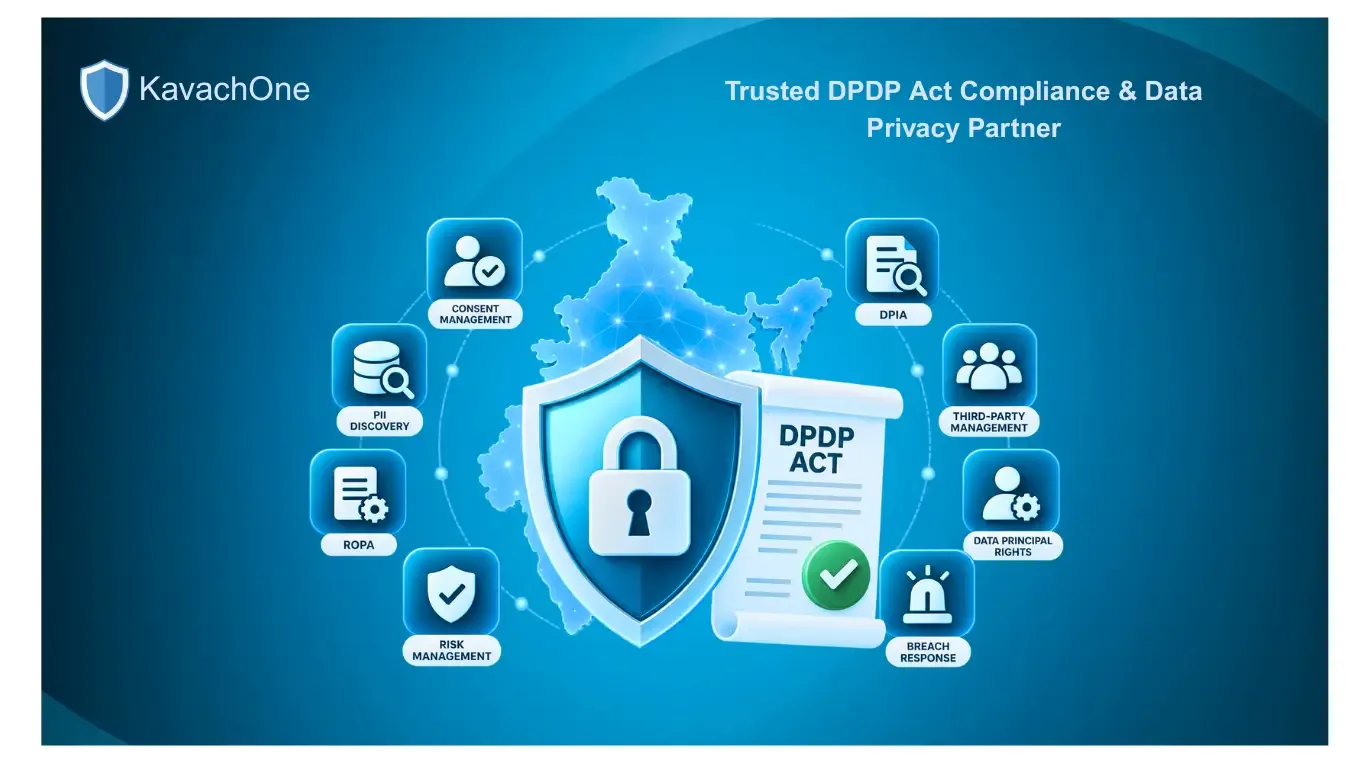
KavachOne connects complex legal requirements with practical cybersecurity. Designed specifically for Indian regulations, KavachOne offers an affordable DPDP Act compliance solution for startups, growing mid-sized businesses, and regulated organizations.
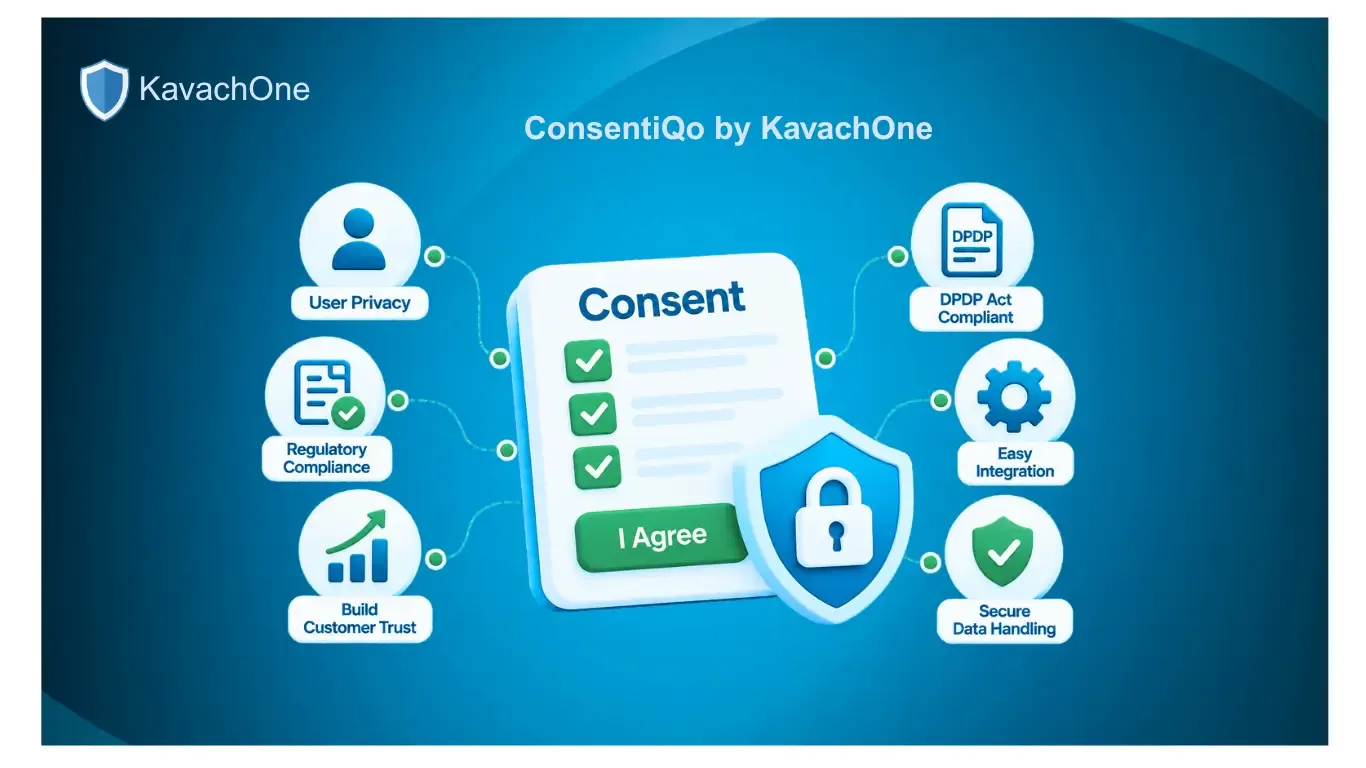
1. ConsentiQo: DPDP-Native Consent Management Platform
KavachOne’s ConsentiQo platform does not charge extra per user or per brand. Instead, it automates the entire consent process:
Granular, Purpose-Based Consent: Generates interactive banners that capture specific consent records linked to distinct processing purposes.
22 Constitutional Languages: Automatically delivers localized privacy notices to Indian users without relying on external translation services.
Tamper-Evident Consent Logs: Create time-stamped, immutable audit trails that verify exactly when, how, and for what purpose consent was granted or revoked.
2. Zero-Egress Automated PII Discovery & Data Mapping
A major driver of compliance expenses is the manual review of databases, spreadsheets, and cloud buckets by external auditors.
KavachOne addresses this with Zero-Egress Data Discovery. Its connectors scan your AWS, Google Cloud, Azure, databases, and CRM systems. The tool finds Indian identifiers like Aadhaar, PAN, voter IDs, phone numbers, and bank details, all without sending data outside your network. It creates a compliant Record of Processing Activities (ROPA) in days, not months.
3. Automated Data Principal Rights (DSR) & Redressal Portal
Fulfilling a user’s request to access, correct, or delete their personal data manually across internal engineering teams can quickly drain productivity. KavachOne provides a branded self-service privacy portal where users can:
Verify their identity securely.
Submit requests for rectification, summary, or deletion.
Nominate legal representatives.
Track internal resolution timelines through an automated grievance ticketing workflow.
4. Vendor Governance & Third-Party Risk Management (TPRM)
KavachOne keeps all third-party vendor information in one place. It handles security questionnaires, checks DPAs, monitors vendor risks, and notifies your team before any contracts or compliance certificates expire.
5. TechnoAudit Certification & Board-Ready Auditing
KavachOne is a reliable cybersecurity company and holds the status of a certified PCI DSS Qualified Security Assessor (QSA). It uses automated compliance software alongside independent inspections; once you have completed your technical configuration, certified auditors will examine your security measures and issue you a DPDP Compliance Certificate, eliminating the need to engage additional assessment agencies.
Real-World Implementation Examples: How Indian Businesses Cut Compliance Costs
Example 1: Direct-to-Consumer (D2C) E-Commerce Brand
The Challenge: An Indian apparel brand that collects phone numbers, delivery addresses, and payment data experienced high drop-offs due to clunky cookie banners and struggled to manage customer requests to delete browsing histories and marketing profiles.
The Practical Fix: The brand deployed KavachOne’s low-code ConsentiQo widget across its web and mobile checkouts. Customers could pick preferred communication channels and opt in using localized Hindi and English interfaces. Deletion requests were linked directly to marketing databases via a webhook, removing the need for manual developer intervention and reducing privacy overhead by over 70%.
Example 2: Growth-Stage Fintech & NBFC
The challenge was to meet RBI compliance requirements while undergoing DPDP examination, since the emerging lending platform had its customers' financial profiles spread across the old MySQL instances, AWS S3 buckets, and customer support desks.
The practical solution was to use KavachOne's zero-egress connectors, which enabled the fintech company to identify all of its customers' PII repositories within four days without moving the customers' data. The use of pre-built DPBI incident templates and third-party vendor scoring modules enabled the company to achieve full audit readiness at a much lower cost than licensing legacy software.
Step-by-Step Checklist to Achieve Cost-Effective DPDP Compliance
Organizations looking to establish compliance smoothly should follow this sequential workflow:
Conduct an Internal Data Inventory: Identify all customer and employee PII intake points (sign-up forms, HRMS, lead funnels, KYC workflows).
Review & Update Privacy Notices: Replace vague terms and conditions with clear, itemized purpose notices translated into relevant regional languages.
Deploy an Automated Consent Management Tool: Ensure every consent transaction generates a verifiable, time-stamped audit log.
Establish a Self-Service Rights & Grievance Portal: Provide users with a frictionless way to withdraw consent, request data erasure, and lodge complaints.
Implement Zero-Egress Discovery: Keep your data map and ROPA continuously updated across cloud and on-premises systems.
Execute Third-Party DPAs: Formalize data handling boundaries and liability terms with all external cloud providers, marketing tools, and contractors.
Draft an Incident Response Playbook: Establish a tested, technical protocol for identifying, containing, and reporting personal data breaches within regulatory timeframes.
Ready to Automate DPDP Compliance Without the Enterprise Price Tag?
Avoid penalties of up to ₹250 crore and save time by not having to manage compliance with spreadsheets. Get full, India-specific data protection, including consent management in 22 languages and zero-egress PII discovery, all at a much lower cost.
Schedule Your Free DPDP Readiness Assessment with KavachOne
Frequently Asked Questions (FAQs)
KavachOne Editorial Team
Cybersecurity & Compliance Experts