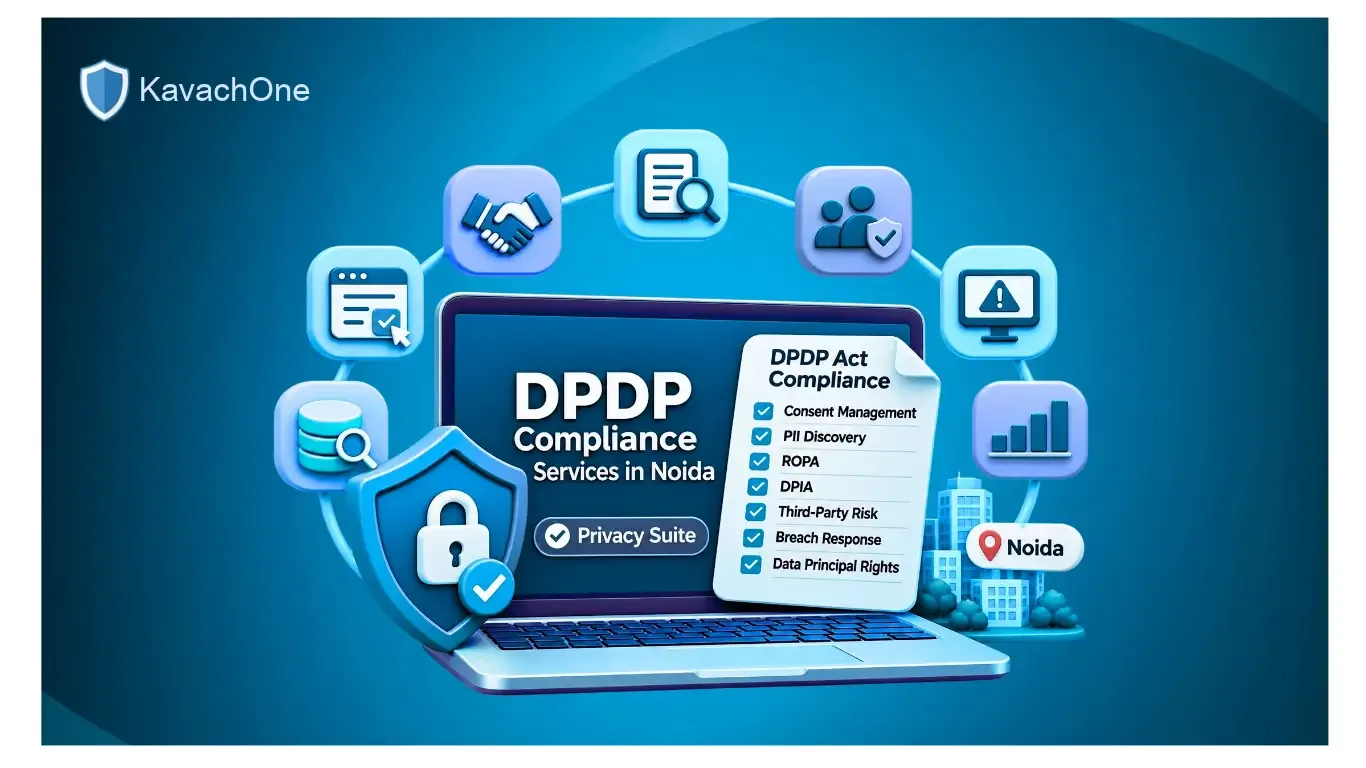

Every day, IT hubs, SaaS companies, fintech startups, and enterprises across Noida’s major sectors handle large volumes of personal data. Now that India’s Digital Personal Data Protection (DPDP) Act is in force, compliance with its rules is a must. Failing to comply can lead to penalties of up to ₹250 crore. To avoid regulatory issues and streamline data management, more businesses are turning to top DPDP compliance services in Noida for automated, reliable privacy solutions.
KavachOne offers a complete privacy automation system designed specifically for the DPDP Act in India. It combines automated PII discovery, multilingual consent management, and DPO support to help businesses comply with data protection rules without slowing their growth.
Why Modern Noida Enterprises Need Dedicated DPDP Compliance Services
Noida has become one of North India's leading technology hubs with cloud platforms, cross-border BPO/KPO centers, health tech, and e-commerce aggregators all in residence. Every digital interaction generates digital personal data (customer mobile numbers, employee Aadhaar numbers, etc.).
Standard Western compliance tools, such as those for GDPR, often don’t fully meet Indian legal requirements. The DPDP Act has its own specific requirements:
Mandatory Multilingual Notices: Privacy notices must be accessible in English and all 22 languages specified in the Eighth Schedule to the Indian Constitution.
Purpose-bound consent architecture (bundled consents, pre-ticked boxes, vague opt-ins, etc.) is illegal.
Local Indian Identifiers: Data inventories must scan and map identifiers unique to India, including PAN, Aadhaar, GSTIN, and UPI/VPA strings.
Stringent Incident SLA: Data breaches require immediate root-cause mitigation and statutory reporting to the Data Protection Board of India (DPBI) and to affected individuals.
Partnering with an expert DPDP consulting and implementation partner ensures technical architectures align precisely with the law’s provisions.
Core Regulatory Requirements Under the DPDP Act
To be fully ready for DPDP, companies need to put key legal and technical steps into practice across their IT, legal, and business processes:
1. Data Inventory and Processing Lineage (RoPA)
Organizations acting as Data Fiduciaries must maintain dynamic Records of Processing Activities (RoPA). IT teams must know what data is collected, where it resides (databases, AWS/Azure buckets, CRM tools, logs), who has access, and its designated retention lifecycle.
2. Notice and Granular Consent Management
Every data collection activity must be preceded by a clear and detailed notice which sets out the purpose of the processing, the personal data which will be collected and the means by which the user can withdraw their consent or make a complaint.
3. Data Principal Rights (DSAR Fulfillment)
People have the right to see summaries of their data, request corrections, request permanent deletion when the data is no longer needed, and designate representatives. Companies must respond to these Data Subject Access Requests (DSARs) within the time set by law.
4. Technical Safeguards and Breach Readiness
Under s8(5) of the Act, organizations must implement appropriate security safeguards, including role-based access control, end-to-end encryption, and regular VAPT, to prevent data exfiltration.
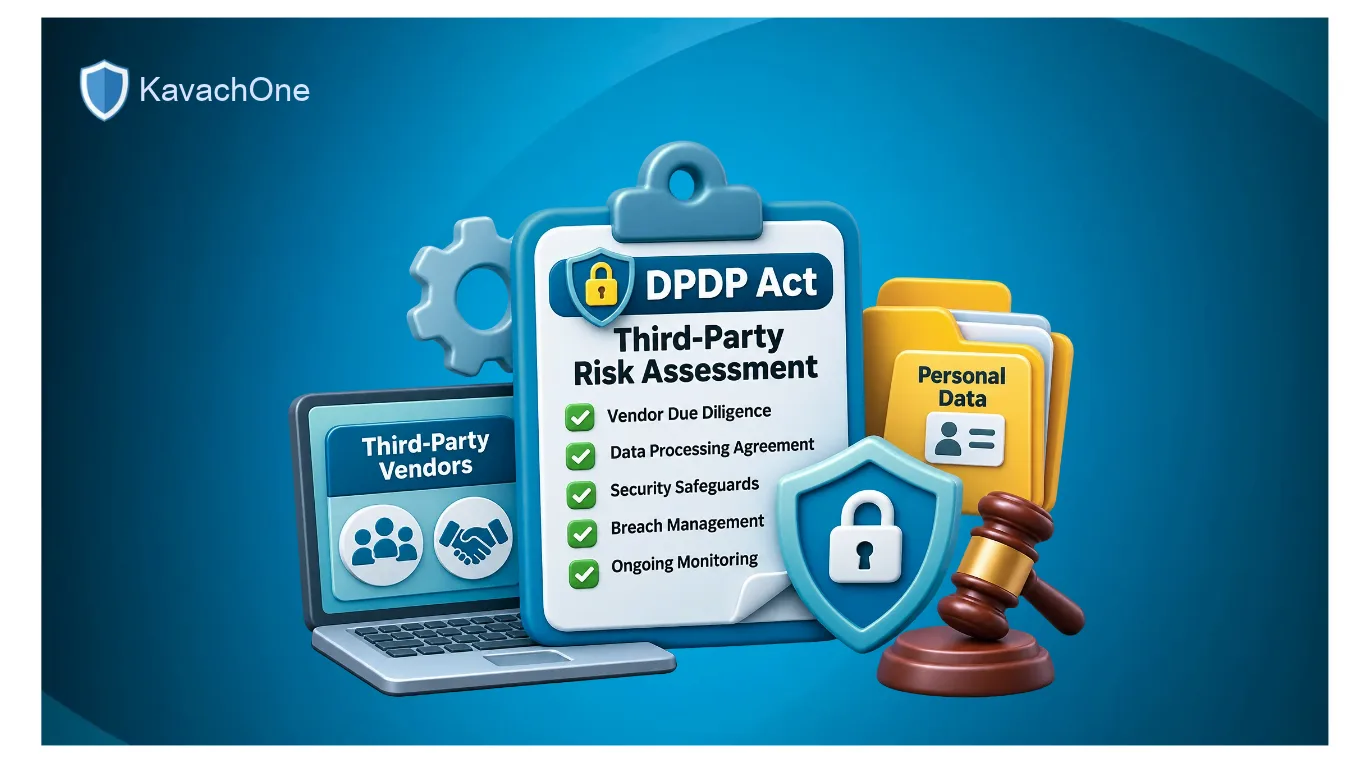
5. Vendor & Third-Party Risk Management (TPRM)
Data Fiduciaries remain liable when third-party processors handle the data. Enforceable Data Processing Agreements (DPAs) and security posture assessments are required in relation to all external vendors.
Why KavachOne Delivers the Best DPDP Compliance Services in Noida
KavachOne is an enterprise-grade privacy suite that's been built from the ground up to meet Indian compliance requirements. It's not simply a spreadsheet solution or a foreign product that's been adapted to the Indian market. It's a true blend of deep techno-legal advisory and automated privacy engineering.
ConsentiQo: Native Multilingual Consent Automation
ConsentiQo is the core of KavachOne’s suite. It is an advanced consent management solution made for Indian users:
22 Official Languages: Dynamically displays compliant notices across web, mobile apps, and customer portals in English and scheduled regional languages.
Event-Driven Revocation: Uses real-time webhooks to instantly synchronize consent revocations across CRMs, marketing platforms, and internal databases.
Immutable Audit Ledger: Stores every consent grant, amendment, and withdrawal in a tamper-evident audit trail for regulatory validation.
On-Premise PII Discovery with Zero Data Egress
Legacy discovery scanners often extract sensitive records to third-party cloud environments for analysis. KavachOne deploys lightweight, privacy-preserving discovery agents directly inside your local environment (AWS, Azure, GCP, or private data centers):
Only metadata leaves your secure perimeter; raw customer data remains untouched.
Deep learning models classify Indian identifiers (Aadhaar, PAN, voter IDs, passport copies, UPI IDs) across structured databases and unstructured document repositories.
Scans automatically populate your 12-field DPDP-native RoPA in real time.
Automated DSAR & Statutory Grievance Redressal
KavachOne deploys a branded, self-service grievance and DSAR portal. The module authenticates the Data Principal's identity, automates cross-database data retrieval or erasure workflows, and tracks grievance resolution timelines to prevent issues from escalating to the Data Protection Board.
Certified Techno-Audit Capabilities & DPO-as-a-Service
True DPDP compliance is all about bridging the gap between technical security and the legal position. KavachOne achieves this by combining accredited technical security assessments (VAPT, perimeter defense validation) with virtual DPO-as-a-Service. The assessments are led by experienced privacy professionals who also conduct DPIAs, manage third-party risks, and serve as the designated point of contact for regulatory inquiries.
Business Benefits of KavachOne’s DPDP Implementation
Mitigate Regulatory Fines: Eliminate exposure to the DPDP Act’s severe financial penalties through proactive posture management.
Accelerate B2B Deal Velocity: Enterprise buyers and multinational clients require demonstrable privacy certifications; KavachOne provides instant, board-ready compliance reports.
Operational Efficiency: Replace scattered spreadsheets and manual privacy compliance verification with continuous, automated privacy monitoring.
Strengthen Customer Trust: Transparent consent banners and self-service privacy portals elevate brand trust and customer confidence.
Step-by-Step DPDP Implementation Roadmap for Noida Organizations
Navigating DPDP Act compliance requires a phased, systematic rollout across your technology stack, legal policies, and operational processes:
Phase 1: Governance, Discovery & Data Lineage (Days 1–30)
Establish Privacy Leadership: Appoint an internal privacy task force and designate a virtual or full-time Data Protection Officer (DPO) to lead regulatory accountability.
On-Premise PII Discovery: Use automated scans that do not send data outside your systems to find Indian identifiers (like Aadhaar, PAN, Voter ID, UPI handles) in your databases, cloud storage, and enterprise systems.
Build the RoPA: Bring the data inflows, the storage endpoints, the access rights, and the processing purposes all into one dynamic Record of Processing Activities (RoPA).
Phase 2: Consent Orchestration & Policy Engineering (Days 31–60)
Deploy Multilingual Notices: Replace pre-checked boxes and bundled agreements with clear, standalone notices available in English and Eighth Schedule regional languages.
Integrate Dynamic Consent (ConsentiQo): Implement an event-driven consent management system that triggers instant webhooks to stop data processing across CRMs and databases when consent is withdrawn.
Enforce Minor Protections: Deploy verifiable parental-consent workflows and turn off behavioral tracking or profiling for users under 18.
Phase 3: DSAR Automation, Security & Vendor Audits (Days 61–90)
Launch a Self-Service Rights Portal: Provide Data Principals with a verified dashboard to submit access, correction, nomination, and erasure requests.
Grievance Redressal Mechanisms: Establish automated internal resolution workflows with clear SLAs to address grievances before complaints reach the Data Protection Board of India (DPBI).
Harden Security & Vendor DPAs: Execute comprehensive VAPT audits, enforce Role-Based Access Controls (RBAC), and secure signed Data Processing Agreements (DPAs) across all third-party vendors.
Phase 4: Breach Response, Retention & Continuous Assurance (Days 91+)
Operationalize Breach Protocols: Formalize incident-triage playbooks to identify containment steps and meet statutory reporting timelines to the DPBI and affected users.
Automate Data Retention & Erasure: Configure time-to-live (TTL) rules and scheduled database cleanup jobs to purge customer PII once the processing purpose expires.
Continuous Audit Readiness: Maintain tamper-evident logs of consent transactions and rights fulfillment to provide immediate evidence during compliance audits.
Strengthen Your Data Governance with KavachOne
Securing your business against regulatory exposure while respecting user privacy is a competitive advantage in today's digital economy. KavachOne equips your organization with the technology, audit capabilities, and privacy expertise needed to ensure frictionless compliance.
Schedule an enterprise DPDP readiness assessment with KavachOne today and deploy compliance architecture built for India.
Frequently Asked Questions
KavachOne Editorial Team
Cybersecurity & Compliance Experts