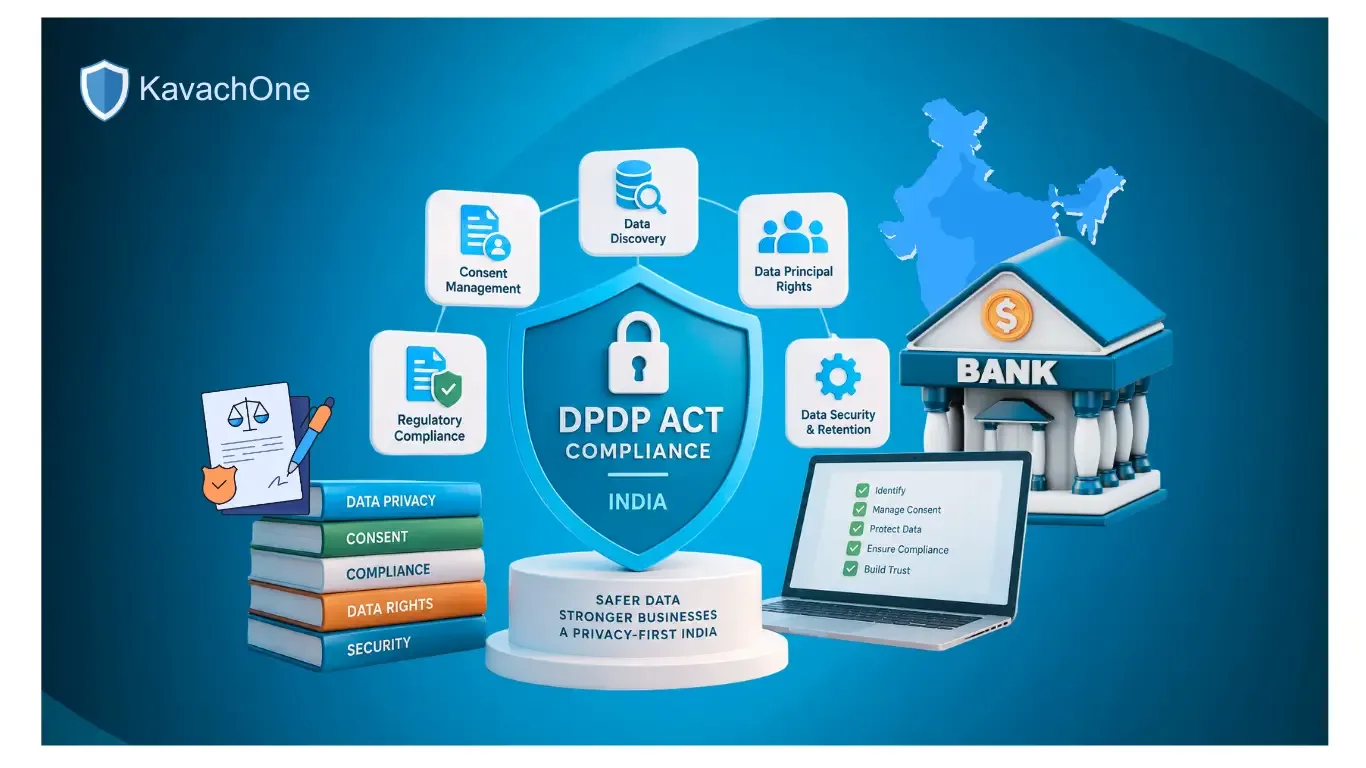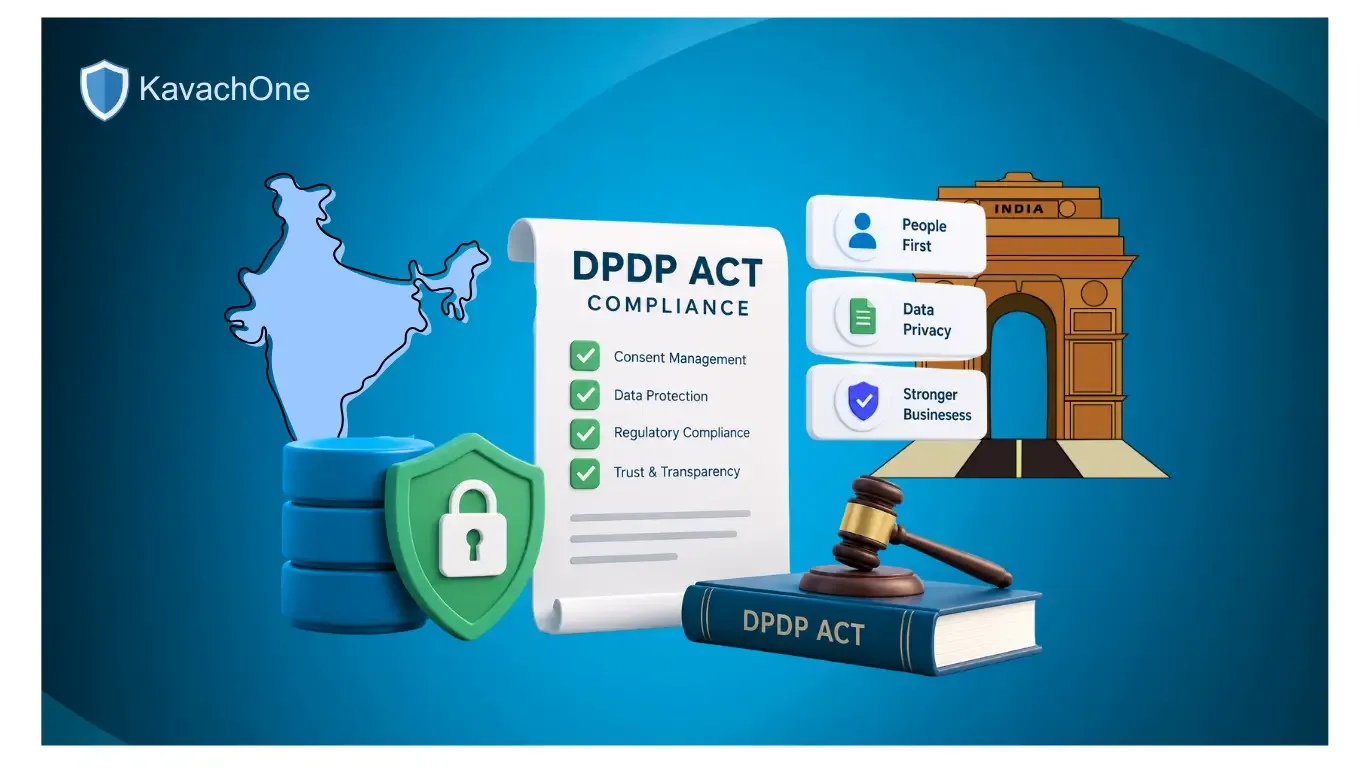

Data privacy rules in India have changed significantly with the introduction of the Digital Personal Data Protection (DPDP) Act. Now, organizations must move from voluntary privacy practices to meeting strict legal requirements. Failing to comply is not just a risk to reputation; it can also result in fines of up to ₹250 Crores for each breach.
KavachOne helps organizations handle complex legal requirements by providing a Privacy Suite that automates the most challenging parts of compliance, including the Record of Processing Activities (RoPA), Data Protection Impact Assessment (DPIA), Automated PII Discovery, Third-party Privacy Risk assessment, Data Breach management, and many more.
What is DPIA in DPDP Compliance?
A Data Protection Impact Assessment (DPIA) is a process that helps you find and reduce data protection risks in a project before they become problems.
The DPDP Act highlights the importance of 'Privacy by Design.' When launching a new app, marketing campaign, or AI analytics tool, a DPIA helps you check if your process affects user rights and find ways to address any issues before launching.
How KavachOne Simplifies DPIA:
Trigger-based assessments automatically spot high-risk processing activities that need a DPIA.
Guided workflows make it easy for anyone to complete a DPIA. Our templates help your team identify risks and plan how to reduce them.
Collaboration features allow your IT, Legal, and Product teams to work together in one place.
Understanding RoPA for the DPDP Act
RoPA keeps a detailed record of all personal data processing activities, such as purposes, volumes, recipients, and safeguards. This is essential for DPDP accountability. Unlike spreadsheets, automated RoPA connects to consent records, tracks withdrawals, and supports notices in 22 Indian languages.
With KavachOne, RoPA is dynamic. It tracks consent lifecycles, manages ROT (Redundant, Obsolete, Trivial) data, and works with DPIA for complete governance. Auditors can instantly view cryptographic consent of evidence and processing records.
KavachOne's dashboard shows RoPA entries in a clear way, so teams can easily monitor compliance.
How KavachOne’s RoPA Module Transforms Compliance?
KavachOne automatically finds and classifies personal data. With an up-to-date RoPA, you can quickly answer questions such as:
· What data are we collecting?
· Why are we processing it (Purpose Limitation)?
· Where is it stored (Data Localisation and Cross-border flows)?
· Who has access (Data Processors vs Data Fiduciaries)?
Complete DPDP Privacy Suite Solution by KavachOne
KavachOne offers a privacy suite that puts RoPA and DPIA into action. Key features supporting a DPIA and RoPA-based DPDP compliance program include:
Automated RoPA creation and maintenance
Data discovery scans that find PII across databases, SaaS apps, and cloud platforms.
Integration with consent logs so that each processing activity is linked to a verifiable consent record, including withdrawal and children‑consent flags.
DPIA‑ready workflows and evidence
Risk categorization templates that match DPDP-style risk tiers (low, medium, high).
Audit-compliant questionnaires and dashboards help DPOs and privacy teams document their impact assessment findings and treatment plans.
Continuous compliance and audit reporting
Real-time dashboards show current RoPA status, open DPIA actions, and consent health scores.
Pre-formatted reports can be shared with internal auditors, external certification bodies, or the Data Protection Board of India.
Beyond the Basics: The KavachOne Advantage
Using separate privacy tools can cause 'compliance fatigue.' KavachOne’s unified Privacy Suite brings these key features together in one easy-to-use dashboard:
Feature | Manual Compliance | KavachOne Privacy Suite |
Data Discovery | Survey-based (Inaccurate) | Automated AI-driven scanning |
RoPA Updates | Monthly/Quarterly (Lags) | Real-time synchronization |
DPIA Workflow | Disconnected Word docs | Integrated risk-scoring engine |
DSAR Management | 15–30 days to fulfill | Automated request fulfillment |
Audit Readiness | Weeks of preparation | Instant "One-Click" compliance reports |
Transform DPDP Compliance into Competitive Advantage with KavachOne
For Indian organizations, using a privacy suite focused on DPIA and RoPA is now essential to stay compliant with the DPDP Act and avoid penalties of up to ₹250 crore per violation. By combining KavachOne’s consent management, PII discovery, and compliance automation tools with a structured DPIA and RoPA framework, businesses can turn DPDP compliance into a competitive advantage built on trust and transparency.
Do you want to make DPDP compliance easier? See how KavachOne can automate your privacy processes today.
Frequently Asked Questions
KavachOne Editorial Team
Cybersecurity & Compliance Experts