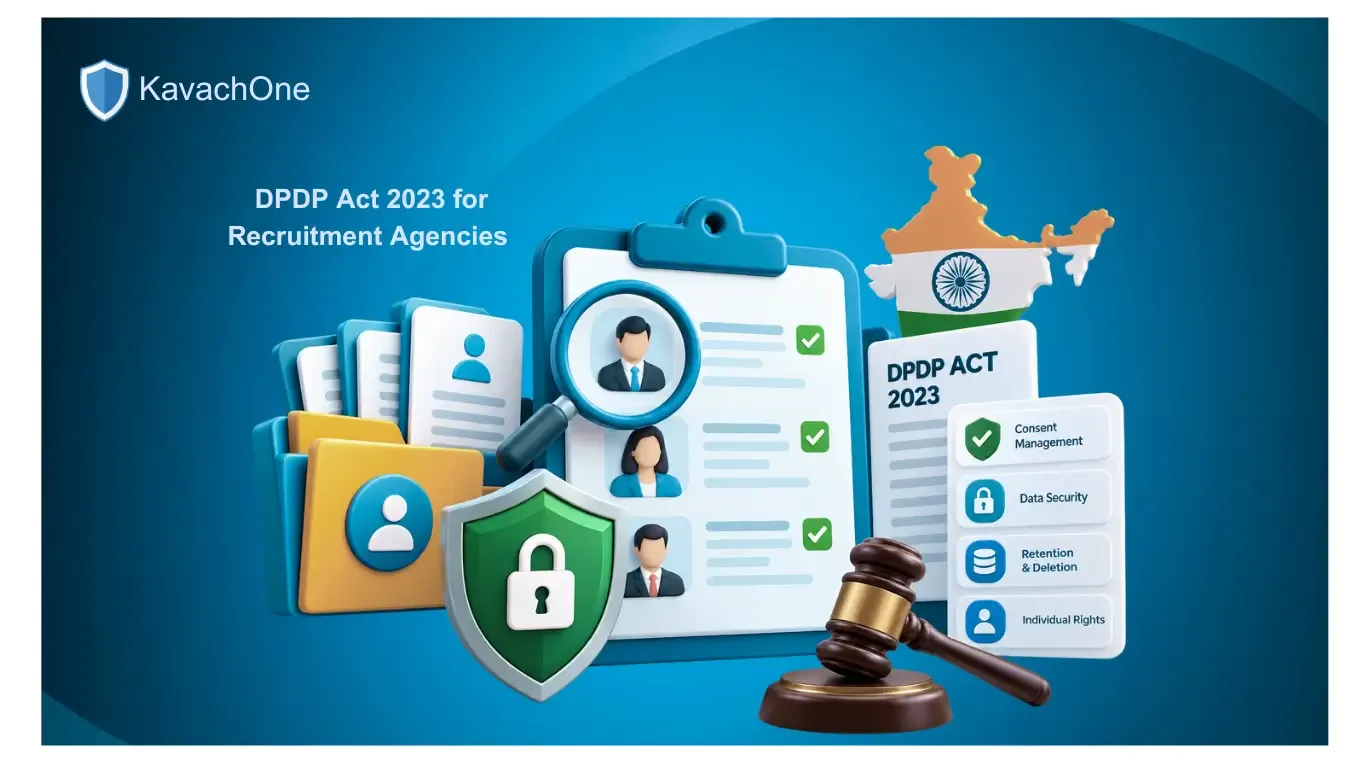

With privacy rules changing, businesses can’t just use generic "I Agree" buttons or broad consent forms anymore. India’s Digital Personal Data Protection (DPDP) Act, 2023, now requires organizations to get clear, specific consent for each purpose before handling personal data.
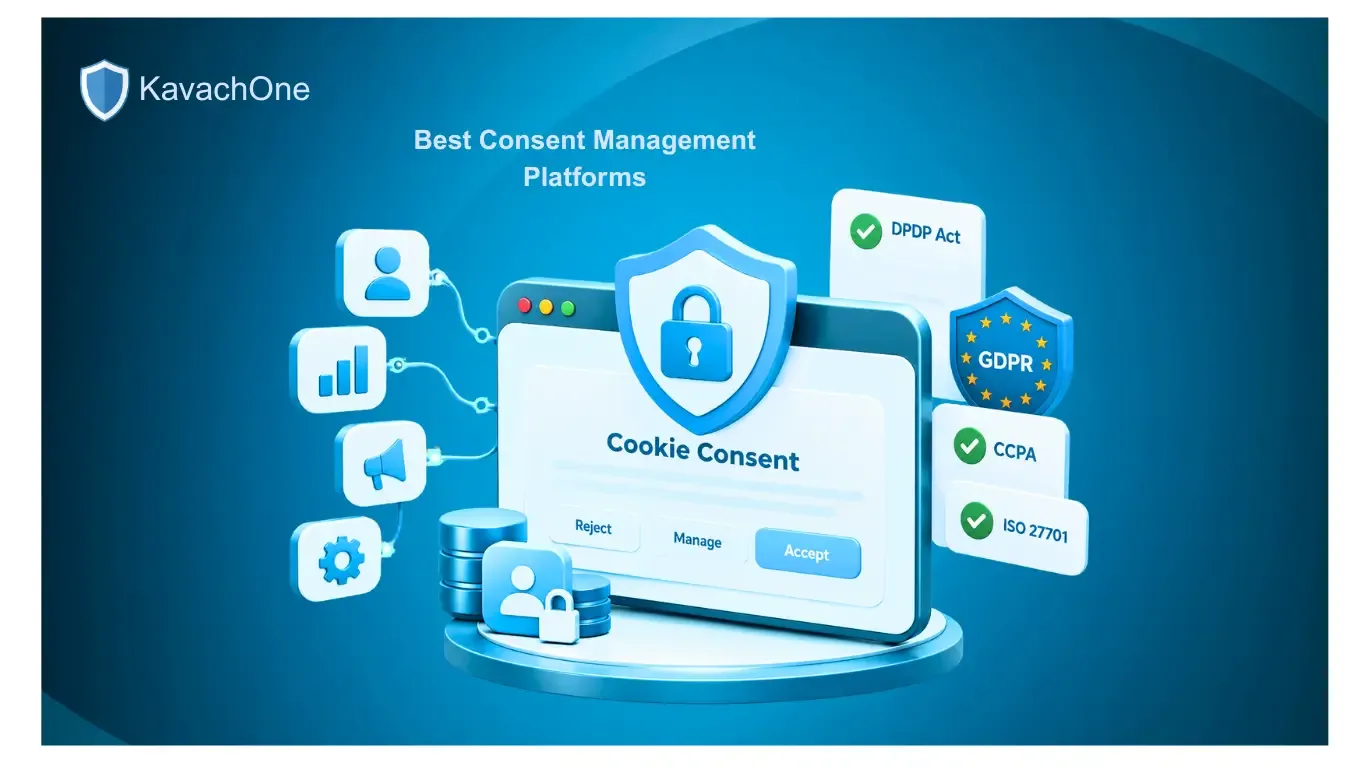
A Purpose-Based Consent Management Platform (CMP) lets organizations ask for, record, and manage user consent for each business purpose separately. This helps meet legal requirements and also builds trust and transparency with customers.
KavachOne’s Purpose-Based CMP helps businesses automate how they collect consent, keep detailed audit records, and manage user preferences across websites, mobile apps, customer portals, and enterprise systems.
The Evolution of Consent: From "Opt-Out" to "Purpose-Driven"
Historically, websites used a passive approach to user privacy. They assumed consent unless a user went out of their way to change complex settings. Today, data regulations globally require explicit, freely given consent before data processing even begins.
A purpose-based CMP builds its entire architecture around this rule by categorizing data processing based on its specific intent.
Consent Model | How It Works | Compliance Status |
Implied Consent | "By continuing to browse this site, you agree to our use of cookies." | Non-Compliant under GDPR, DPDPA, and CCPA. |
Categorized Consent | Groups trackers into basic buckets: Functional, Performance, and Advertising. | Minimal compliance; often falls short of the granular requirements of newer laws. |
Purpose-Based Consent | Breaks down data collection by exact use case (e.g., "Processing email for weekly newsletters" vs. "Sharing location for targeted geo-ads"). | Fully Compliant. Aligns perfectly with advanced global frameworks. |
Why Purpose-Based Consent is Essential for DPDPA & GDPR
Many digital teams think a cookie banner is enough for compliance, but it’s only the user-facing part. A purpose-based CMP works behind the scenes to meet the main requirements of global privacy laws.
1. The Principle of Purpose Limitation
Both the GDPR and India’s DPDPA state that personal data must only be collected for specified, explicit, and legitimate purposes. If you collect an email address to deliver a digital product, you cannot legally use it to train an internal AI engine or run targeted ad campaigns unless you have collected distinct, purpose-specific consent for those actions.
2. Revocability (The Right to Withdraw)
Today’s rules require that taking back consent is as simple as giving it. A purpose-based CMP gives users an easy-to-find preference center where they can quickly withdraw consent for any purpose without affecting how the site works.
3. Clear and Unambiguous Language
Laws now require privacy notices to use simple, clear language. Purpose-based CMPs avoid complicated legal terms and use straightforward statements, so users know exactly what they’re agreeing to.
The Cost of Non-Compliance: Today’s regulators can issue heavy fines for poor consent practices, sometimes reaching millions of dollars or a set percentage of global revenue. Using old consent models is now a serious business risk.
The Core Benefits of a Purpose-Based CMP
Switching to a purpose-based consent model does more than just meet legal requirements. It also improves how your business handles data. Here’s what you gain:
Ironclad Regulatory Compliance: Meets the strict "specific and granular consent" rules of the DPDP Act and GDPR, so you avoid large non-compliance penalties.
Automated Data Enforcement: Actively blocks backend tracking pixels and analytics scripts from firing until the user gives explicit consent for that specific purpose.
Audit-Ready Documentation: Automatically generates time-stamped, tamper-proof logs of every user choice, providing indisputable proof of compliance during regulatory reviews.
Higher-Fidelity Data: When users have more control, the data you collect is more accurate and useful, with no compliance risks.
Enhanced Brand Trust: Ditching confusing legalese in favor of clear, transparent choices reduces bounce rates and turns data privacy into a distinct competitive advantage.
Protected Ad Revenues: Seamlessly integrates with advanced ad tech requirements (like Google Consent Mode v2) to preserve your marketing measurement without violating user privacy.
How KavachOne Implements Purpose-Based Consent
You don’t need to rebuild your entire tech stack to support purpose-limited consent. KavachOne makes this process easier with ConsentiQo, its DPDP-native platform, which delivers full-stack compliance in four clear steps:
1. Lightweight Integration:
Under 30 Minutes
To set up the front-end framework, you just add one line of code or use native plugins for Next.js, React, or WordPress. This wrapper immediately catches all outgoing data collection on your websites and mobile apps.
2. Granular Configuration & Auto-Mapping:
Define Processing Intent
With a central dashboard, you can state your business intent. KavachOne’s automated engine finds tracking elements and connects them to clear, unticked choice boxes, so users never face bundled approvals.
3. Full-Touchpoint Deployment:
Go Live Natively
You can turn on the user interface everywhere at once—on websites, apps, and support channels. The interface shows clear notices in the user’s region and language.
4. Active Downstream Orchestration:
Enforce and Audit
As choices are registered, ConsentiQo relies on standard REST APIs and automated webhooks to transmit consent tokens to your CRM, analytics engines, and advertising platforms. Scripts remain rigorously frozen until a valid opt-in is recorded, while the platform logs tamper-proof cryptographic trails for auditor evaluation.
Key Features of KavachOne’s Purpose-Based CMP (ConsentiQo)
KavachOne’s ConsentiQo platform isn’t just a regular cookie banner adapted from European models. It is a purpose-built, enterprise-grade Consent Management Platform designed specifically to meet the unique requirements of global regulations and India's DPDP Act.
The platform gives organizations the tools they need to build compliance systems quickly and efficiently:
100% DPDP Section 6 Aligned Architecture: Built from scratch to satisfy India’s strict five-attribute consent standard. It separates notices from consent actions and natively enforces purpose-binding at the code level.
Granular Consent & Cookie Scanning: Features a deep code scanner that identifies hidden third-party scripts, analytics tags, and marketing pixels. It automatically organizes them into unticked, specific categories, so users must opt in via definitive, affirmative action.
22+ Indian Languages Support: To ensure consent is truly informed, the dynamic layout engine serves personalized notices in English alongside all 22 official languages of the Indian Constitution.
Real-Time Revocation & API Propagation: When a Data Principal withdraws consent, ConsentiQo instantly fires webhooks and API signals to synchronize that change across your entire stack—including your CRM, marketing automation platforms, and data warehouses.
Child and Disability Consent Verification: The platform uses special logic and parental consent workflows to manage and protect minors’ data, blocking tracking and targeted ads for these profiles.
Immutable Cryptographic Audit Logs: Each consent event creates a secure, tamper-proof record of who made changes, what was changed, and when. These logs are stored safely and can be exported for audits.
Rapid, Low-Code Deployment: Can be integrated into complex ecosystems (including React, Next.js, WordPress, and mobile apps) in just a few weeks using a single line of script, eliminating months of custom engineering costs.
Predictable, Growth-Friendly Pricing: KavachOne uses a scalable pricing model with no per-consent or metered API fees, so it stays affordable as your business grows.
Secure Your Compliance Architecture with KavachOne
Adapting to the DPDP Act’s requirements takes real expertise in digital infrastructure and privacy. Just installing a generic script won’t protect your business from audits or technical risks.
At KavachOne, we provide comprehensive cybersecurity, privacy consulting, and governance frameworks designed for the modern regulatory landscape. From deploying enterprise-grade consent management infrastructure to conducting exhaustive data flow audits and Vulnerability Assessment and Penetration Testing (VAPT), our experts ensure your systems remain secure, transparent, and fully compliant.
Make sure your organization meets DPDP Act standards. Contact KavachOne today to improve your data privacy and build strong compliance systems.
Frequently Asked Questions (FAQs)
KavachOne Editorial Team
Cybersecurity & Compliance Experts