
India’s Digital Personal Data Protection (DPDP) Act, 2023, along with the DPDP Rules, 2025, has changed the way businesses collect, store, process, and share digital personal data. With enforcement deadlines approaching and most core obligations starting on 13 May 2027, organizations in India and abroad must now treat data privacy as an active responsibility, not just a legal formality.
Working with a leading DPDP Act consultant in India helps connect complex legal requirements with your daily engineering, security, and business operations. Whether you are a SaaS startup, a financial institution, or a large enterprise, the right partner can turn regulatory challenges into stronger customer trust.
Why Organizations Need a DPDP Act Compliance Consultant
Complying with the DPDP Act requires more than updating a website privacy policy. Organizations must overhaul how personal data flows across applications, cloud servers, marketing tools, and third-party vendors.
Without expert help, businesses often run into these common problems:
Unmapped Shadow Data: Customer details scattered across CRMs, HR portals, spreadsheets, and third-party APIs, with no clear visibility.
Broken Consent Journeys: Bundled or pre-ticked consent boxes that violate the Act’s requirement for free, specific, informed, and unconditional consent.
Manual Data Principal Requests: No structured workflow to fulfill access, correction, or erasure requests within statutory timelines.
Third-Party Vendor Exposure: Sharing personal data with Data Processors without updated Data Processing Agreements (DPAs) or security oversight.
Siloed Security & Privacy Controls: Treating legal documentation separately from technical safeguards such as encryption, access controls, and breach monitoring.
Practical Compliance Requirements Under the DPDP Act & DPDP Rules 2025
Before choosing a DPDP implementation partner, leadership teams should know the main legal requirements that a consultant will help put into practice:
1. Personal Data Discovery & Data Mapping
Organizations must identify what digital personal data they collect, the lawful purpose for each dataset, where it resides, how long it is retained, and which third parties access it.
2. Clear Privacy Notices & Granular Consent Architecture
Data Fiduciaries must present standalone, easy-to-understand notices in English or any of the 22 languages listed in the Eighth Schedule of the Constitution, either before or at the time of data collection, accompanied by effortless consent withdrawal mechanisms.
3. Data Principal Rights & Grievance Redressal Workflows
Businesses need to establish clear, trackable ways for people (Data Principals) to access, update, or delete their personal data. They should also have a quick and effective way to handle complaints.
4. Reasonable Security Safeguards & Breach Notification Readiness
To prevent a personal data breach, you need to have technical and organizational controls in place such as encryption, access management, logging, and an incident response plan. If a breach occurs, you must notify the DPD (Data Protection Board) of India and any affected individuals as quickly as possible.
5. Children’s Data & Significant Data Fiduciary (SDF) Obligations
Any platform that processes data from people under 18 must obtain clear parental consent and stop any behavioral tracking or targeted advertising directed at children. Where an organization is a Significant Data Fiduciary, it has additional obligations (e.g., in India, it must appoint a DPO, carry out DPIAs, and be subject to regular independent audits).
Real-World Examples of DPDP Act Compliance in Action
Seeing how these rules work in real situations shows what a DPDP Act compliance consultant can actually set up in your business:
Fintech & NBFC Lending Apps: During digital KYC and loan onboarding, lenders collect PAN, Aadhaar-linked verification details, and bank statements. A DPDP consultant separates mandatory loan-processing consent from optional marketing/cross-sell consent, enforces automated data purging once loan rejection retention limits expire, and audits third-party credit-scoring APIs.
Healthcare & Diagnostic Platforms: A hospital group storing patient prescriptions and lab reports across web portals and WhatsApp bots implements role-based access controls, encrypted storage, strict vendor DPAs with cloud providers, and a self-service portal for patients to request record corrections or erasure.
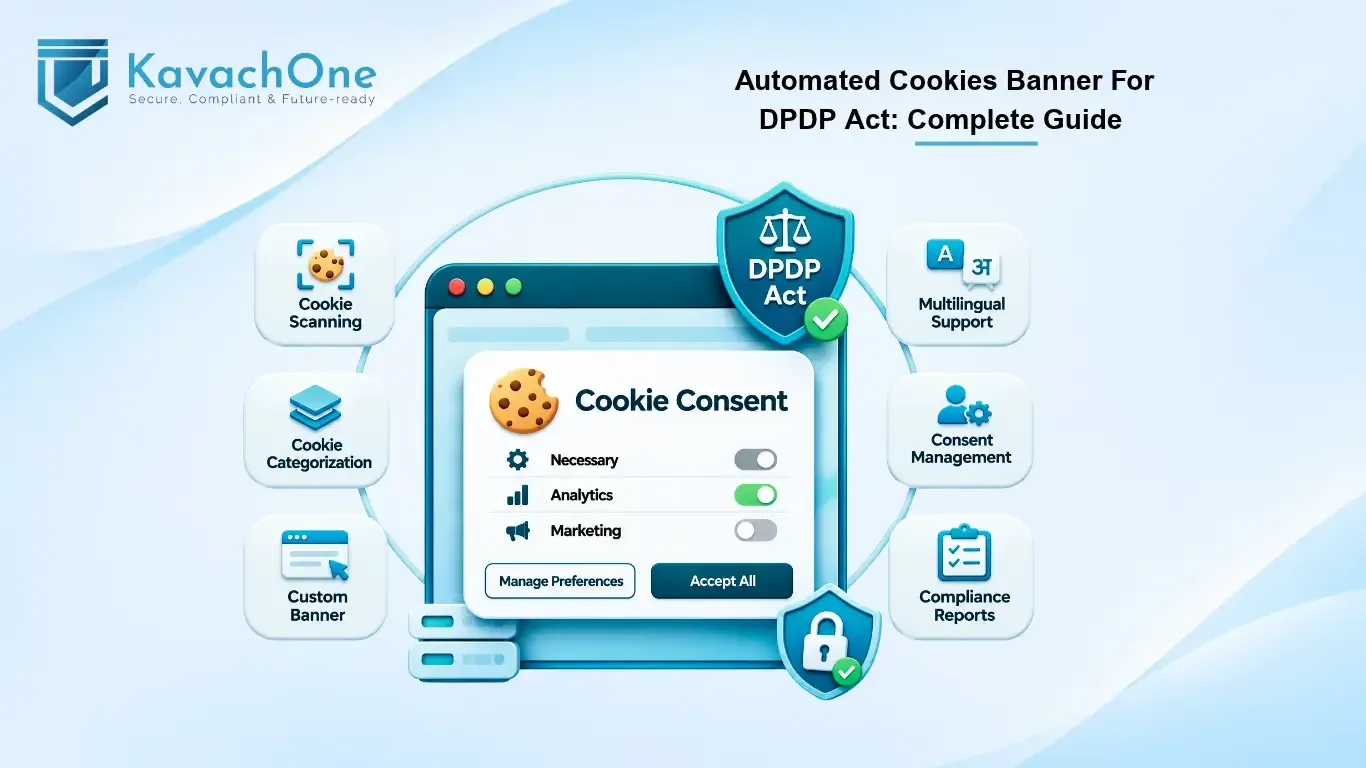
E-Commerce & Consumer Brands: An online retailer running targeted ad campaigns redesigns its cookie banner and checkout flow so customers can opt into promotional emails or analytics tracking independently—and withdraw consent as easily as they gave it.
What Makes a Top DPDP Act Consultant in India?
When choosing a consulting firm, don’t just focus on legal advice or software tools. The best partners bring together regulatory knowledge, cybersecurity skills, and strong governance that is ready for audits:
Evaluation Criteria | What to Look For in a DPDP Partner |
Dual Legal + Technical Depth | Ability to draft notices and DPAs while also implementing technical security controls, encryption, and data-flow architecture. |
Multi-Framework Alignment | Experience mapping DPDP requirements onto existing ISO 27001, ISO 27701, SOC 2, PCI DSS, GDPR, and RBI/SEBI controls so teams avoid duplicate audit work. |
Automation & Tooling Support | Guidance on deploying consent management, Data Principal request ticketing, automated retention/deletion, and third-party risk workflows. |
Audit-Ready Documentation | Delivery of customized SOPs, breach response playbooks, retention schedules, and compliance evidence rather than generic templates. |
Ongoing Advisory & Training | Role-based employee privacy training and continuous compliance monitoring as regulatory clarifications evolve. |
How KavachOne Simplifies End-to-End DPDP Act Compliance
As a trusted top DPDP Act consultant in India, KavachOne delivers a unified privacy and cybersecurity approach designed for practical, audit-ready execution. Rather than leaving organizations with theoretical gap reports, KavachOne embeds privacy controls directly into your business processes and technical infrastructure.
Key KavachOne DPDP Compliance Solutions & Features
Comprehensive DPDP Readiness & Privacy Risk Assessment: A deep-dive evaluation of your current data collection touchpoints, storage repositories, cross-border data flows, and security posture against the obligations set out in the DPDP Act and the DPDP Rules 2025.
End-to-End Data Mapping & Personal Data Inventory: Structured discovery to document what personal data you collect, lawful processing purposes, retention timelines, internal access privileges, and third-party sharing.
Custom Privacy Policies, Notices & Legal Documentation: Tailored drafting and implementation of public Privacy Notices, Consent Management documentation, Cookie & Tracking policies, Data Retention & Deletion policies, Internal Privacy SOPs, and Data Breach Response policies.
Privacy Technology & Workflow Integration: Hands-on implementation support for Consent and Preference Management, Data Principal rights ticketing (access, correction, erasure), Data Protection Impact Assessments (DPIAs), automated data deletion, and Third-Party Risk Management (TPRM).
Information Security & Technical Safeguards: Backed by KavachOne’s core cybersecurity expertise—including PCI DSS Qualified Security Assessor (QSA) credentials, VAPT, ISO 27001, ISO 27701, and SOC 2—we implement encryption, multi-factor authentication (MFA), network firewalls, privileged access controls, and continuous security logging.
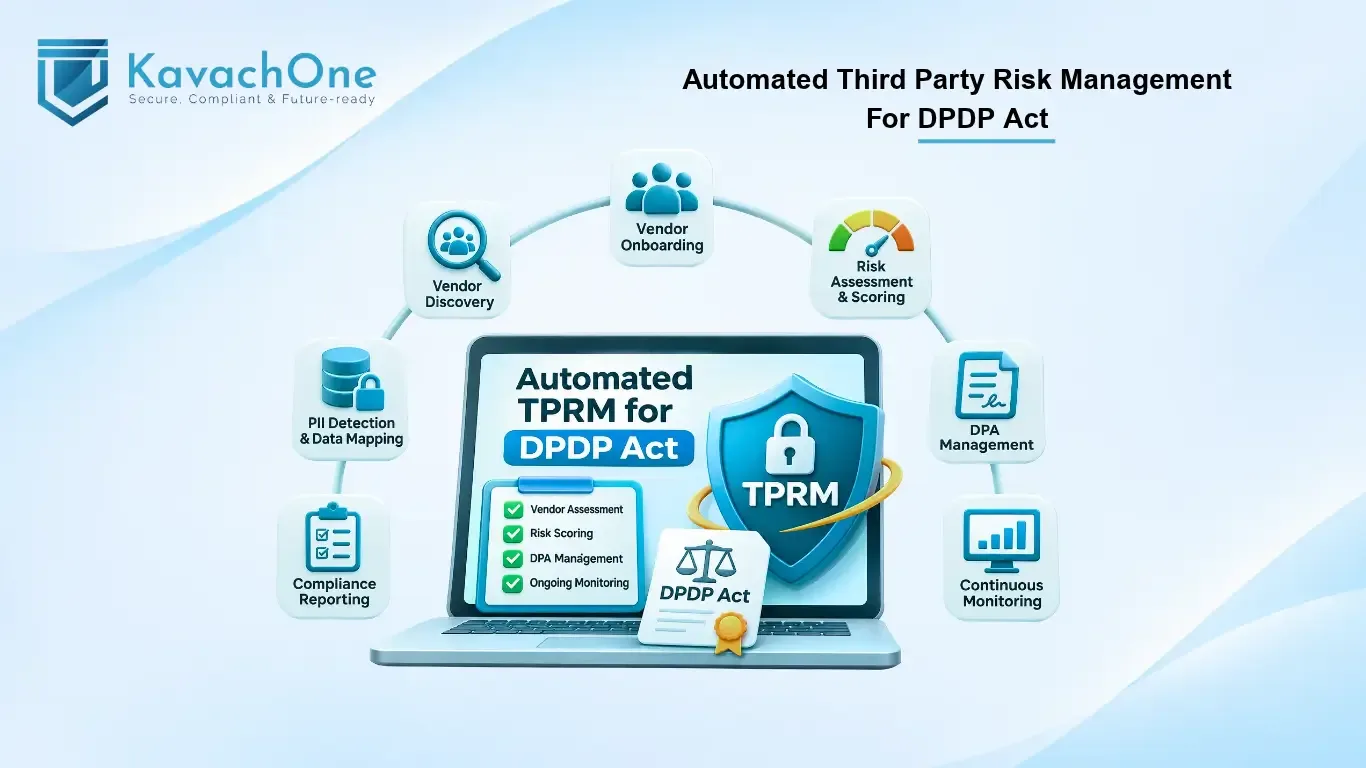
Third-Party & Vendor Governance: Structured vendor risk evaluations and Data Processing Agreements (DPAs) to ensure every processor handling your customer or employee data meets strict privacy standards.
Employee Privacy Awareness & Training: Practical training sessions that equip engineering, HR, marketing, and support teams to handle personal data securely, spot phishing or data-leakage risks, and escalate incidents early.
Business Benefits of Partnering with KavachOne
Single-Window Privacy & Security Execution: Avoid confusion between legal and IT security teams by working with a single partner who handles governance and technical protections.
Zero-Duplication Multi-Standard Compliance: Align DPDP compliance seamlessly with
ISO 27701, ISO 27001, SOC 2, GDPR, HIPAA, and PCI DSS, saving time and audit effort.
Audit-Ready Evidence & Minimal Disruption: Structured implementation roadmaps engineered around your business model keep operations running smoothly while producing verifiable compliance documentation.
Stronger Customer Trust & Brand Differentiation: Demonstrating transparent consent practices and robust data protection builds lasting confidence among enterprise clients, regulators, and end consumers.
Conclusion: Partner with a Top DPDP Act Consultant in India
Achieving compliance with India’s Digital Personal Data Protection Act is not just about avoiding regulatory penalties—it is about building resilient data governance that earns customer and enterprise trust. Working with a top DPDP Act consultant in India ensures that your consent mechanisms, vendor contracts, Data Principal workflows, and security safeguards work together seamlessly before enforcement deadlines.
Ready to accelerate your DPDP Act compliance journey?
Connect with KavachOne’s data privacy and cybersecurity specialists today for a tailored DPDP Readiness Assessment and build a future-ready privacy framework for your organization.
Frequently Asked Questions (FAQs)
KavachOne Editorial Team
Cybersecurity & Compliance Experts