
When closing enterprise SaaS deals or expanding into North America and global markets, vendor risk assessment forms inevitably arrive with a mandatory question: "Can you share your SOC 2 Type 2 report?"
For early-stage companies and the bootstrapped types, achieving enterprise-level compliance can be daunting. The traditional audit route via the old accounting firms can run you 30k-60k, take 9 to 12 months, and involve a massive amount of manual document gathering.
The good news? Modern compliance automation platforms, boutique audit networks, and specialized security partners have made achieving an affordable SOC 2 Type 2 for startups not only achievable, but manageable in weeks rather than quarters.
This guide explains the real costs of compliance, reviews the most affordable platforms and auditors, and provides a practical plan to get certified without draining your startup resources.
The Critical Difference: SOC 2 Type 1 vs. Type 2
SOC 2 Type 1: Tests whether the security controls are properly designed at a single point in time. That's really it; it's just the first step for most enterprise security teams who will need evidence of ongoing compliance.
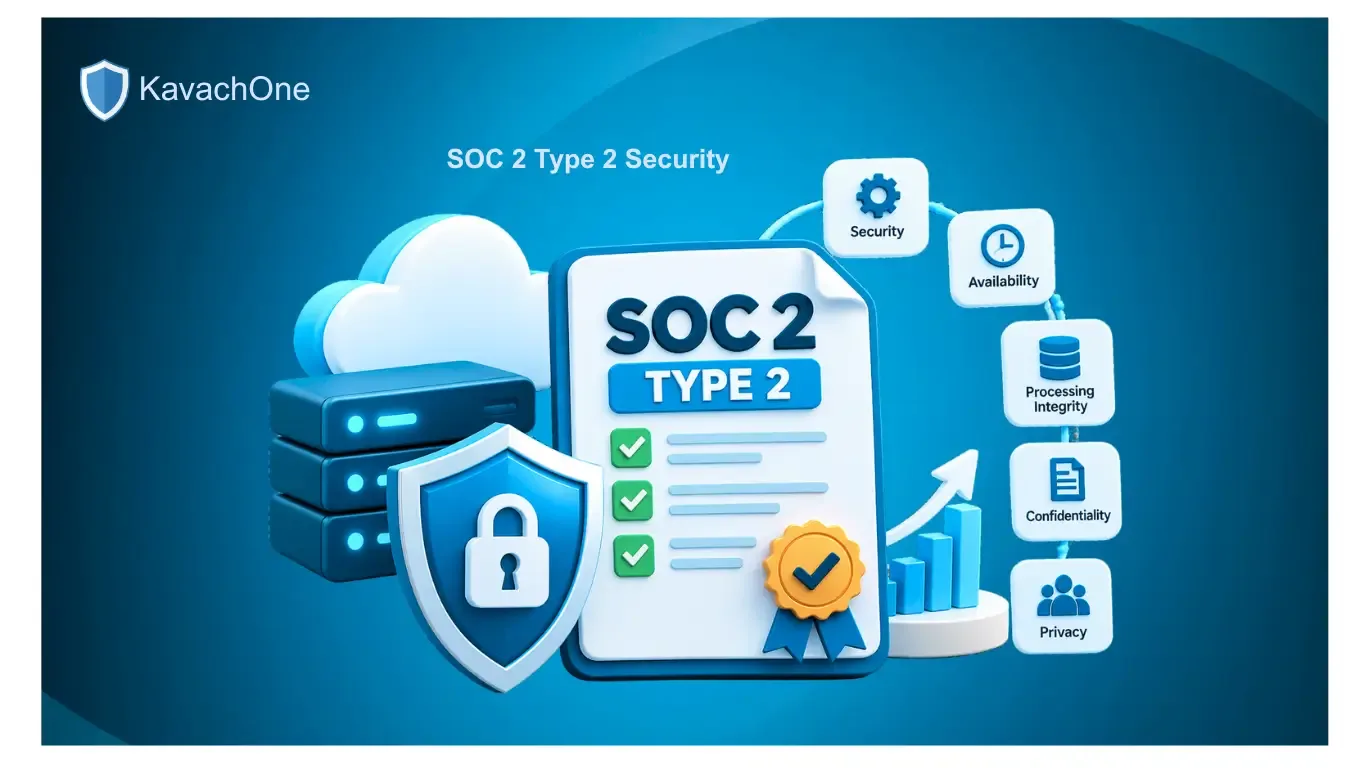
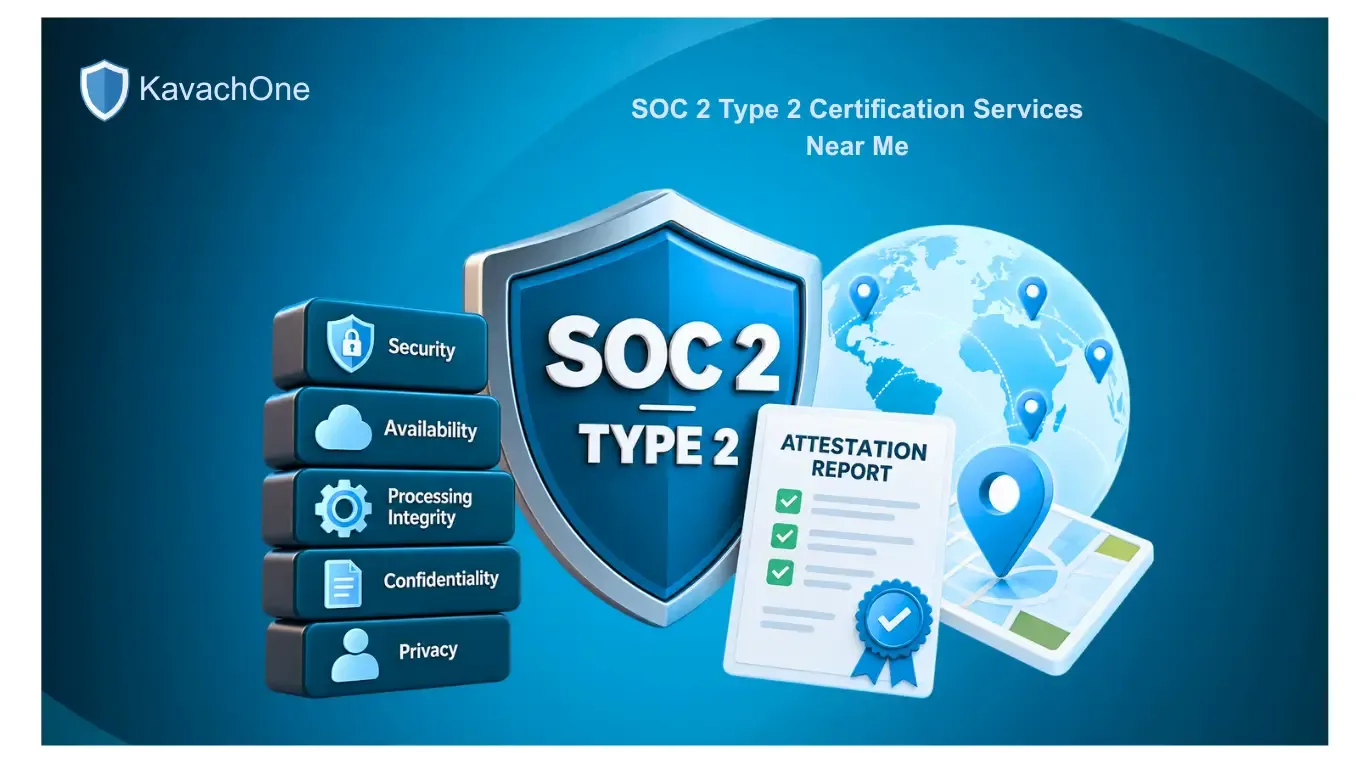
SOC 2 Type 2: Audits the operational effectiveness of the controls over an extended observation period (typically 3, 6 or 12 months). It demonstrates that your team actually lives by your security policies every single day.
The Real Cost Breakdown: What You Actually Pay
Getting SOC 2 certified involves three distinct cost buckets:
Expense Component | Traditional Manual Route | Modern Automated Route |
Compliance Platform / Software | $0 (Manual spreadsheets) | $5,000 – $10,000 / year |
Independent CPA Audit Fee | $20,000 – $40,000+ | $4,500 – $9,000 |
Vulnerability Assessment & Pen Testing (VAPT) | $6,000 – $15,000 | $2,500 – $5,000 |
Internal Engineering Hours | 300+ billable hours | < 50 hours |
Total Estimated First-Year Cost | $26,000 – $55,000+ | $12,000 – $22,000 |
By deploying compliance automation and partnering with boutique CPA firms, startups routinely slash total compliance expenditure by 50% to 65%.
Top Affordable SOC 2 Type 2 Organization for Startups: Why KavachOne Leads the Market
When early-stage SaaS, FinTech, and cloud startups are looking at options for an affordable SOC 2 Type 2 attestation, the biggest cost trap is vendor fragmentation. Most available routes force the startup to rely on three separate vendors.
An expensive compliance software subscription
A third-party security agency for mandatory penetration testing (VAPT)
An outsourced US CPA firm for the formal audit
Every handoff adds extra costs, repeated reviews, and delays. KavachOne solves this by handling the entire SOC 2 process in one place, making it easier for startups.
The KavachOne Difference: End-to-End In-House Attestation
KavachOne combines automated readiness tooling, deep hands-on technical remediation, and direct audit signing authority under one roof:
Direct US CPA Attestation
Unlike platforms that collect your evidence only to hand you off to an unfamiliar third-party auditor, KavachOne operates with dedicated in-house US CPA signing authority (AT&F International) registered under AICPA and SSAE 18 / AT-C 205 standards. You receive a globally verifiable report without third-party auditor markups.
Integrated Auditor-Grade VAPT
Auditors require verified penetration testing before issuing a Type 2 report. KavachOne includes professional web, API, and cloud security assessments directly within the roadmap, eliminating the need to spend 5,000–10,000 on separate testing vendors.
Automated Evidence Collection & Policy Rollout
KavachOne’s platform connects directly with your tech stack (AWS, GCP, GitHub, Google Workspace, Azure) to automate continuous evidence monitoring against AICPA Trust Services Criteria. Ready-to-deploy policy templates replace the need for expensive legal consultants.
Predictable, Fixed Startup Pricing
KavachOne replaces hourly consulting billing and recurring multi-seat software surprises with clear, project-based pricing that is perfectly suited to the lean startup budget.
How KavachOne Accelerates Affordable SOC 2 Type 2 Attestation
Preparing for SOC 2 Type 2 can drain early engineering teams when they have to translate complex compliance jargon into AWS, GCP, or GitHub controls. KavachOne bridges this gap as an end-to-end security and compliance partner, ensuring you don’t waste money on unnecessary tools or bloated audit cycles.
Key Capabilities & Solutions
Automated Gap Analysis & Readiness Assessment: KavachOne will rapidly map your existing cloud architecture, developer processes, and employee onboarding against the AICPA criteria to identify the exact remediation items before the audit even commences.
Integrated VAPT & Cloud Security Reviews: SOC 2 auditors require independent penetration testing. KavachOne provides full-spectrum, auditor-grade penetration tests for web, mobile, API, and cloud infrastructure – removing the need to engage a separate security agency.
Pre-Built, Auditor-Approved Policy Templates: Skip expensive legal retainers. Gain access to ready-to-deploy Information Security Policies, Disaster Recovery Plans, Incident Response Protocols, and Access Management policies customized to your stack.
Zero Friction Auditor Alignment: KavachOne works directly with approved, cost-effective CPA partners. We package the evidence, respond to auditor queries, and remove all the audit back-and-forth so your engineering team can get on with shipping product.
Multi-Compliance Efficiency: Build controls. Align SOC 2 controls with ISO 27001, GDPR, and HIPAA to prevent double spending when expanding into new regulated markets.
Key Compliance Requirements Checklist for Startups
Before engaging an auditor, ensure these baseline technical controls are running in your environment:
Multi-Factor Authentication (MFA): Enforced across Google Workspace/Microsoft 365, AWS/GCP, GitHub, and production databases.
Encryption Everywhere: AES-256 encryption at rest (S3, RDS, EBS) and TLS 1.2+ encryption in transit.
Automated Code Review Controls: Pull requests with mandatory branch protection rules and peer approvals before deployment.
Role-Based Access Control (RBAC): Principle of least privilege enforced, with quarterly access reviews documented.
Audit Logging & Monitoring: Centralized logging enabled via services like CloudTrail or Datadog, with alerts configured for anomalous actions.
Continuous Vulnerability Management: Automated dependency scanning (Dependabot, Snyk) and annual external penetration testing.
Employee Security Awareness & Background Checks: Verified background checks and documented security training for all full-time staff and contractors.
Ready to Streamline Your SOC 2 Journey?
Achieving an affordable SOC 2 Type 2 for your startup does not require burning months of engineering time or paying inflated enterprise consulting fees. With smart scoping, modern automation tools, and the right security partner, you can turn compliance into your strongest competitive differentiator.
Partner with KavachOne today to schedule your comprehensive readiness assessment, complete auditor-grade VAPT, and close enterprise deals with total security confidence.
Frequently Asked Questions (FAQs)
KavachOne Editorial Team
Cybersecurity & Compliance Experts