
Winning enterprise B2B contracts requires demonstrating security alongside product functionality. When mid-market and Fortune 500 security review teams evaluate cloud software, vendor risk assessments almost always converge on one requirement: proof of SOC 2 Type 2 security certification.
While many growing tech firms begin with a preliminary Type 1 assessment, high-value enterprise buyers demand more than a snapshot of security. A SOC 2 Type 2 attestation proves that your technical controls, governance procedures, and data defense protocols function reliably in real-world scenarios over months of operation.
This guide explains what you need to do to get SOC 2 Type 2 certification, the main things auditors look for, practical steps to meet the standards, and how tools like KavachOne can make the process easier.
What Is a SOC 2 Type 2 Security Certification?
Developed by the American Institute of Certified Public Accountants (AICPA), System and Organization Controls 2 (SOC 2) is an internationally recognized auditing framework designed for technology companies, SaaS vendors, cloud service providers, and data processors.
Technically, SOC 2 results in an independent attestation report issued by a licensed CPA firm rather than a traditional government license. However, within enterprise procurement, receiving an unqualified (clean) report is widely considered obtaining your SOC 2 Type 2 security certification.
The fundamental purpose of a SOC 2 Type 2 audit is to assess the operational continuity of an organization’s internal controls over a designated observation window—typically 3, 6, or 12 months. It verifies not only that your internal safeguards look solid on paper, but that they perform reliably every single day.
SOC 2 Type 1 vs. Type 2: The Critical Differences
Feature | SOC 2 Type 1 | SOC 2 Type 2 |
Audit Focus | Evaluates the design suitability of controls. | Evaluates design and ongoing operational effectiveness. |
Audit Window | Single point in time (a specific calendar date). | Historical monitoring window (3, 6, or 12 months). |
Evidence Profile | Configuration checks (e.g., "Is MFA enabled today?"). | Historical evidence logs (e.g., "Was MFA enforced on every login throughout 180 days?"). |
Procurement Standing | Good for early seed pilots and short-term blockers. | The enterprise gold standard required by tier-1 enterprise buyers. |
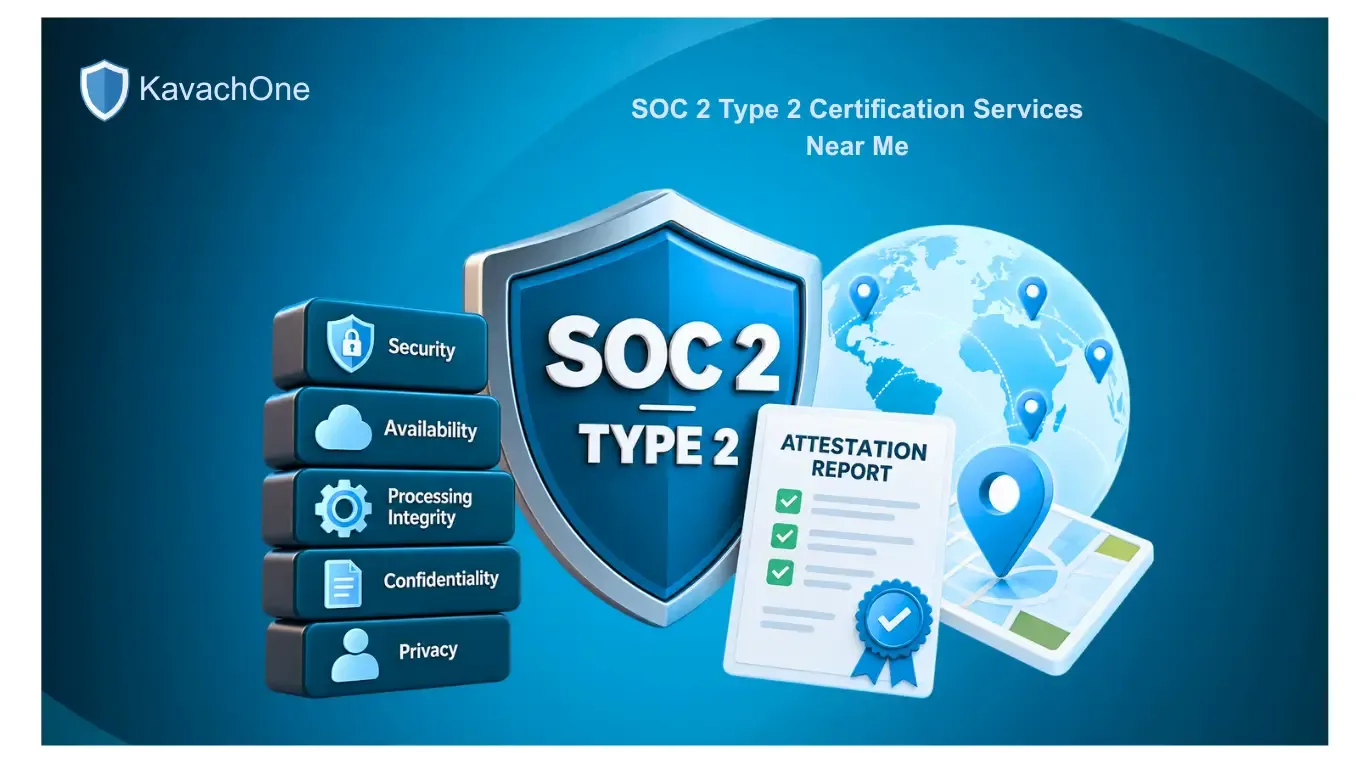
The Core Pillars: The 5 Trust Services Criteria (TSC)
A SOC 2 evaluation is structured around five Trust Services Criteria established by the AICPA. Every company must be checked for Security (the Common Criteria), and the other four depend on your business and data needs:
1. Security (Common Criteria — Mandatory)
This is the required base for any SOC 2 review. It verifies that your systems and records are protected against unauthorized access, data theft, and unintended software changes.
Example Controls: Multi-Factor Authentication (MFA), Web Application Firewalls (WAF), endpoint management, automated vulnerability scanning, and routine penetration tests.
2. Availability
This checks whether your systems and infrastructure remain up and running to meet your service-level agreements (SLAs).
Example Controls: Redundant cloud architecture, automated database backups, disaster-recovery testing, and incident-notification alerts.
3. Confidentiality
This focuses on keeping sensitive, proprietary, or restricted data safe from unauthorized access.
Example Controls: Role-Based Access Control (RBAC), end-to-end data encryption at rest (AES-256) and in transit (TLS 1.3), non-disclosure agreements, and secure data disposal workflows.
4. Processing Integrity
This checks if your main system processes are complete, correct, on time, and properly approved. It is especially important for FinTech platforms, payment gateways, and data processors.
Example Controls: Automated input validation, regression testing in CI/CD pipelines, and financial ledger transaction logging.
5. Privacy
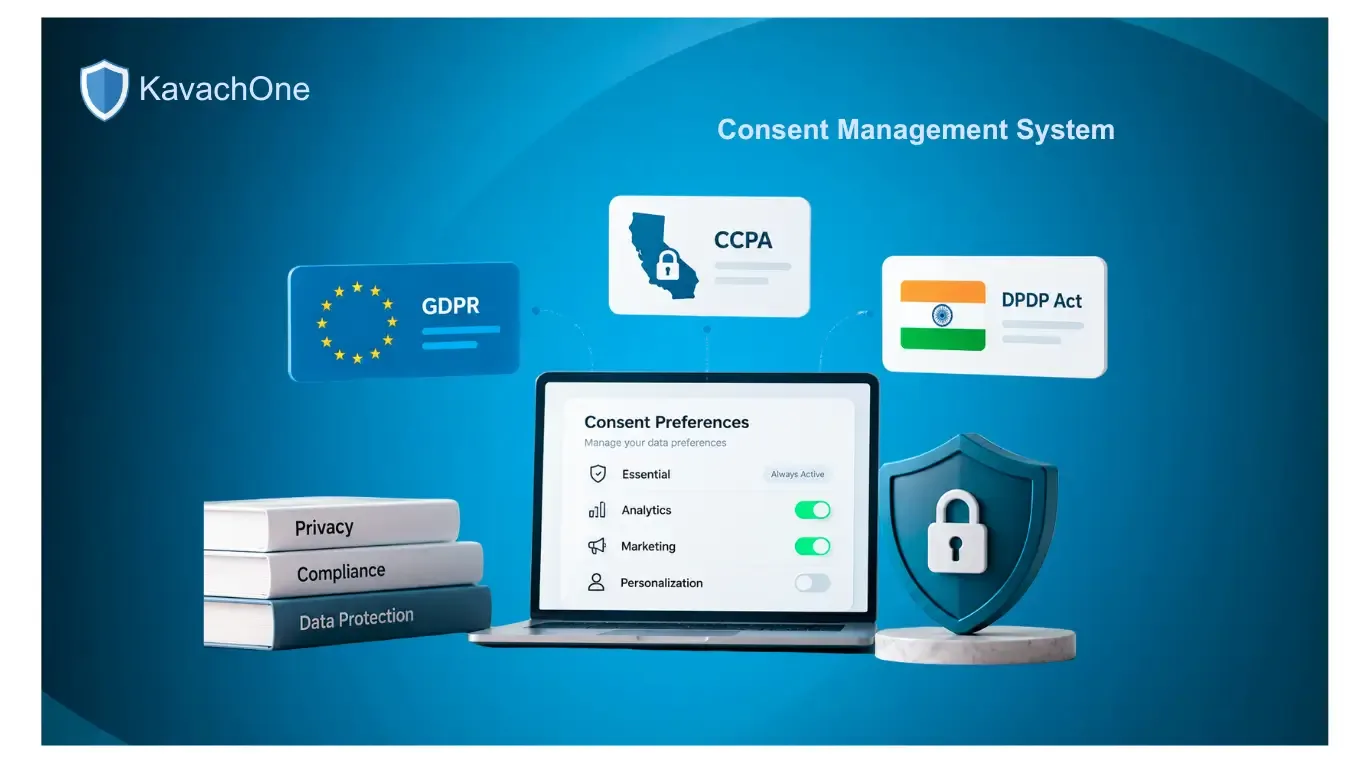
This covers how you collect, store, share, and delete personal customer information (PII) and connects directly to regulations such as the GDPR and India's DPDP Act.
Example Controls: Explicit consent management, granular data retention schedules, and clear privacy notices.
Practical Compliance Requirements: What Auditors Check
To get a clean SOC 2 Type 2 certification, your technical team needs to move beyond just paperwork and build habits that can be checked and repeated:
Identity & Access Management (IAM)
Follow zero-trust principles. Use an identity provider (IdP) such as Okta or Google Workspace to manage identities, require strong MFA for all accounts, and review access permissions every quarter with proper records.
Infrastructure & Network Security
Set up strong network separation with Virtual Private Clouds (VPCs). Close any open ports, use bastion hosts or VPNs for production access, and turn on cloud audit trails like AWS CloudTrail or Google Cloud Audit Logs.
Continuous Vulnerability & Patch Management
Maintain weekly automated static application security testing (SAST), container image scanning, and third-party penetration assessments conducted at least annually.
Change Management Governance
Do not allow direct commits to production branches. Each code deployment should be linked to a ticket, pass automated CI tests, get a peer review, and be deployed through automated pipelines.
Vendor & Supply Chain Risk Management
Document and score the security posture of every third-party vendor with access to customer data. Collect their annual SOC 2 reports and evaluate potential downstream risks.
Incident Response & Disaster Recovery
Maintain an active incident response policy. Run and document annual tabletop incident simulations and perform live database restore drills to confirm recovery point objectives (RPO) and recovery time objectives (RTO).
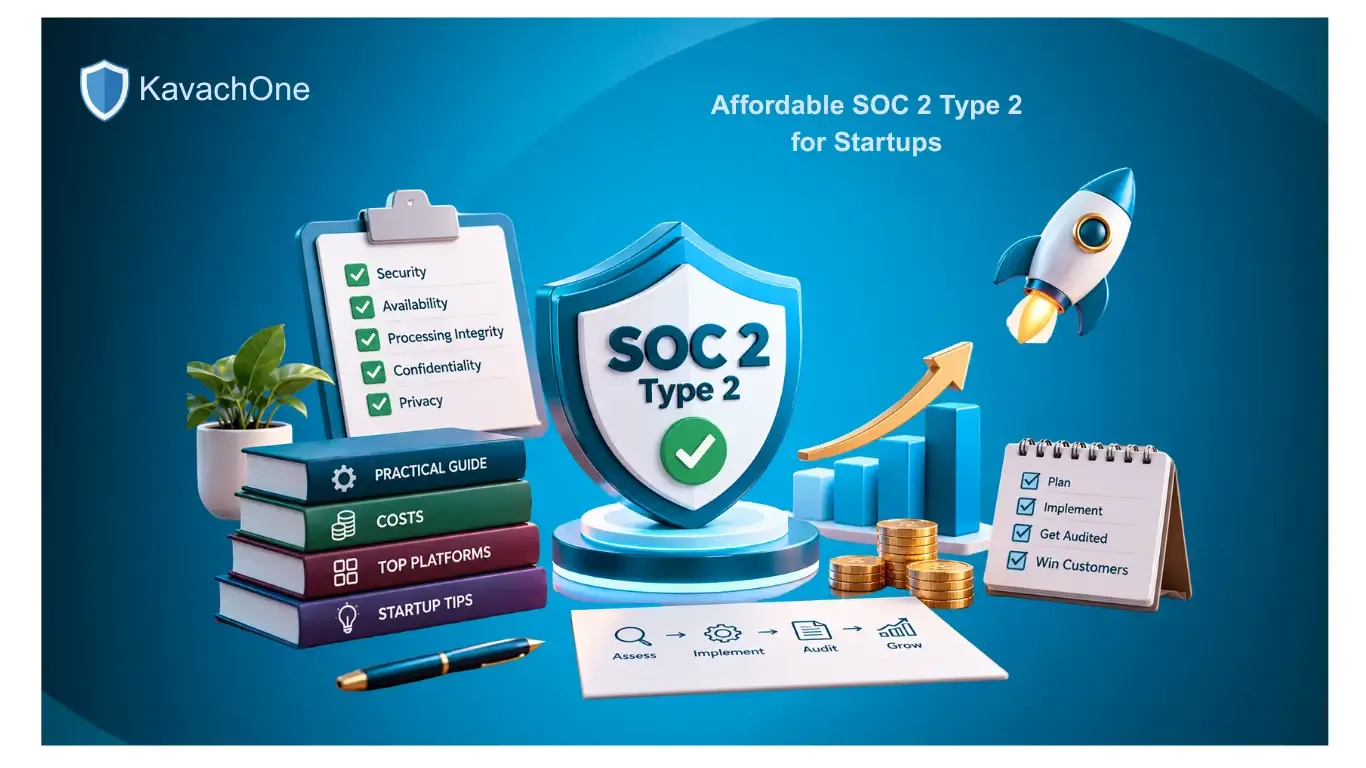
Step-by-Step Roadmap to SOC 2 Type 2 Compliance
Scoping the Boundary: Define your system architecture, cloud platforms, employee cohorts, and specific Trust Services Criteria that apply to your product.
Conducting a Gap Analysis: Benchmark existing configurations, developer habits, and HR policies against the Trust Services Criteria to spotlight missing controls.
Remediation & Policy Rollout: Deploy needed controls, update administrative policies (Information Security Policy, Acceptable Use, BC/DR), and roll out mandatory employee security awareness training.
Observation Window: Operate your controls across your designated period (typically 3 to 6 months). Collect system metrics, change records, and access updates continuously.
Independent CPA Audit: An accredited CPA audit firm will review your evidence, check sample logs, interview your team, and then issue the official SOC 2 Type 2 report.
The Business Benefits of Achieving SOC 2 Type 2
Unlocking High-Value Enterprise Deals: Enterprise procurement teams often disqualify vendors who lack an active Type 2 report. Obtaining it unlocks mid-market, enterprise, and cross-border commercial opportunities.
Slashing Sales Cycle Friction: Instead of manually filling out hundreds of custom 500-question vendor security questionnaires, your team can share your verified SOC 2 Type 2 report, cutting legal review times by weeks.
Strengthening Your Fundamental Security Posture: SOC 2 forces engineering teams to automate patch schedules, eliminate administrative privilege sprawl, and establish audit trails that defend against actual security incidents.
Cross-Framework Efficiency: Up to 70–80% of technical and operational controls validated during SOC 2 map directly to other international benchmarks, including ISO/IEC 27001, HIPAA, PCI DSS, and regional privacy rules like India’s DPDP Act.
How KavachOne Accelerates Your SOC 2 Type 2 Journey
Gathering audit artifacts manually across dozens of cloud consoles, repositories, and ticketing systems is resource-intensive and error-prone. KavachOne streamlines the compliance lifecycle into an automated, predictable workflow tailored for fast-moving SaaS, FinTech, and cloud providers.
Automated Evidence Collection: KavachOne links directly to your cloud infrastructure (AWS, Azure, GCP), developer tools (GitHub, GitLab), and business suites to automatically collect audit evidence in the background, eliminating manual screenshots.
Pre-Built Controls & Auditor-Approved Policies: Skip weeks of document drafting. KavachOne supplies tested policy templates and pre-mapped security controls that fit your engineering workflows.
Real-Time Gap Analysis & Dashboards: Identify misconfigured cloud buckets, unencrypted databases, or inactive MFA settings immediately with real-time posture monitoring and a clear remediation roadmap.
Mock Audits & End-to-End CPA Support: KavachOne pairs automated tooling with expert security assessors. Through guided readiness assessments and mock audits, the platform ensures your team enters the observation period and CPA evaluation with confidence.
Unified Compliance Management: Leverage cross-framework mapping in KavachOne to reuse SOC 2 evidence for ISO 27001, PCI DSS, and DPDP compliance simultaneously.
Accelerate Your Path to Enterprise Trust
Achieving your SOC 2 Type 2 security certification is a proven operational milestone that reduces sales friction, satisfies enterprise vendor vetting requirements, and protects customer data. You don't have to navigate manual spreadsheets, confusing audit matrices, and complex evidence logs on your own.
Get started with KavachOne today to run an automated gap analysis, continuously track controls, and quickly and cost-effectively secure your enterprise-ready SOC 2 Type 2 certification.
Frequently Asked Questions (FAQs)
KavachOne Editorial Team
Cybersecurity & Compliance Experts