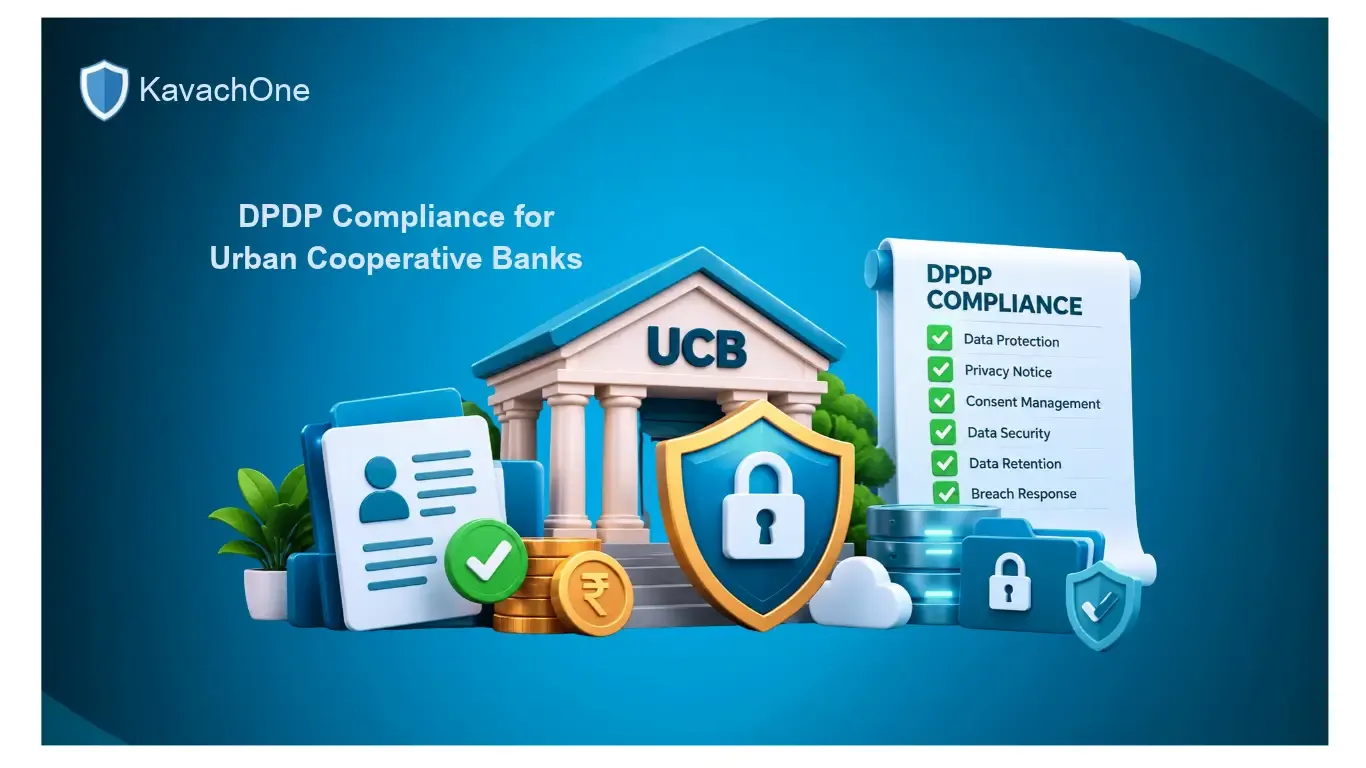

India’s financial sector is entering a new era of data protection with the Digital Personal Data Protection (DPDP) Act, 2023. For Urban Cooperative Banks (UCBs), this adds new data privacy responsibilities alongside applicable RBI regulations and IT security requirements.
From Aadhaar and PAN details to loan applications and transaction records, UCBs must assess how they collect, process, store, and protect personal data. A DPDP Gap Assessment for Urban Cooperative Banks helps identify compliance gaps, prioritize corrective actions, and strengthen data protection practices. With KavachOne’s compliance solutions, banks can take a structured approach to DPDP readiness.
Why Is a DPDP Gap Assessment Important for Cooperative Banks?
Under India’s DPDP Act, Urban Cooperative Banks (UCBs) are classified as Data Fiduciaries, making board members and leadership directly liable for customer data across both digital systems and physical branch records.
A DPDP gap assessment is critical for cooperative banks to:
Prevent ₹250 Crore Penalties: Identify security and process gaps before they lead to data breach fines.
Close Vendor & ASP Loopholes: Ensure outsourced Core Banking Solutions (CBS) and IT partners comply with strict Data Processing Agreements (DPAs), shifting third-party liability away from the bank.
Balance RBI vs. DPDP Rules: Align required RBI/PMLA record-keeping with DPDP rules on data minimization and erasure to avoid legal conflicts.
Protect Physical Branch Records: Check paper files at branches, like unmasked Aadhaar copies, PAN records, and loan files, to prevent local data leaks.
A gap assessment provides leaders with a clear plan to stay ready for audits, protect community trust, and avoid legal risks, all without disrupting daily branch operations.
Key Compliance Challenges for UCBs Under the DPDP Act
1. Reconciling RBI Retention with DPDP Right to Erasure
The Prevention of Money Laundering Act (PMLA) and RBI KYC Master Directions require banks to keep customer records for at least 5 years after an account is closed. On the other hand, Section 8(7) of the DPDP Act states that data should be erased once its purpose is served or when consent is withdrawn. A gap assessment helps UCBs sort data correctly, set up retention schedules for required records, and separate marketing or analytics data for deletion.
2. Multi-Vendor CBS Dependency
Most UCBs rely on external vendors for IT operations. According to DPDP Section 8(2), the bank remains legally responsible as a Data Fiduciary if a data breach occurs at the vendor’s end. If your CBS hosting partner has a data leak, your bank will face the penalty.
3. Multilingual Consent and Legacy Records
Section 5 requires privacy notices and consent forms to be in clear language, including English and any of the 22 official languages listed in the Eighth Schedule of the Constitution. For regional cooperative banks serving local communities, legacy paper records and digital forms represent a compliance vulnerability.
Step-by-Step Guide: How to Conduct a DPDP Gap Assessment
To do a successful gap analysis, you need a clear approach that covers people, processes, and technology:
Step 1: Personal Data Discovery and Mapping (ROPA)
You cannot protect what you cannot locate. UCBs must map the end-to-end lifecycle of customer, employee, and shareholder data:
Ingestion points: Physical branch counters, digital onboarding portals, loan processing desks, ATM switches, mobile applications.
Data categorization: Segregate sensitive data such as biometric prints, Aadhaar numbers, PAN cards, credit scores, and financial transactions.
System mapping: Document data flow between branch teller terminals, CBS databases, document management systems, email servers, and off-site backup tapes.
Deliverable: A comprehensive Record of Processing Activities (ROPA).
Step 2: Consent and Notice Architecture Evaluation
Evaluate existing customer onboarding and servicing agreements:
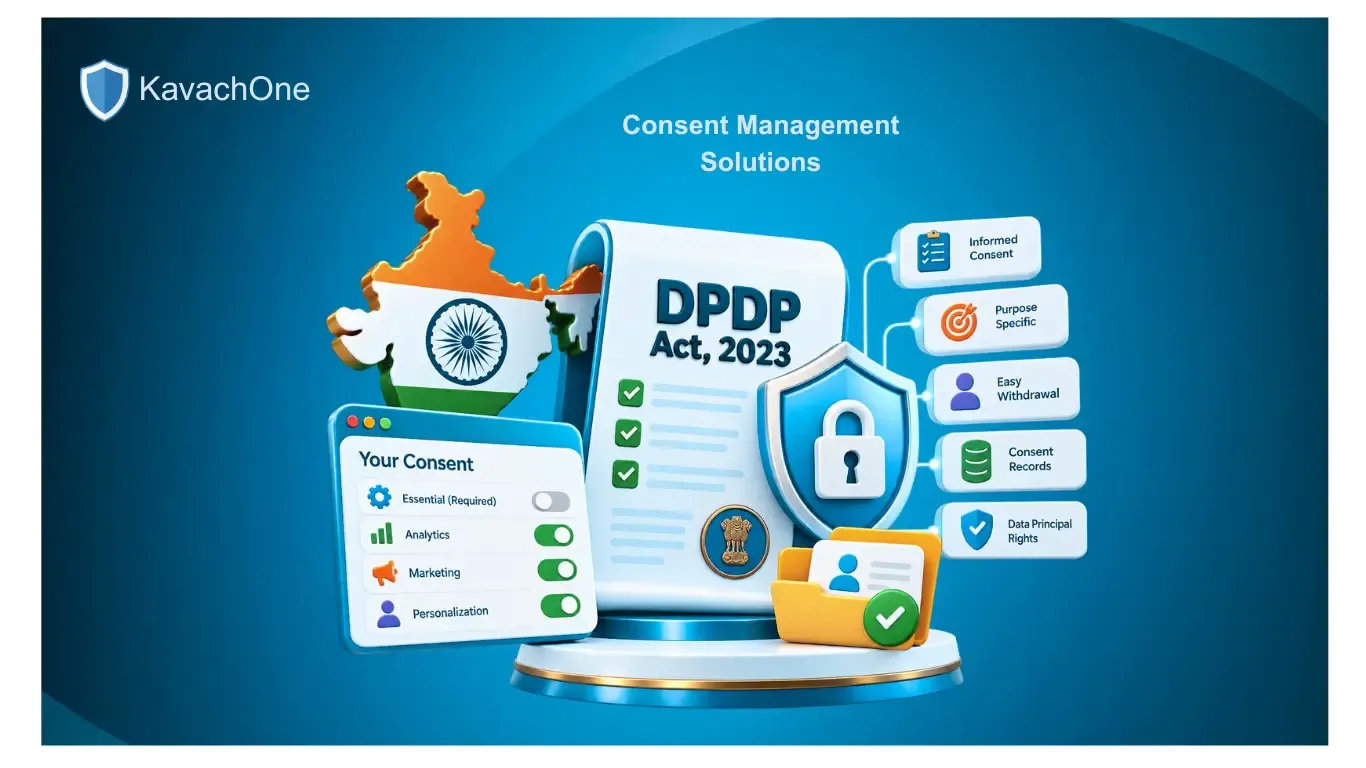
Determine if consent is unbundled. A customer opening a savings account cannot be forced to consent to cross-selling insurance or receiving promotional SMS.
Assess whether privacy notices clearly state the specific purpose of collection, the identities of processors, and how the customer can withdraw consent.
Audit language availability across local operational territories.
Step 3: Third-Party & Vendor Risk Assessment (TPRM)
Scrutinize every third-party vendor that handles your bank’s data:
Review agreements with CBS vendors, payment gateway aggregators, cloud hosting partners, recovery agencies, and SMS gateway providers.
Verify if Data Processing Agreements (DPAs) are executed, binding the vendor to the same security standards and breach-reporting windows mandated by the DPDP Act.
Step 4: Technical Security and Access Safeguards
In alignment with DPDP Section 8(5) and the RBI Cyber Security Framework, evaluate operational defense mechanisms:
Data encryption: Verify encryption protocols for data at rest (database-level encryption) and data in transit (TLS 1.3).
Access governance: Evaluate Role-Based Access Controls (RBAC) across CBS and local branch systems to prevent unauthorized internal data viewing.
Vulnerability assessments: Inspect the frequency of external Vulnerability Assessment and Penetration Testing (VAPT) across internet-facing IPs, APIs, and mobile banking platforms.
Step 5: Data Principal Rights and Grievance Mechanism
Evaluate your bank’s capacity to handle customer rights requests:
Assess whether the bank can fulfill requests for information summary, data correction, update, or erasure within statutory timeframes.
Review your dispute resolution process. Make sure there is a Data Protection Officer (DPO) or grievance officer with contact details that are easy for the public to find.
How KavachOne Accelerates DPDP Readiness for Cooperative Banks
Managing data privacy needs technical skills, legal knowledge, and an understanding of banking. KavachOne offers a complete cybersecurity, governance, risk, and compliance service designed for banks and financial institutions.
1. Hands-On Consulting & Gap Assessment
KavachOne’s privacy consultants conduct on-site and remote audits across your administrative offices and branch networks. We evaluate your operational practices against both the DPDP Act and RBI IT directions and deliver a prioritized executive report with clear remediation steps.
2. On-Premise PII Discovery with Zero Data Egress
Traditional cloud tools can be risky since cooperative banks need to keep data local. KavachOne uses on-premises PII discovery tools to scan your local systems, CBS databases, and on-site document storage. No customer data leaves your bank; only compliance information is sent to the audit dashboard.
3. Vendor Governance & DPA Drafting
We help UCBs reduce external risks by auditing key IT suppliers, verifying ASP security, and establishing standard Data Processing Agreements (DPAs) to shift liability and ensure compliance.
4. DPO-as-a-Service for Cooperative Banks
Hiring a full-time, experienced Data Protection Officer is often cost-prohibitive for smaller cooperative institutions. KavachOne’s DPO-as-a-Service equips your board with certified privacy leaders (holding CISA, CISSP, CIPP, and CIPM credentials) who manage regulatory filings, supervise audits, and handle customer grievance escalations.
Secure Your Bank's Compliance Future with KavachOne
Delaying data privacy preparation puts your cooperative bank at risk of significant financial losses, regulatory issues, and reputational damage. Conducting a DPDP Gap Assessment is the first important step toward strengthening your bank and preparing it for audits.
Partner with KavachOne’s privacy and cybersecurity consultants today.
Book a privacy consultation with our experts.
Identify your digital and physical customer data risks.
Deploy a customized DPDP remediation roadmap aligned with RBI standards.
Contact KavachOne today to speak with our certified data privacy specialists and safeguard your institution.
Frequently Asked Questions (FAQs)
KavachOne Editorial Team
Cybersecurity & Compliance Experts