
When companies try to secure enterprise sales or expand into global markets, they often face a major challenge: the enterprise security review. Whether you sell cloud software, FinTech infrastructure, or IT services, procurement teams will always request an attestation report that meets the American Institute of Certified Public Accountants (AICPA) standards.
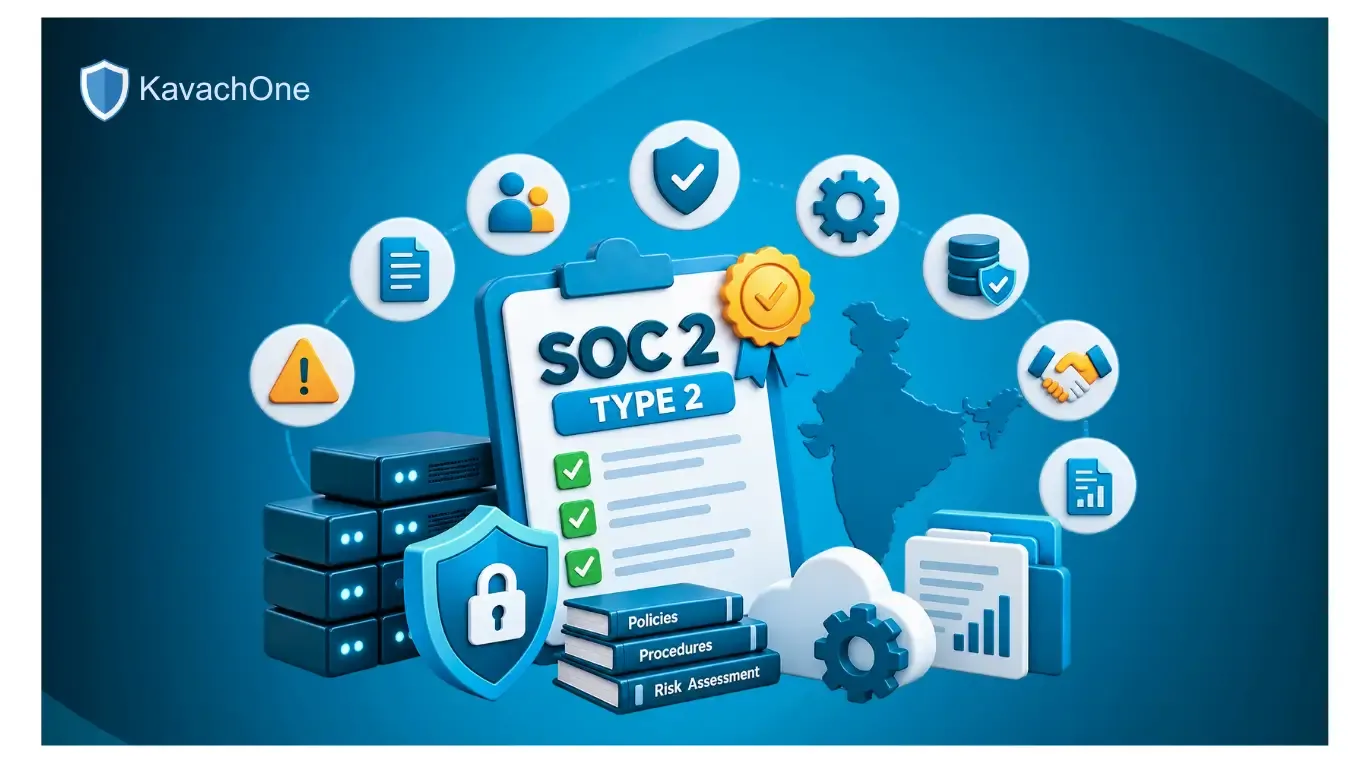
Specifically, buyers look for a SOC 2 Type 2 attestation.
If your organization is starting this compliance process, you’re probably wondering: how long does it usually take to complete SOC 2 Type 2 certification?
On average, a SOC 2 Type 2 audit takes about 3 to 9 months to complete. Unlike a one-time assessment, a Type 2 audit checks how well your internal controls work over a set period. Knowing this timeline and spotting possible delays is key to keeping your sales process on track.
SOC 2 Type 1 vs. Type 2: Understanding the Timeline Difference
Before mapping the exact schedule, it helps to distinguish a SOC Type 1 from a Type 2 report:
SOC 2 Type 1: Evaluates the design suitability of your controls at a single point in time (e.g., "As of June 30"). It verifies whether your policies and technical configurations exist and meet the AICPA Trust Services Criteria (TSC). A Type 1 report can typically be completed in 2 to 4 weeks with modern compliance automation.
SOC 2 Type 2: Evaluates whether those controls operated effectively over an extended observation period (typically 3, 6, or 12 months). It is the definitive industry standard demanded by tier-1 enterprise procurement, healthcare networks, and banking institutions.
A Type 1 report can help with early sales discussions, but buyers will eventually want the ongoing assurance that comes with a Type 2 report.
How Long Does SOC 2 Type 2 Certification Typically Take to Complete? Phase-by-Phase Breakdown
Achieving SOC 2 Type 2 compliance involves four distinct phases: scoping and readiness, remediation, the formal observation window, and the CPA audit/reporting phase.
Phase | Core Activities | Traditional Manual Timeline | Automated Timeline (via KavachOne) |
Phase 1: Scoping & Readiness | Define system boundaries, select Trust Services Criteria (Security, Availability, etc.). | 3–6 Weeks | 1–2 Weeks |
Phase 2: Remediation & Setup | Deploy missing policies, configure MFA/RBAC, set up logging, run pentests. | 6–12 Weeks | 2–3 Weeks |
Phase 3: Observation Period | Maintain active controls and continuously collect operational evidence. | 3–12 Months (Static) | 3–6 Months (audit-ready on Day 1) |
Phase 4: CPA Audit & Issuance | Auditor interviews, evidence testing, draft review, final report delivery. | 6–8 Weeks | 2–3 Weeks |
Total Estimated Time | 6–15 Months | ~3.5–7 Months |
1. Scoping and System Boundary Definition (Weeks 1–2)
The scoping phase determines the perimeter of your audit. You will decide which of the 5 Trust Services Criteria apply:
Security (Common Criteria): Mandatory for all SOC 2 reports.
Availability: Crucial for infrastructure hosts and mission-critical SaaS.
Confidentiality: Essential for intellectual property, sensitive business data, and proprietary analytics.
Processing Integrity: Typical for e-commerce, payment gateways, and FinTech calculation engines.
Privacy: Relevant for platforms managing personally identifiable information (PII).
Over-scoping your environment is one of the most common causes of multi-month audit delays.
2. Gap Analysis and Technical Remediation (Weeks 2–5)
During this stage, your team benchmarks existing configurations against the AICPA framework. Remediation tasks typically include:
Implementing role-based access control (RBAC) and hardware-backed multi-factor authentication (MFA) across all identity providers.
Codifying change-management protocols (e.g., automated CI/CD branch-protection rules and peer code reviews).
Enforcing end-to-end data encryption (AES-256 at rest, TLS 1.3 in transit).
Executing an annual third-party penetration test and remediating high-risk vulnerabilities.
Drafting formal InfoSec, Access Control, Incident Response, and Vendor Management policies.
3. The Mandatory Observation Window (Months 1–3 or 1–6)
A CPA cannot evaluate operating effectiveness retroactively without contemporaneous evidence.
3-Month Window: The minimum observation period accepted for initial SOC 2 Type 2 reports. Ideal for startups balancing enterprise procurement pressure with tight deadlines.
6-Month Window: The standard observation period for high-assurance mid-market software companies.
12-Month Window: Standard for annual recertification cycles once baseline compliance is established.
During this period, your controls need to work smoothly without any major failures.
4. CPA Audit Examination & Report Delivery (Final 2–4 Weeks)
Once the observation window closes, a licensed independent CPA firm conducts the formal examination in accordance with SSAE 18/AT-C 205 attestation standards. The auditor samples change tickets, access logs, onboarding records, and incident reports to verify that no control gaps occurred. After clarifying queries, they issue the signed SOC 2 Type 2 report.
Four Major Factors That Prolong Your SOC 2 Type 2 Timeline
Why do some engineering organizations take over a year to finish their audit? Four operational factors dictate turnaround speed:
Manual Screenshot and Evidence Fatigue: Hunting down screenshots across AWS/GCP, GitHub, Jira, and Google Workspace every week drains engineering bandwidth and leaves gaps during auditor sampling.
Control Deviations During the Window: If an employee offboards and their access is not revoked within your policy's SLA (e.g., 24 hours), or if changes reach production without peer review, you incur an audit exception in your final report. Serious lapses can reset your observation window.
Complex or Scattered Architecture: Multiple cloud accounts, hybrid legacy databases, and sprawling third-party SaaS vendors expand your threat surface and require additional evidence collection.
Friction with External Auditor Handoffs: Passing work between a readiness consultant and an external audit firm can lead to weeks of scheduling delays, redundant questionnaires, and conflicting interpretations of controls.
Accelerating Your Timeline with KavachOne
Traditional SOC 2 audits often drag on because companies must coordinate between separate tool vendors, readiness advisors, and third-party accounting firms. KavachOne eliminates this operational drag with an integrated, end-to-end compliance ecosystem.
Continuous Automated Evidence Gathering
KavachOne connects directly to your current systems, including cloud platforms like AWS, Azure, and GCP, code repositories like GitHub and GitLab, identity providers, and task managers. The platform monitors your controls and automatically collects audit evidence in real time, so you don’t have to use manual spreadsheets or take screenshots.
Fully In-House CPA Attestation Authority
The main reason SOC 2 audits get delayed at the end is because of auditor coordination. KavachOne runs its own licensed US CPA firm, AT&F International, which is AICPA-licensed and SSAE 18 / AT-C 205 compliant.
No Third-Party Handoffs: The same team guiding your remediation conducts your audit and issues your report.
Single-Window Speed: By eliminating the gap between readiness and examination, companies compress final reporting down from months to weeks.
Universal Enterprise Acceptance: Reports issued by KavachOne carry full legal authority and are accepted by Fortune 500 enterprises, global banks, and US procurement bodies.
Unified Multi-Framework Mapping
If your business operates across multiple markets, KavachOne maps your SOC 2 technical controls to other critical frameworks, including ISO/IEC 27001, HIPAA, PCI DSS, and India’s DPDP Act. Up to 80% of implemented controls overlap, allowing you to achieve dual-market readiness without duplicating effort.
Conclusion: Achieve Audit-Readiness Without Slowing Down Your Team
When you consider how long SOC 2 Type 2 certification takes, the main delays usually come from manual evidence gathering and poor communication with auditors, not the framework itself. A manual audit can take 6 to 12 months, but using automation and in-house CPA attestation can cut that down to just a few months.
Don't let protracted compliance reviews delay your enterprise pipeline. Partner with KavachOne to automate your evidence collection, conduct gap analyses with expert security consultants, and secure your globally recognized SOC 2 Type 2 report under one unified roof.
Frequently Asked Questions (FAQs)
KavachOne Editorial Team
Cybersecurity & Compliance Experts