
Expanding an Indian SaaS company, IT services consultancy, or cloud hosting business into international markets inevitably brings high-stakes security scrutiny. Enterprise prospects in North America, Europe, and Australia routinely demand proof of robust data protection controls before signing long-term contracts.
SOC 2 is central to these security evaluations. Knowing the key requirements for SOC 2 Type 2 certification in India is now essential for winning international contracts, passing vendor risk checks, and protecting important digital assets.
What is SOC 2 Type 2 Certification?
Developed by the American Institute of Certified Public Accountants (AICPA), Service Organization Control 2 (SOC 2) is an attestation standard that assesses how service organizations manage customer data.
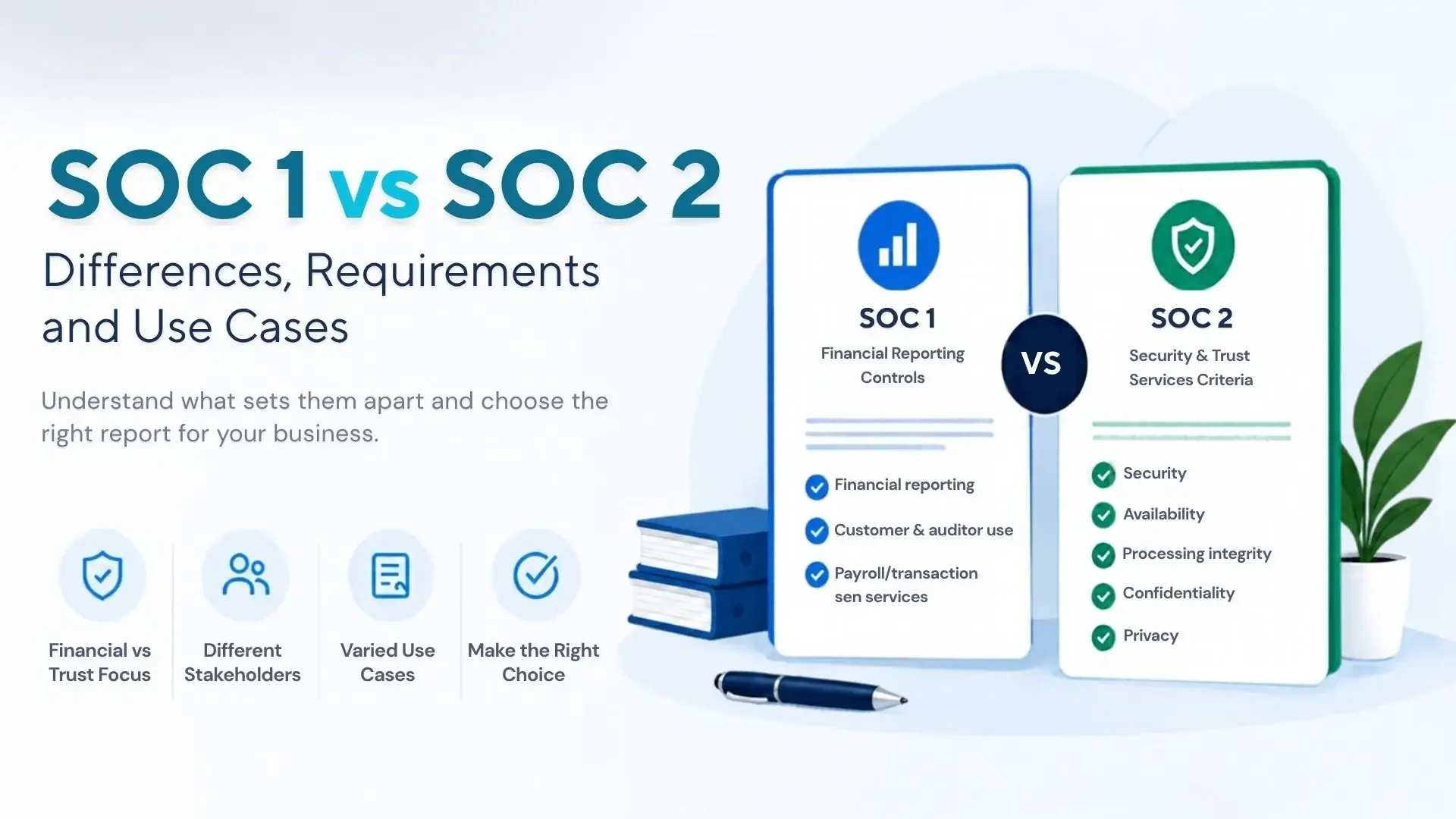
While a SOC 2 Type 1 report evaluates whether your security controls are suitably designed at a single point in time, a SOC 2 Type 2 report evaluates how effectively those controls operate over an extended observation period (typically 3 to 12 months).
Important Distinction: A SOC 2 report is an independent attestation issued exclusively by a licensed CPA firm (often working in tandem with Indian audit partners), not an off-the-shelf certificate.
What Are the Key Requirements for SOC 2 Type 2 Certification in India?
Meeting the key requirements for SOC 2 Type 2 certification in India involves establishing organizational governance, continuous technical controls, and consistent operational audit trails.
1. Robust Identity and Access Management (IAM)
Auditors demand strict enforcement of the principle of least privilege:
Multi-Factor Authentication (MFA): MFA is mandatory on all cloud consoles (AWS, Azure, GCP), all internal VPNs, all email services, and all code repositories.
Role-Based Access Control (RBAC): Access privileges mapped strictly to job functions.
Onboarding and Offboarding Workflows: Keep records showing that employees who leave lose access to all internal and cloud systems within 24 hours.
Quarterly Access Reviews: Maintain logs showing managers regularly check and confirm employee permissions.
2. Infrastructure Security & Data Encryption
You must protect data at every stage of its lifecycle:
Encryption in Transit & at Rest: Standardized use of TLS 1.3 for data in flight and AES-256 for persistent databases, storage volumes, and backups.
Key Management: Use centralized systems to rotate and securely store cryptographic keys, either via cloud key management services or hardware security modules.
Network Segmentation: Virtual Private Clouds (VPCs), strict subnets, and web application firewalls (WAFs) that isolate staging environments from live production data.
3. Change Management & Secure Software Development (SDLC)
For Indian software and IT service firms, change governance is heavily sampled:
Separation of Duties: Developers cannot push untested code directly to production.
Peer Reviews and Approvals: Each pull request should include automated test results and proof that a peer has reviewed and approved it before merging.
CI/CD Security Guardrails: Static Application Security Testing (SAST) and Dependency Scanning integrated into deployment pipelines.
4. Vulnerability Management & Continuous Monitoring
Annual Penetration Testing: Third-party VAPT audits of the internal infrastructure and external attack surface.
Automated Vulnerability Scanning: Weekly or monthly automated scans with documented remediation tracking based on Common Vulnerability Scoring System (CVSS) scores.
Centralized SIEM & Logging: Tamper-evident logging for authentication attempts, administrative commands, and network perimeter alerts.
5. Vendor & Third-Party Risk Management (TPRM)
Because modern software teams rely heavily on third-party SaaS vendors, you must prove oversight:
Maintain a vendor inventory categorized by critical access.
Collect and evaluate annual SOC 2 Type 2 or ISO 27001 reports from subservice organizations and SaaS partners.
Implement Data Processing Agreements (DPAs) incorporating cross-border transfer parameters.
6. Incident Response & Business Continuity
Documented Incident Response Plans (IRP) tested via annual tabletop simulations.
Set clear recovery goals, such as Recovery Time Objective and Recovery Point Objective, and test them each year with disaster recovery drills.
Compliance with Indian regulatory reporting expectations, such as CERT-In cybersecurity directions for reporting identified security incidents.
7. Governance, HR, and Security Policies
Formal organizational policies covering Information Security, Acceptable Use, Remote Work, and Password Management.
Background checks for all personnel before joining.
Annual cybersecurity awareness training with verifiable completion records.
India-Specific Compliance Considerations
SOC 2 is based on US standards, but running a business in India brings its own regulatory and operational challenges:
Dimension | Indian Context & Challenge | Strategy for SOC 2 Alignment |
Data Protection Law | DPDP Act (Digital Personal Data Protection) enforces strict consent and data fiduciary accountability. | Integrate SOC 2 Privacy Criteria with DPDP Act workflows (consent logs, data discovery, DPIR handling). |
Cyber Incident Reporting | CERT-In directives mandate reporting specified incidents within 6 hours. | Ensure internal Incident Response runbooks bridge CERT-In deadlines with SOC 2 communication protocols. |
Hybrid & Remote Teams | Widespread remote/hybrid setups across distributed development hubs. | Enforce MDM (Mobile Device Management), automated patch compliance, and hard-drive encryption on all endpoint laptops. |
Audit Engagement Model | Indian companies cannot be attested by non-CPA regional firms alone. | Work with compliance platforms or readiness advisors partnering with accredited CPA firms registered with the PCAOB/AICPA. |
Step-by-Step Roadmap to SOC 2 Type 2 Certification
Navigating the journey requires a disciplined, structured approach over several months:
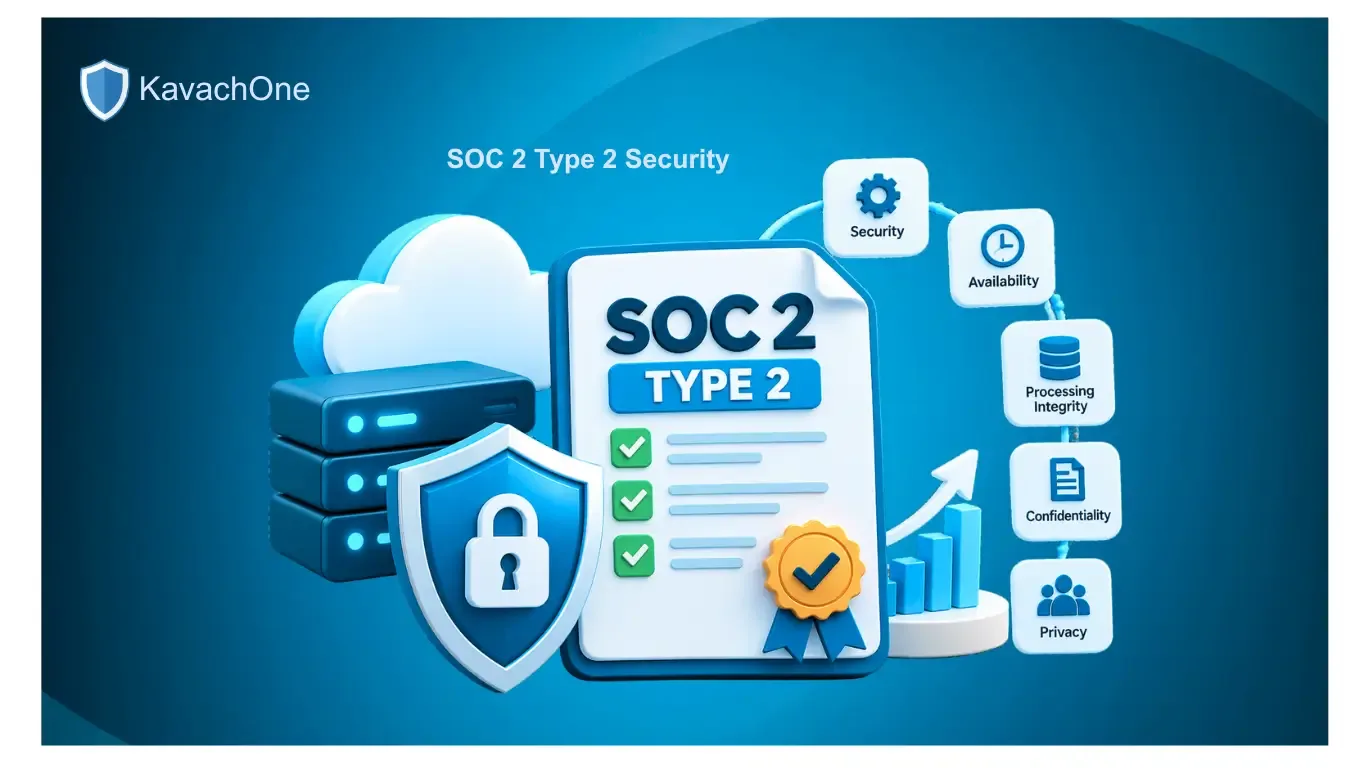
Define Scope & TSC Selection: Determine which products, customer environments, and Trust Services Criteria fall into the audit boundary.
Perform Gap Analysis: Evaluate current controls against AICPA criteria to identify missing policies or unmonitored infrastructure.
Remediation & Control Implementation: Patch technical vulnerabilities, configure automated agent monitoring, and institutionalize missing documentation.
Observation Window (3–6 Months): Maintain strict operating discipline. Controls must run continuously without unrecorded exceptions.
Fieldwork & Evidence Review: The independent CPA auditor reviews the evidence gathered, interviews asset owners, and validates test samples.
Report Issuance: The CPA firm issues an attestation report detailing management assertions, control descriptions, and the auditor's formal opinion.
How KavachOne Accelerates SOC 2 Compliance
Preparing for and maintaining SOC 2 Type 2 compliance manually often leads to spreadsheet fatigue, fragmented screenshots, and sudden control lapses. KavachOne simplifies this process by acting as an integrated Governance, Risk, and Compliance (GRC) management platform.
Continuous Control Monitoring: KavachOne links directly to your cloud infrastructure, identity providers, and CI/CD pipelines, automating evidence collection throughout the multi-month observation window to eliminate last-minute audit stress.
Unified SOC 2 & DPDP Act Governance: via its built-in privacy modules and ConsentiQo integration, KavachOne brings together the India DPDP Act compliance requirements (consent records, PII discovery, grievance handling) with the SOC 2 Privacy and Confidentiality requirements in a single operational interface.
Automated Vendor Risk Management: Easily track sub-processors, distribute standardized vendor risk questionnaires, and store third-party compliance attestations in an immutable repository.
Pre-Built Audit Frameworks and Fast-Track Readiness: Use a single piece of evidence across multiple frameworks, such as SOC 2 Type 2, ISO 27001, and Indian regulations. This saves a lot of engineering time.
Audit-Ready Evidence Vault: Deliver structured, timestamped evidence directly to CPA audit teams, avoiding lost files and reducing back-and-forth email loops.
Fast-Track Your Enterprise Readiness
Securing a clean SOC 2 Type 2 attestation is one of the highest-leverage milestones an Indian tech enterprise can achieve. It turns data security from an operational bottleneck into a competitive advantage that wins trust and closes enterprise contracts worldwide.
Partnering with compliance automation platforms like KavachOne helps eliminate manual administrative tasks, align your controls with global expectations, and maintain continuous, audit-ready compliance.
Frequently Asked Questions (FAQs)
KavachOne Editorial Team
Cybersecurity & Compliance Experts