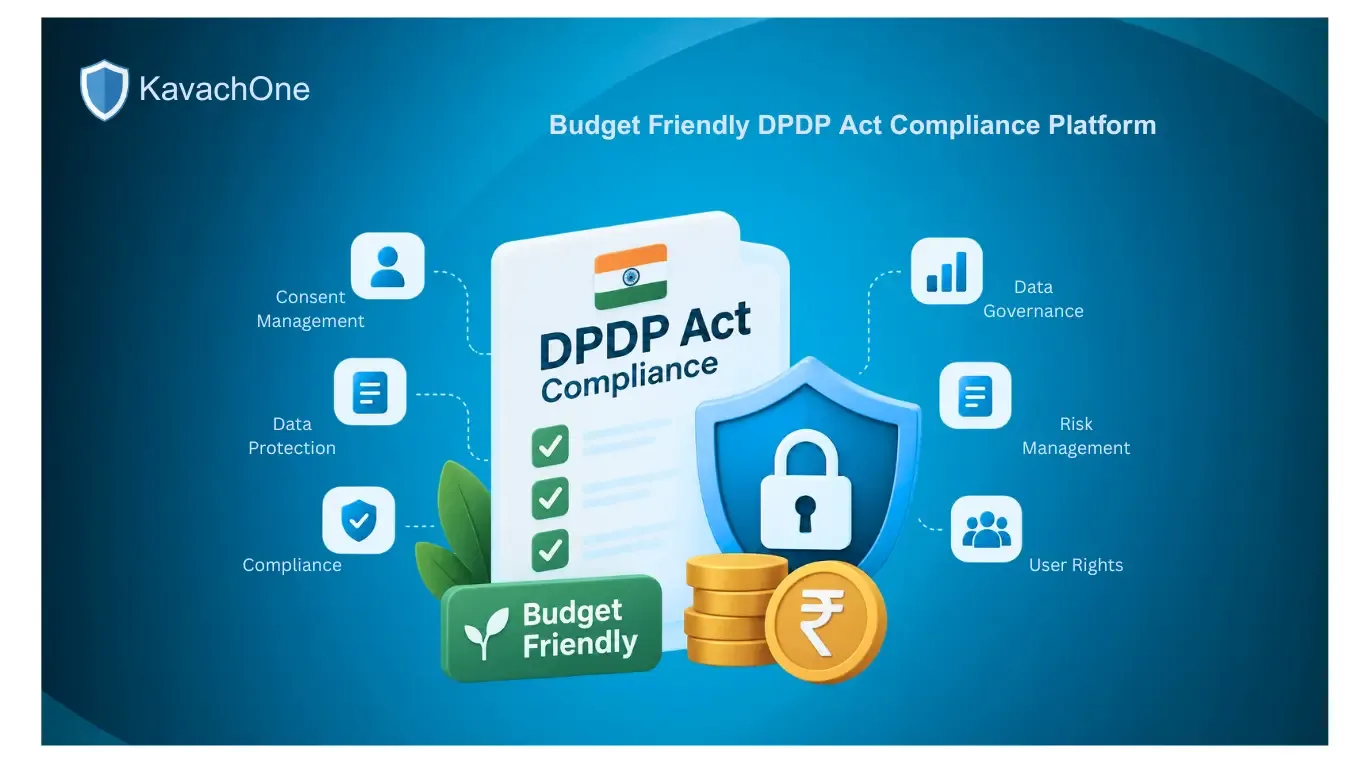

The Digital Personal Data Protection (DPDP) Act is no longer something to be ignored in boardroom discussions; it has become a vital legal requirement. Since penalties under the law can reach ₹250 crore for serious data failures, businesses in India and foreign companies that handle the personal data of Indian citizens now have a pressing need to change their traditional data management methods and adopt transparent, auditable systems.
The choice of the right partner makes all the difference between merely ticking the required boxes and achieving solid, audit-proof data governance. This thorough guide examines the mandatory compliance requirements, the operational difficulties, and the reasons why KavachOne has become the best provider of DPDP Act compliance solutions for modern enterprises in India.
What is the DPDP Act? Understanding India’s Privacy Framework
The Digital Personal Data Protection Act sets out a contemporary system for the governance of digital personal data in India, being based on the principles of accountability and the rights of users; it covers any organization that processes digital personal data in India as well as those based abroad that provide goods or services to Data Principals (i.e., individuals) in India.
Core Terminology Under the Act
Data Principal: The person whose personal data is in question (including children and individuals with disabilities through their legitimate guardians).
Data Fiduciary: The enterprise or entity determining the purpose and means of processing personal data.
Significant Data Fiduciaries (SDFs): Organizations designated by the Central Government based on the volume of data they handle, the sensitivity of that data, and the systemic risk involved, and are subject to greater obligations, such as carrying out Data Protection Impact Assessments (DPIAs) and undergoing independent audits.
Data Processor: A third-party entity that processes personal data strictly on behalf of the Data Fiduciary.
Consent Manager: Interoperable entities registered with the Data Protection Board (DPB) to enable Data Principals to give, manage, review, or withdraw consent.
Practical DPDP Act Compliance Requirements for Businesses
To prevent penalties and maintain customer trust, Data Fiduciaries need to update their IT systems, legal agreements, and customer interactions to meet seven key requirements:
1. Granular, Multilingual Consent & Notice (Section 6)
Consent has to be given freely, be specific, be based on informed knowledge, be unconditional and unambiguous. Consent requests should not be included in long Terms of Service.
Notices must accompany every consent request, clearly stating what data is collected, the specific purpose, how Data Principals can exercise rights, and grievance escalation paths.
Notice and consent options must be available in English as well as in all of the 22 languages listed in the Eighth Schedule of the Indian Constitution.
2. Automated PII Discovery and Data Mapping
Organizations need full visibility into Personally Identifiable Information (PII), such as Aadhaar, PAN, phone numbers, biometrics, and financial data, across all databases, cloud storage, CRM systems, and internal files, as required by the DPDP.
3. Comprehensive Records of Processing Activities (ROPA)
Fiduciaries are required to keep accurate and current records that track the source of the data, the legal basis for it, where it is stored, how long it is to be retained, and the downstream processors.
4. Data Principal Rights (DSAR) & Grievance Redressal
People have the legal right to obtain summaries of their personal data, to correct any inaccuracies, to have the data erased when the purposes for which it is used have been fulfilled, and to appoint a representative. Companies are required to offer simple, easy-to-follow grievance resolution procedures.
5. Third-Party Vendor Risk Management (TPRM)
Section 8(3) provides that Data Fiduciaries may only enter into agreements with Data Processors when those agreements are valid and enforceable. The Fiduciary must still be held directly liable by the regulator if the processor fails to comply.
6. Security Safeguards & 72-Hour Breach Reporting (Section 8(6))
Organizations must implement appropriate security measures to prevent breaches of personal data. If such an incident occurs, the Fiduciary has a legal obligation to inform both the Data Protection Board of India and the affected Data Principals as quickly as possible.
7. Child Data Protection Directives (Section 9)
Verifiable parental consent is required when processing children's data, and there are absolute legal bans on behavioral tracking, targeted advertising, and any processing which is adverse to the child's well-being.
The Challenge: Why Generic Compliance Software Fails in India
Many enterprises attempt to satisfy DPDP obligations using foreign privacy platforms built originally for GDPR (Europe) or CCPA (California). This creates operational friction:
Egress Risks: Many global SaaS scanners pull data into external or cross-border cloud environments for indexing, clashing with localized security standards.
Language Gaps: Standard platforms lack out-of-the-box support for 22 scheduled Indian regional languages.
Legal vs. Technical Silos: Traditional law firms draft static policies without technical enforcement tools, whereas generic software vendors lack deep expertise in audit and regulatory defense.
Consent Architecture: India’s statutory framework uniquely emphasizes interoperable Consent Managers, demanding purpose-based tracking rather than basic website cookie popups.
Why KavachOne is India’s Best DPDP Act Compliance Solution Provider
KavachOne bridges legal rigor and automated technical execution. As a specialized Techno-Audit firm, KavachOne combines proprietary enterprise privacy software with hands-on audit capabilities. Built by certified cybersecurity practitioners (PCI DSS QSA, ISO 27001 lead auditors), the platform ensures businesses generate real, defensible evidence for regulatory reviews.
Core Features of the KavachOne Privacy Platform
1. On-Premise PII Scanner with Zero Data Egress
KavachOne’s smart data discovery scanner works inside your private network or dedicated cloud. It finds and catalogs high-risk Indian data like Aadhaar, PAN, GSTIN, voter IDs, and health data with over 99% accuracy, and keeps all sensitive records within your environment.
2. ConsentiQo: Native Multilingual Consent Management
ConsentiQo powers granular, purpose-driven consent collection across web platforms, mobile SDKs, customer portals, and physical kiosks:
Seamlessly renders notices and preferences in 22 official Indian languages.
Operates on a revocation-first model, instantly syncing consent withdrawals with CRMs, analytics tools, and downstream databases.
Maintains an immutable, tamper-evident 7-year consent audit log.
3. Automated ROPA & Dynamic DPIA Engine
The platform automatically organizes scan results into structured Records of Processing Activities. If it identifies high-risk processing, such as biometric checks or large-scale profiling, it initiates a Data Protection Impact Assessment using AI, rules, or an auditor as needed.
4. Automated DSAR & Grievance Portal
KavachOne offers a branded self-service portal where Data Principals can request access, corrections, or data deletion. The system verifies identity, gathers data from connected systems, and ensures requests are handled on time.
5. Vendor Risk Management (TPRM) & DPA Tracking
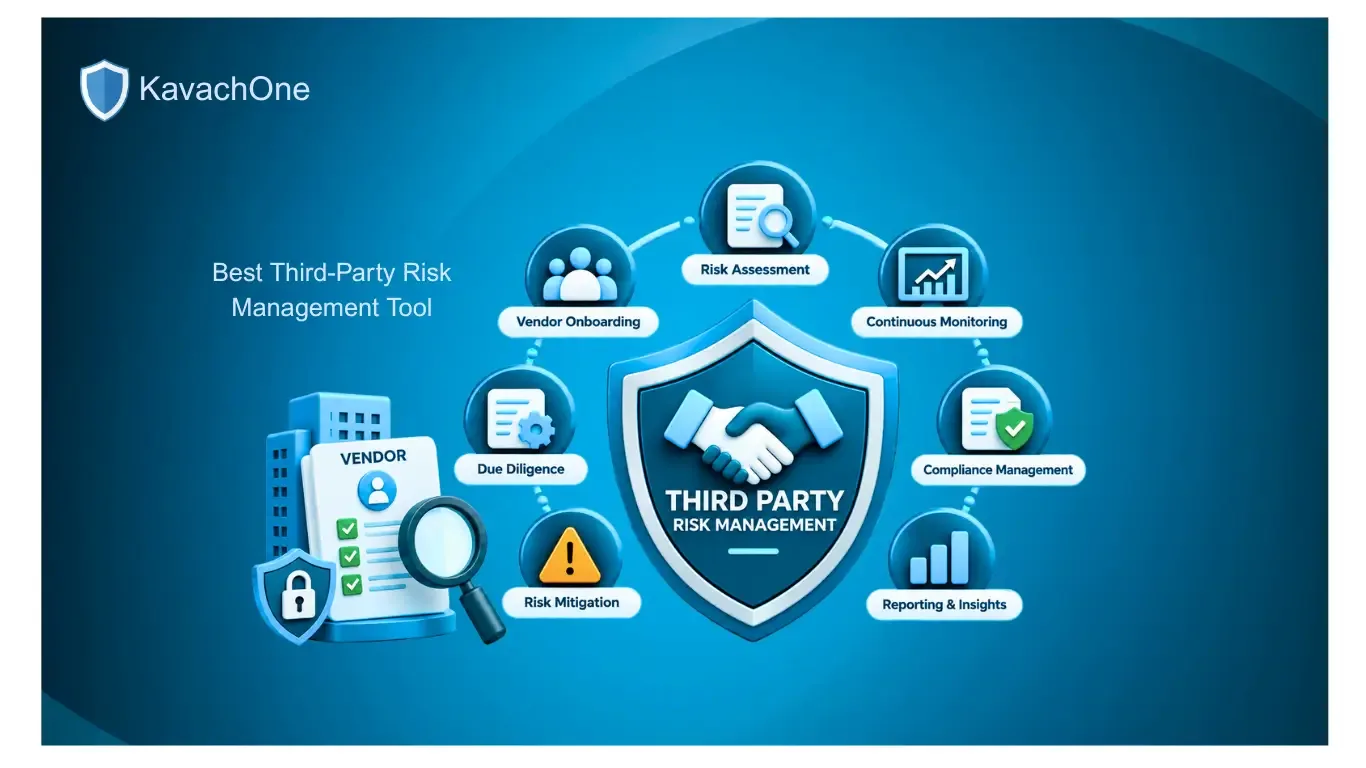
Monitor and assess all your data processors. KavachOne automates vendor risk scoring, manages legal Data Processing Agreements, and conducts regular performance reviews to reduce supply-chain risks under Section 8(3).
6. Incident Management & DPB-Ready Evidence Bundles
If a security issue is suspected, KavachOne helps teams investigate the cause, contain the issue, and comply with notification rules on time. Compliance officers can quickly create a complete Data Protection Board Evidence Bundle that includes logs, risk assessments, and consent records.
Strategic Steps to Start Your Compliance Journey
Conduct an Exhaustive Data Inventory: Identify where customer and employee personal data enters, rests, and exits your organization.
Review Consent Touchpoints: Replace vague checkboxes with purpose-specific, clear consent requests in regional languages.
Execute Enforceable DPAs: Audit third-party service providers, cloud vendors, and payment processors to verify the presence of operational safeguards.
Institutionalize Breach Protocols: Run tabletop incident simulations to ensure technical and communications teams can coordinate notifications within 72 hours.
Partner with a Specialized Provider: Deploy an integrated techno-audit platform to manage consent, data discovery, and governance from a single, auditable dashboard.
Ready to Fast-Track Your DPDP Compliance?
Don't let compliance roadblocks or regulatory penalties slow down your enterprise growth. See how KavachOne’s zero-egress PII scanner, multilingual consent engine, and DPB-ready audit bundles protect your business. Book a Free DPDP Compliance Demo with KavachOne
Prefer to speak directly with a privacy specialist? Contact our compliance experts today.
Frequently Asked Questions (FAQs)
KavachOne Editorial Team
Cybersecurity & Compliance Experts