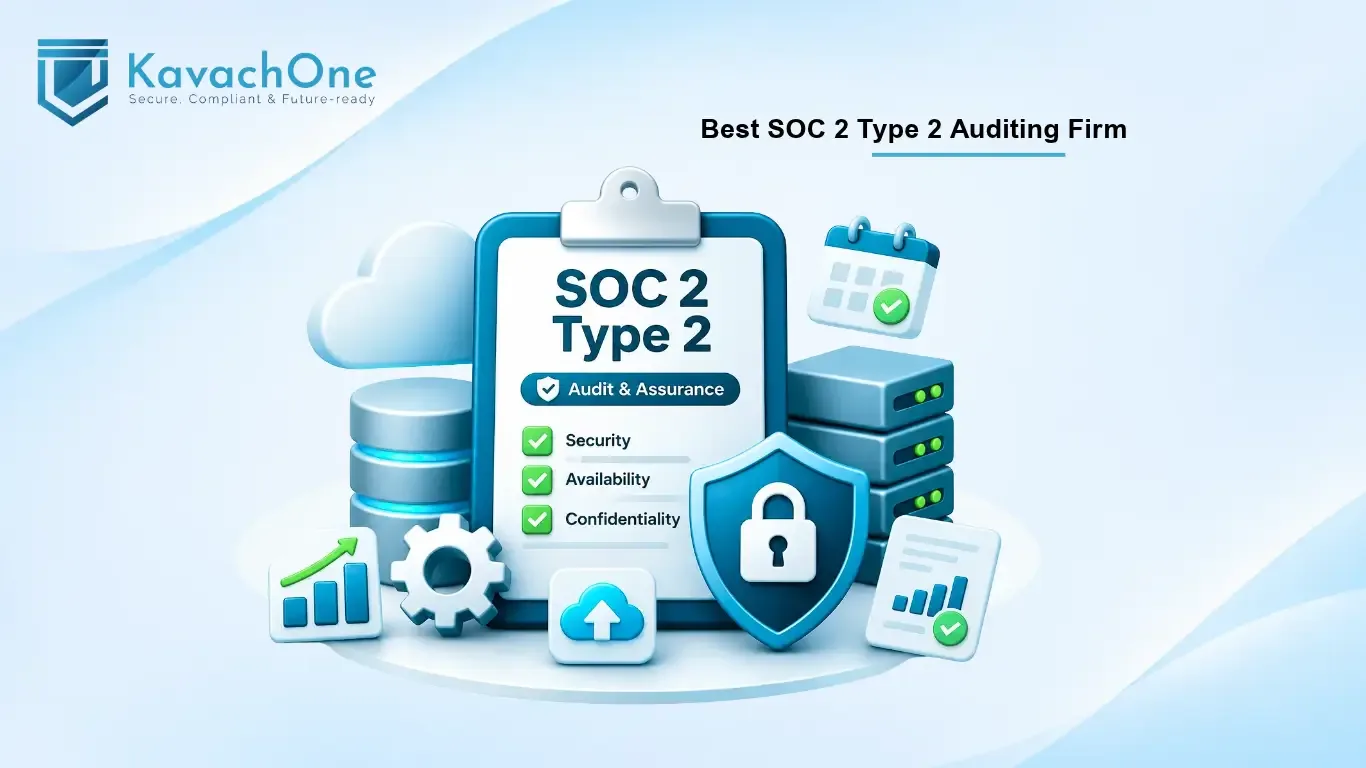

Winning enterprise clients in today’s security-conscious market requires more than a strong privacy policy—it demands independent proof that your security controls actually work. A SOC 2 Type II external audit provides that verification by evaluating both the design and operating effectiveness of your security posture over an extended observation period.
A Type I examination looks at a single moment in time, while a SOC 2 Type II external audit assesses how well your team adheres to security protocols over three to twelve months. Passing this thorough review can help you secure enterprise approvals faster, accelerate B2B sales, and demonstrate to stakeholders that you keep customer data safe from emerging cyber threats.
What Is a SOC 2 Type II External Audit?
Developed by the American Institute of Certified Public Accountants (AICPA), SOC 2 (System and Organization Controls 2) is an auditing standard tailored for service organizations, SaaS providers, and cloud platforms that store or process customer data.
During a SOC 1, an independent licensed CPA firm evaluates your internal controls against the AICPA Trust Services Criteria (TSC). Rather than simply checking whether policies exist on paper, external auditors examine historical logs, sample operational tickets, and verify that your controls functioned reliably every single day throughout your audit window.
Understanding the Five Trust Services Criteria (TSC)
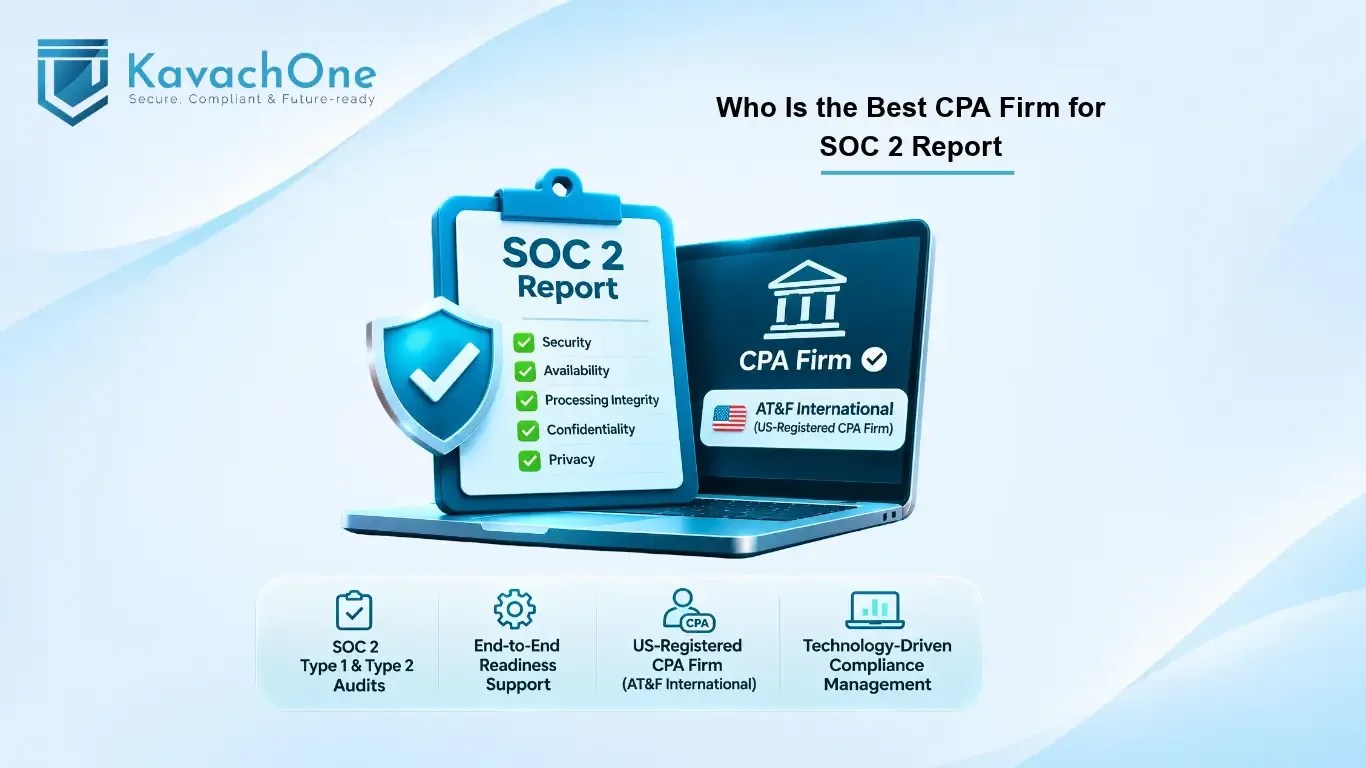
Every SOC 2 examination evaluates your environment against up to five core criteria:
Security (Common Criteria): Mandatory for every audit. It ensures systems and data are protected against unauthorized access, logical intrusion, and malicious disclosure.
Availability: Verifies that systems remain operational, resilient, and accessible in accordance with committed service-level agreements (SLAs).
Processing Integrity: Confirms that system processing is complete, valid, accurate, timely, and authorized.
Confidentiality: Protects sensitive business information—such as intellectual property, financial records, and source code—through encryption and strict access controls.
Privacy: Governs how personally identifiable information (PII) is collected, used, retained, disclosed, and disposed of in alignment with your privacy notice and global privacy laws.
Practical Compliance Requirements for a SOC 2 Type 2 Audit Process
To prepare for an independent CPA examination, you need to turn high-level framework criteria into daily, trackable habits. Auditors usually check many different controls and request more than 100 pieces of evidence.
1. Access Control and Identity Governance
Auditors scrutinize who can access production infrastructure and customer databases. Practical requirements include:
Enforcing Multi-Factor Authentication (MFA) and Single Sign-On (SSO) across all critical cloud environments, code repositories, and identity providers.
Conducting quarterly user access reviews to revoke unnecessary privileges immediately.
Keep strict onboarding and offboarding checklists. For example, you should be able to show with timestamped logs that a departing engineer’s AWS and GitHub access was removed within hours of their departure.
2. Change Management and SDLC Controls
External auditors verify that unauthorized or untested code never reaches production. Your workflow must demonstrate:
Peer code reviews and automated security testing before merging pull requests.
Separation of duties so developers cannot approve and deploy their own production changes.
Documented rollback procedures and change tickets tied directly to system updates.
3. Risk Assessment and Vendor Management
Your security posture is only as strong as your third-party ecosystem. You must maintain:
An annual formal risk assessment scoring threats by likelihood and business impact.
A centralized vendor inventory that categorizes third-party subprocessors by data risk and reviews their own SOC 2 or ISO 27001 reports annually.
4. Incident Response and Business Continuity
Auditors require proof that your organization can detect, contain, and recover from disruptions:
Documented Incident Response Plans (IRP) and Disaster Recovery (DR) policies.
Run annual tabletop exercises and database backup restoration tests. Make sure to keep dated post-mortem notes and screenshots that show you successfully recovered your data.
5. Information Security Policies and Employee Training
Policies must be formally approved by leadership, reviewed annually, and acknowledged by every team member. All employees must also complete annual security awareness training covering phishing, data handling, and incident reporting.
Step-by-Step Roadmap to Audit Readiness
Navigating the SOC 2 Type 2 audit process runs smoothly when broken into structured phases:
Define Audit Scope and TSC: Identify the specific products, cloud infrastructure, and teams included in the system description, and select the relevant Trust Services Criteria.
Conduct a Gap Analysis: Compare your current technical setup and written policies to AICPA requirements. This helps you find any missing safeguards.
Remediate Control Gaps: Implement technical fixes (such as enabling encryption at rest, configuring centralized logging, or formalizing HR background checks) and publish updated policies.
Complete a Readiness Assessment: Run a mock evaluation to verify that every control is operating smoothly before the formal observation clock begins.
Execute the Observation Period: Operate your controls consistently for 6 to 12 months while archiving timestamped evidence.
Undergo External CPA Fieldwork: Respond to auditor sample requests, participate in walkthrough interviews, and review the draft report before final issuance.
How KavachOne Streamlines Your SOC 2 Type II External Audit
Managing spreadsheets, collecting screenshots from engineering teams, and trying to understand complex AICPA criteria can slow down your projects for months. KavachOne makes the whole process easier by turning compliance from a stressful manual task into a structured, repeatable program.
Key Features of KavachOne’s Compliance Solution
End-to-End Gap & Readiness Assessments: KavachOne’s specialists evaluate your existing cloud architecture, policies, and operational workflows to pinpoint exact control gaps before external auditors arrive.
Tailored Policy & Control Frameworks: Instead of generic templates that fail auditor scrutiny, KavachOne builds customized security policies, risk registers, and control mappings aligned directly with your business operations.
Vulnerability Assessment & Penetration Testing (VAPT): Satisfy technical testing requirements with thorough application and infrastructure security testing conducted by certified cybersecurity specialists.
Continuous Evidence & Audit Coordination: KavachOne guides your engineering, HR, and IT teams on collecting clear, auditor-ready evidence throughout your observation window—minimizing back-and-forth queries during CPA fieldwork.
Multi-Framework Alignment: If your roadmap also includes ISO 27001, PCI DSS, HIPAA, or India’s DPDP Act, KavachOne maps overlapping controls so you never duplicate compliance effort.
Business Benefits of Partnering with KavachOne
Faster Enterprise Deal Closures: Enter security reviews with a clean, unqualified SOC 2 Type II report that immediately satisfies enterprise procurement teams.
Reduced Engineering Distraction: Clear evidence workflows and dedicated specialist guidance keep your developers focused on shipping features rather than decoding compliance jargon.
Zero-Surprise Audit Execution: Proactive readiness checks help you avoid common audit issues, such as missed offboarding steps or overdue access reviews, before fieldwork begins.
Ready to Pass Your SOC 2 Type II External Audit with Confidence?
Getting SOC 2 Type II compliance does not have to slow your growth or overwhelm your teams. With structured readiness planning, clear control ownership, and expert help, your organization can make security compliance a strong competitive advantage.
Take the next step toward audit readiness with KavachOne. Connect with our compliance specialists today to schedule a comprehensive SOC 2 readiness assessment and build a clear roadmap for your upcoming SOC 2 Type II external audit.
Frequently Asked Questions (FAQs)
KavachOne Editorial Team
Cybersecurity & Compliance Experts