
Managing an Alternative Investment Fund (AIF) in India entails navigating a complex set of regulations. Fund managers are already used to strict reporting under SEBI (Alternative Investment Funds) Regulations, but the Digital Personal Data Protection Act (DPDP Act) adds a new layer of rules.
AIFs often hold large amounts of sensitive investor records, such as HNI and Ultra HNI ID documents, UBO declarations, and confidential capital call registers. The DPDP Act makes fund managers, investment managers, and trustees responsible as Data Fiduciaries, so they are directly accountable for how digital personal data is collected, processed, stored, and shared with intermediaries.
Finding the best DPDP Act compliance solution for SEBI-registered Alternative Investment Funds (AIFs) is no longer just a legal exercise. It's a fundamental operational requirement to protect yourself from the prospect of massive regulatory fines and reputational damage. This guide helps you understand your statutory obligations and implement an audit-ready, enterprise-grade privacy architecture.
Why SEBI-Registered AIFs Face Unique DPDP Act Challenges
Unlike retail digital platforms that use a one-size-fits-all onboarding process, Alternative Investment Funds manage a much more complex, layered data lifecycle. This involves PPMs, fund administrators, custodians, and registrar and transfer agents (RTAs).
1. High-Touch Investor PII Collection
During capital raising and onboarding, funds collect extensive Personally Identifiable Information (PII):
Identity & Financial Records: Passports, Aadhaar, PAN cards, bank account statements, and tax residency certificates (FATCA/CRS).
Entity & Governance Records: UBO declarations for trusts, family offices, and corporate Limited Partners (LPs).
Suitability Profiles: Risk-tolerance metrics, net-worth certifications, and accredited-investor documentation.
2. Multi-Party Processing Ecosystems
Investor data is never kept in just one place. Fund managers regularly share digital records with custodians, legal advisors, auditors, and digital platforms. Under the DPDP Act, funds remain fully responsible for any non-downstream compliance issues or breaches by third-party processors.
3. Reconciling DPDP Act and SEBI Retention Mandates
A common operational conflict arises between:
The DPDP Act’s Right to Erasure: Investors requesting the deletion of their personal information.
SEBI (AIF) Regulations require funds to keep investment records, audit trails, and transaction history for the life of the fund plus the prescribed statutory period.
A dedicated compliance solution should smoothly balance legal retention exemptions with data managed through investor consent.
Practical DPDP Compliance Requirements for Fund Managers
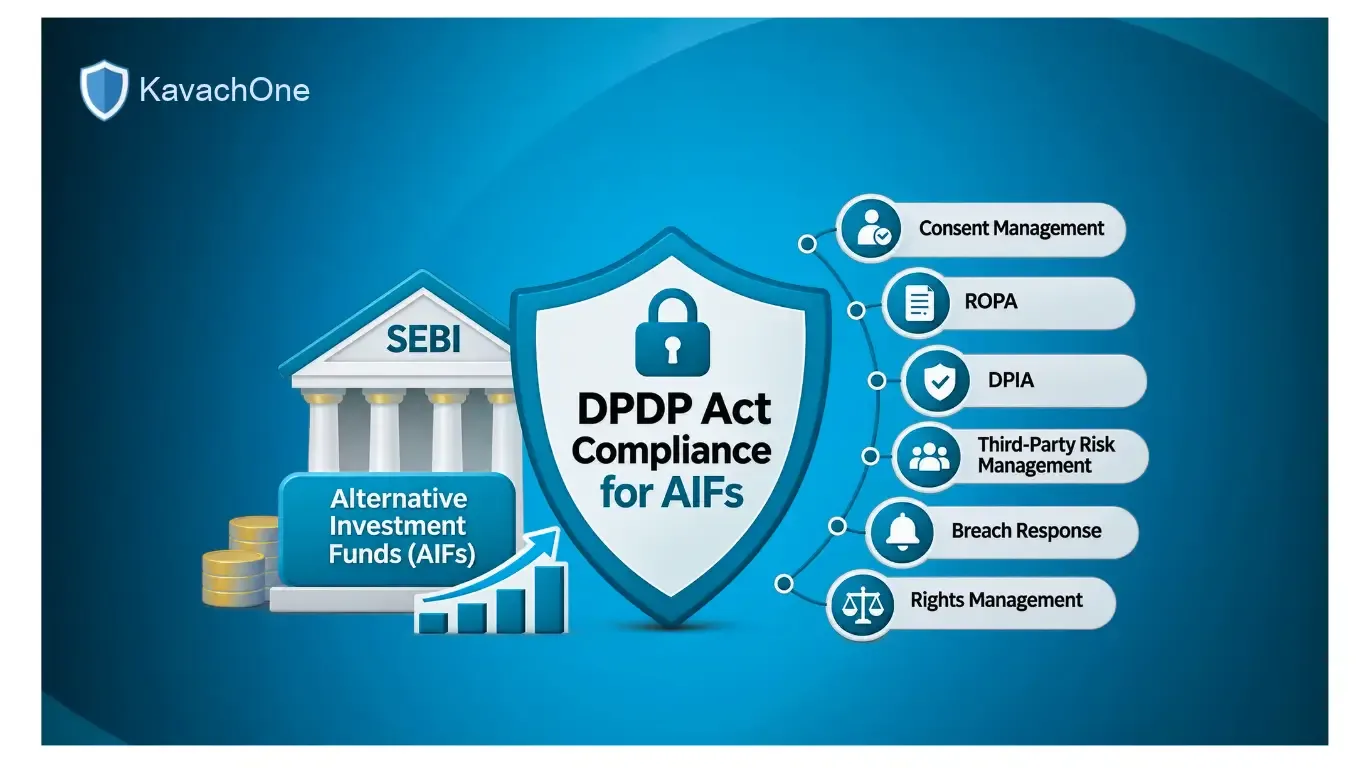
To be fully prepared, AIF operations, legal, and IT teams should focus on five key areas:
Data Inventory and Purpose Mapping
Funds must maintain detailed Records of Processing Activities (RoPA). Identify each personal data asset, specify the legal basis for processing, record storage locations such as cloud repositories, ERPs, or email archives, and track access both internally and externally.
Itemized, Clear Consent Architecture
Generic clauses in lengthy PPMs or subscription agreements are insufficient. The DPDP Act requires clear, specific notices and explicit consent. Funds must use straightforward language to explain what data is collected, its purpose, and how investors can exercise their legal rights.
Enforceable Data Principal Rights Management
Investors (Data Principals) have the legal right to see summaries of their data, ask for corrections to outdated records, and file complaints. AIFs need to establish clear processes to handle these requests on time without disrupting their core business.
Third-Party Risk Management (TPRM) & Processor Governance
Every vendor contract, including those with RTAs, fund accounting providers, and SaaS platforms, must include the required data protection clauses. These contracts should clearly set processing limits, incident reporting duties, and regular audit rights.
Zero-Threshold Incident Detection and Breach Readiness
Under the India DPDP framework, any personal data breach (however minor it may seem) must be reported to the Data Protection Board of India (DPBI) and to the affected individuals without undue delay. Fund managers must have incident response plans in place with clearly defined escalation paths.
KavachOne: The Best DPDP Act Compliance Solution for SEBI-Registered Alternative Investment Funds (AIFs)
To achieve smooth compliance, you need to bridge the gap between legal requirements and your enterprise technology. KavachOne offers a complete TechnoAudit, consulting, and governance system designed to solve the data challenges faced by institutional finance and alternative investments.
By combining deep regulatory insight with a dedicated software platform, KavachOne simplifies DPDP governance so that fund managers can get on with the actual deal-making and delivering value to investors.
Core Solutions and Capabilities
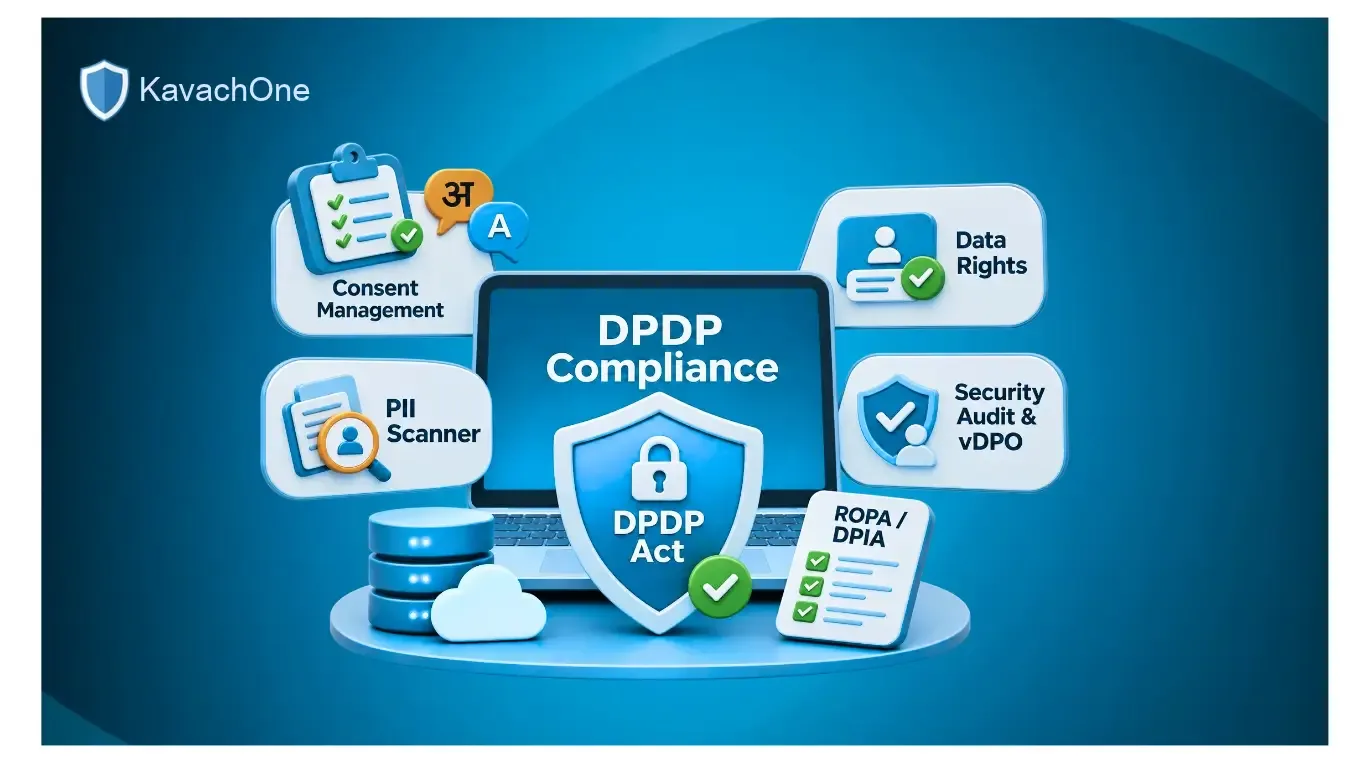
Automated PII Discovery & Data Lineage: KavachOne deploys specialized PII and Customer Due Diligence (CDD) scanning engines across your cloud storage, local servers, and databases. It locates, classifies, and maps structured and unstructured investor data, building real-time data flows without manual tracking.
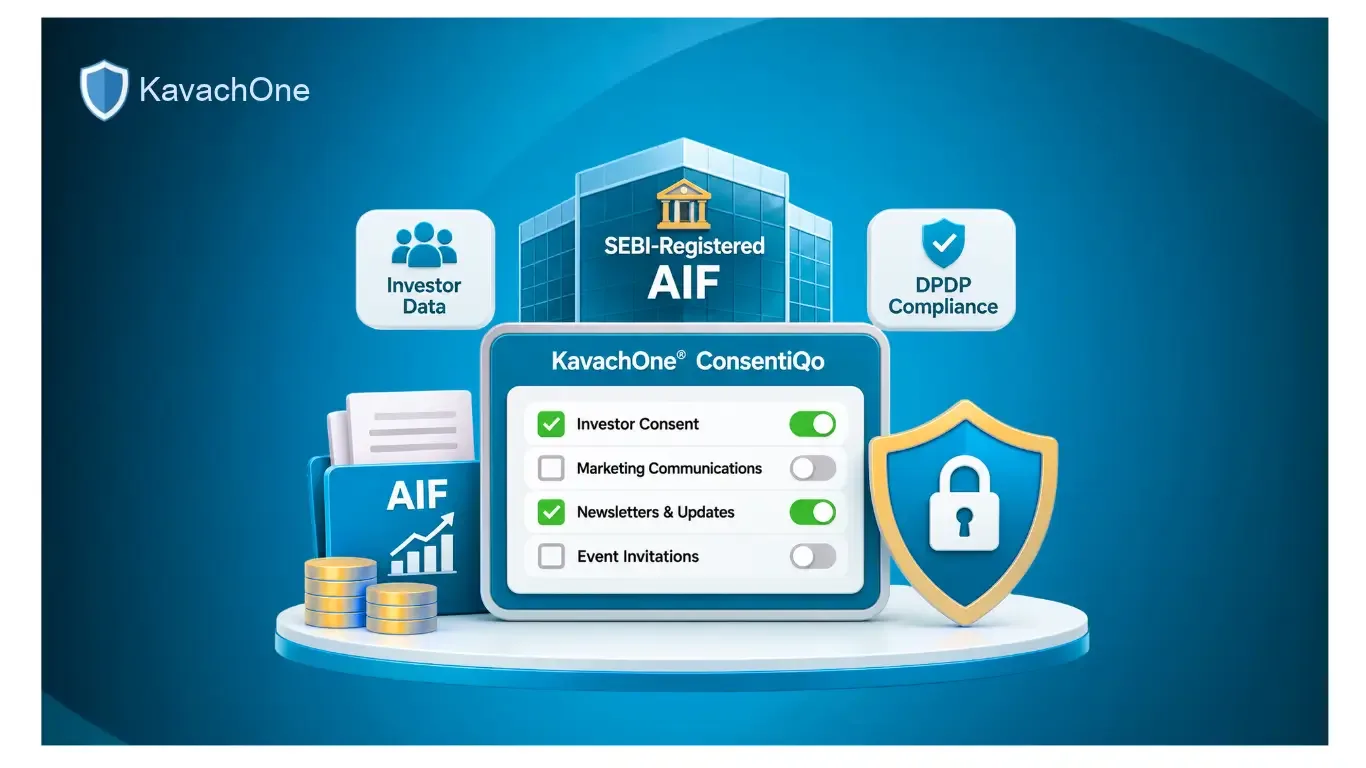
ConsentiQo (Enterprise DPDP Consent Management): A dedicated platform for managing multilingual investor consent notices, with tamper-proof, immutable audit logs of all consent capture activity and a self-service intake portal for investor rights and complaints.
ComplyXpert (Unified Compliance & Evidence Management): KavachOne's main governance engine maps controls for the DPDP Act, SEBI cybersecurity frameworks, ISO 27001, and SOC 2 simultaneously. This removes duplication and ensures you always have audit-ready evidence vaults.
Third-Party Risk & Processor Management (TPRM): Centralizes vendor assessments, tracks security attestations from RTAs, custodians, and fund administrators, and automates vendor risk scoring to protect fund managers from downstream exposure.
Fractional DPO & Regulatory Advisory: Access experienced privacy attorneys and Certified Information Security Assurance (CISA) specialists via KavachOne's DPO-as-a-Service. Get expert advice on drafting SEBI-compliant privacy policies, handling regulatory notices, and conducting Data Protection Impact Assessments (DPIAs).
Key Benefits of Partnering with KavachOne
Protection from Regulatory Exposure: Ensure your fund adheres to statutory standards, insulating the General Partner (GP), Investment Manager, and trustees from non-compliance actions and steep financial penalties.
Harmonized Compliance Operations: Prevent operational friction between SEBI record-retention rules and DPDP erasure mandates by implementing structured legal classification engines.
Enhanced Institutional Investor Confidence: Sophisticated domestic and global institutional LPs demand stringent data governance. Demonstrating third-party verified DPDP readiness accelerates operational due diligence (ODD) during fundraising.
Streamlined Multi-Standard Audits: Using unified control mapping, your internal teams avoid duplicating effort across information security and data privacy mandates.
Strategic Roadmap: Achieving DPDP Readiness in 4 Steps
Gap Analysis & Scoping: Conduct a comprehensive readiness assessment to benchmark the current state of onboarding, LP portals, and operational processes against the DPDP Act.
Data Mapping & Clean-Up: Deploy automated scanners to discover sensitive records, identify unauthorized shadow data, and establish a centralized inventory.
Consent & Vendor Realignment: Update PPM notices, investor consent capture workflows, and service provider contracts with DPDP-aligned data transfer clauses.
Institutionalize Governance: Implement automated DSAR resolution workflows, establish breach-readiness runbooks, and activate continuous compliance monitoring.
Strengthen Your Fund’s Data Governance with KavachOne
As data protection enforcement in India increases, readiness will distinguish leading fund managers. Establishing an audit-ready, secure data privacy framework protects LP relationships, maintains trust, and ensures regulatory compliance.
Ready to evaluate your fund’s DPDP readiness?
Contact the privacy and compliance specialists at KavachOne today to schedule an executive consultation and learn how our integrated solutions can streamline your compliance process.
Frequently Asked Questions (FAQs)
KavachOne Editorial Team
Cybersecurity & Compliance Experts