
Alternative Investment Funds (AIFs) in India work in a complex investment environment where managing confidential financial records, personal details, and investor portfolios is routine. Now that India’s Digital Personal Data Protection (DPDP) Act is in effect, handling personal information is no longer just a best practice—it is a legal requirement.
For investment managers, trustees, and sponsors of Category I, II, or III funds, ensuring SEBI-registered Alternative Investment Funds comply with the DPDP Act is now a core part of daily operations. This helps protect investor trust, avoid penalties, and keep fund management running smoothly.
Understanding the DPDP Act in the Context of SEBI-Registered AIFs
Under the DPDP Act, an AIF (or its Investment Manager) functions primarily as a Data Fiduciary. It determines the purpose and means of collecting personal information from individual investors, High-Net-Worth Individuals (HNIs), Ultra-HNIs, family office principals, and key managerial personnel.
AIF operations handle vast volumes of digital personal data across the investor lifecycle:
Onboarding & KYC: Permanent Account Number (PAN), Aadhaar, passport copies, proof of address, bank account credentials, tax residency, and FATCA/CRS self-certifications.
Investment Operations: Capital contribution statements, drawdowns, distribution bank records, net-worth certificates, and source-of-funds documentation.
Portfolio Due Diligence: Background verification and personal financial history of investee company founders and key executives.
The DPDP Act requires that the collection, storage, sharing, and processing of this data be supported by clear notices that explain the purpose and demonstrate accountability.
Key Compliance Requirements: How SEBI-Registered Alternative Investment Funds Comply with the DPDP Act
To meet legal requirements without interrupting investor workflows, fund managers need to build data protection controls around four main areas:
1. Purpose-Bound Investor Notices and Clear Consent
AIFs often collect a lot of personal data when signing private placement and subscription agreements. Section 6 of the DPDP Act prohibits pre-ticked boxes, bundled agreements, or unclear clauses.
Actionable Requirement: Consent notices should clearly state what personal data is collected, why it is needed (for example, SEBI KYC, AML compliance, or unit allotment), and how to withdraw consent or make a complaint.
2. Third-Party Vendor Risk and Data Processing Agreements (DPA)
AIF ecosystems rely heavily on external intermediaries:
Custodians, Depository Participants, and Registrar & Transfer Agents (RTAs).
Fund administrators, statutory auditors, and tax consultants.
Cloud-based CRM and fund management software providers.
Under the DPDP Act, an AIF remains legally accountable for violations committed by its third-party Data Processors. Funds must execute rigorous Data Processing Agreements (DPAs), establish automated vendor risk assessment workflows, and mandate strict confidentiality protocols.
3. Record of Processing Activities (ROPA) & On-Premise PII Discovery
Many funds store sensitive investor files in various places such as email threads, cloud folders, shared drives, and ERP systems.
Actionable Requirement: Investment teams must maintain an active Record of Processing Activities (ROPA) detailing data lineage, retention periods, and storage locations. Continuous scanning for structured and unstructured Indian identifiers (PAN, Aadhaar, bank records) ensures complete data visibility without operational blind spots.
4. Data Principal Rights and Statutory Grievance Redressal
Investors (Data Principals) possess statutory rights under the DPDP Act, including:
The right to access a summary of their personal data processed by the fund.
The right to correct, update, or complete out-of-date records.
The right to data erasure (balanced against mandatory statutory retention periods under SEBI and PMLA guidelines).
Dedicated, time-bound grievance redressal before an investor escalates a complaint to the Data Protection Board (DPB).
Aligning SEBI Regulations with DPDP Act Mandates
A common challenge for fund compliance teams is getting data minimization and erasure requirements under the DPDP Act to work in conjunction with the record-keeping requirements imposed by SEBI and the PMLA:
Regulatory data retention vs erasure: An investor can request that data be deleted upon leaving the scheme, but SEBI and PMLA require that transactional, subscription, and KYC data be retained for the period required for statutory audit.
Documented Legal Grounds: Compliance teams should link each data field to its legal requirement. If an investor asks for full erasure, the fund should archive the data needed for compliance and securely delete any non-essential or marketing data.
How KavachOne Streamlines DPDP Compliance for AIFs
Managing DPDP compliance with legacy systems, spreadsheets, and legal templates can pose risks and cause problems. KavachOne provides an integrated, India-made privacy automation platform to solve these issues.
Core Capabilities of the KavachOne Privacy Suite
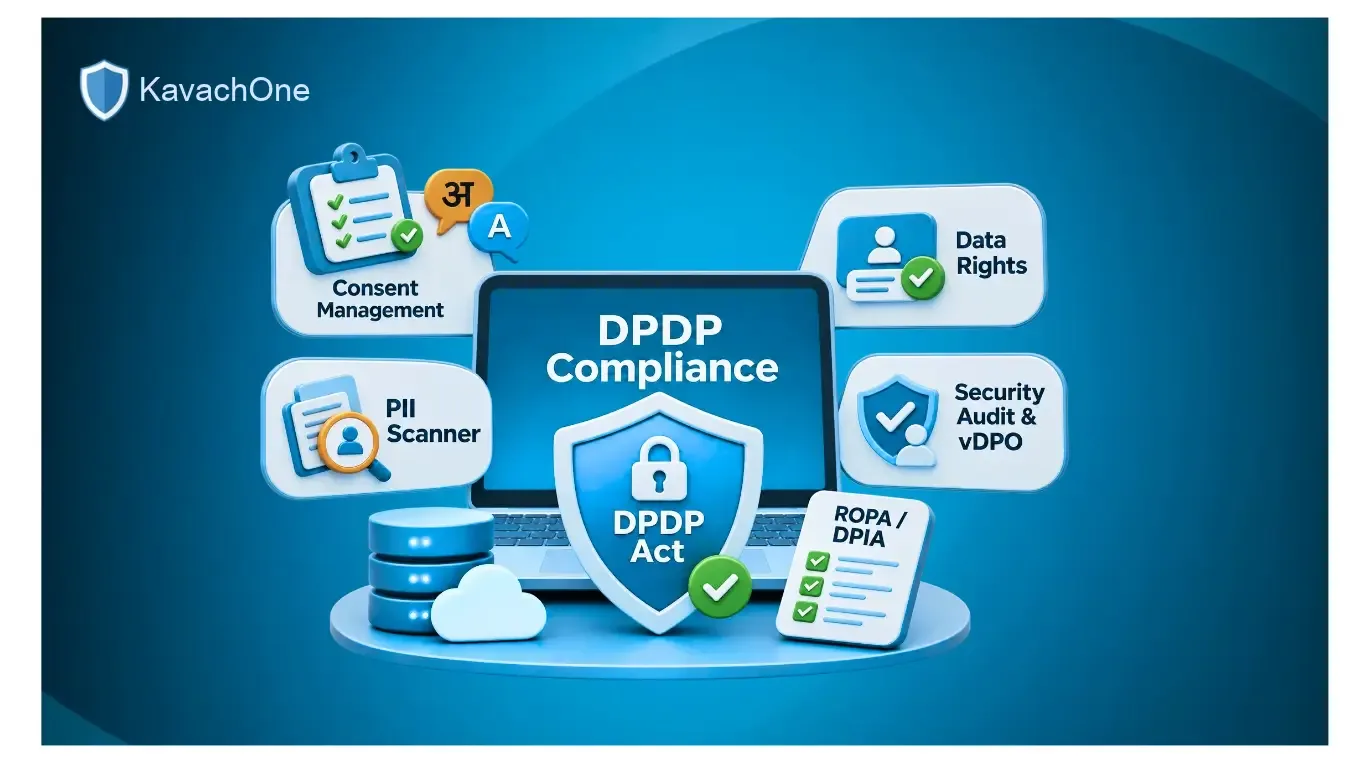
Zero-Egress PII Discovery: Traditional discovery solutions risk data leaks by transferring data off-site. KavachOne inspects files directly inside your Virtual Private Cloud (AWS, Azure, GCP) or on-premises environment. Your raw investor data never leaves your perimeter, while high-accuracy machine learning algorithms scan for PAN, Aadhaar, passport, and bank details with 99%+ accuracy.
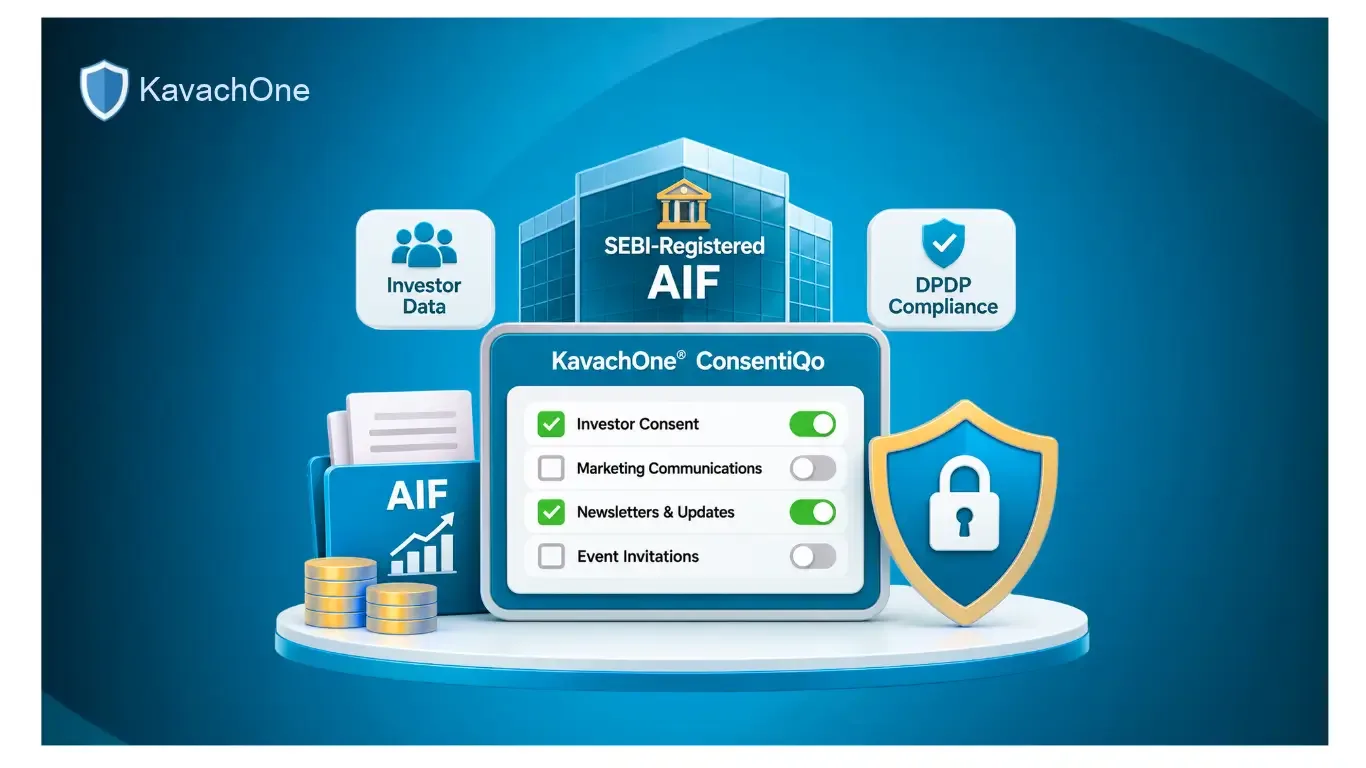
Purpose-Bound Consent Management (ConsentiQo): Automate consent collection in multiple languages during investor onboarding. Keep tamper-proof, audit-ready logs to ensure full regulatory transparency.
Automated ROPA & DPIA Engine: Continuously map data flows across custodian, RTA, and accounting integrations. Generate real-time Records of Processing Activities that auto-update whenever operational workflows change.
Self-Service Investor Rights (DSAR) Portal: Provide investors with a secure, branded dashboard to review their data, request updates, or submit inquiries. Integrated workflow triggers allow compliance officers to verify identities and execute requests within regulatory SLAs.
Third-Party Vendor Risk Management (TPRM): Manage vendor assessments, rate custodian and software vendor security, and track DPAs all in one place.
Technical Security Validation & Virtual DPO Support: Backed by PCI DSS QSA accreditations and certified privacy professionals (CISA, CISSP, CIPP), KavachOne offers comprehensive VAPT assessments and dedicated DPO-as-a-Service to oversee privacy audits and interact with regulatory authorities.
Strategic Benefits for Fund Managers and Trustees
Implementing an automated, institutional-grade privacy posture delivers tangible operational advantages:
Sustained Investor Confidence: High-net-worth investors and global institutions demand enterprise-grade governance before committing capital. Demonstrating robust DPDP compliance strengthens fund reputation.
Elimination of Operational Bottlenecks: Replacing manual spreadsheets with continuous data mapping and automated consent workflows frees up internal compliance and legal teams.
Audit-Ready Posture: Generate one-click regulatory evidence bundles tailored to Data Protection Board inquiries and SEBI compliance audits.
Mitigated Legal and Financial Risk: Avoid statutory non-compliance penalties and protect your fund’s operational license.
Build a Resilient Compliance Framework with KavachOne
To ensure your SEBI-registered Alternative Investment Fund meets the DPDP Act, you need more than basic privacy templates. Automated, privacy-focused workflows built for India’s rules are essential.
KavachOne helps fund managers, sponsors, and trustees streamline personal data discovery, automate consent lifecycles, and secure third-party ecosystems with zero data egress.
Ready to evaluate your fund’s privacy posture? Connect with our certified data privacy specialists today to schedule a confidential assessment and explore how the KavachOne Privacy Suite simplifies end-to-end DPDP compliance.
Frequently Asked Questions (FAQs)
KavachOne Editorial Team
Cybersecurity & Compliance Experts