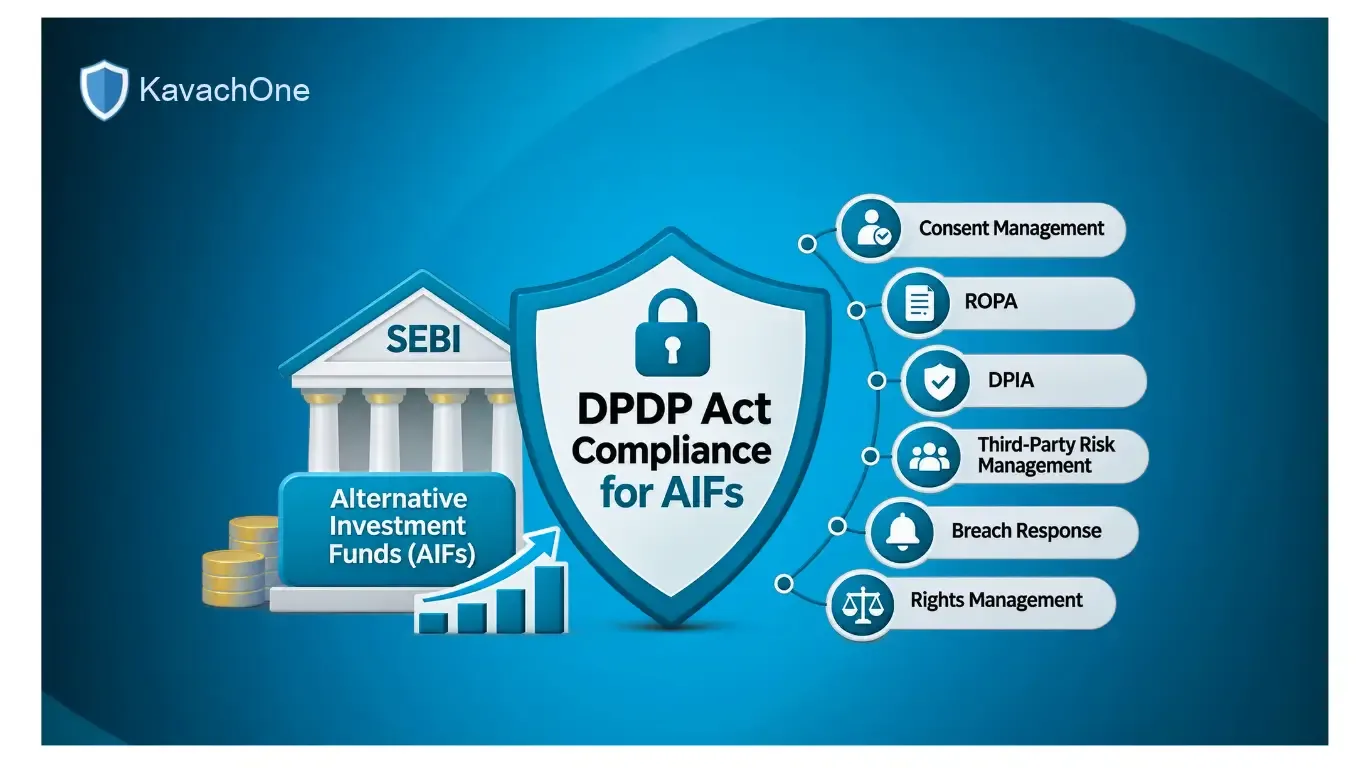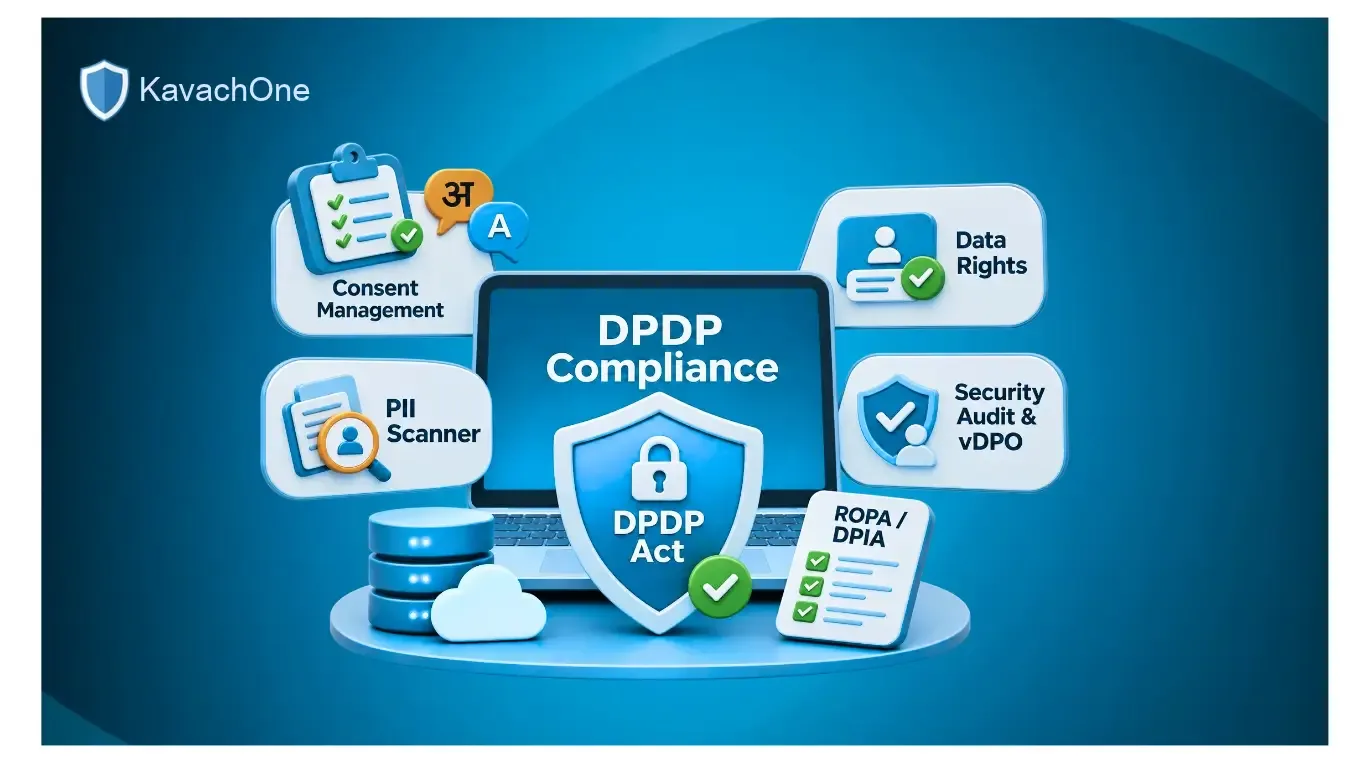

Alternative Investment Funds (AIFs) in India face strict regulatory oversight. SEBI closely monitors investor onboarding, KYC, and fund administration, while the India Digital Personal Data Protection (DPDP) Act adds further statutory requirements. The main challenge for investment managers is managing sensitive investor data transparently, without causing friction during fundraising or throughout the fund’s lifecycle.
A dedicated Consent Management Platform for SEBI-registered Alternative Investment Funds (AIFs) is now a core regulatory requirement, not just an administrative tool. Fund managers collect Aadhaar, PAN, net-worth certifications, banking details, and source-of-wealth records, so it’s essential to link each piece of personal data to clear, specific consent.
The Intersection of SEBI Compliance and Privacy Mandates
SEBI-registered Category I, II, and III AIFs work with high-net-worth individuals (HNIs), family offices, corporate sponsors, and institutions. To meet the Prevention of Money Laundering Act (PMLA) rules and SEBI KYC directives, onboarding and sub-complying require the collection of a large amount of personally identifiable information (PII).
At the same time, India’s DPDP Act requires anyone collecting personal data to give a clear, detailed notice and get informed, specific consent from investors.
For AIF managers, broad consent clauses hidden in long Private Placement Memorandums (PPMs) or general subscription agreements are no longer enough. Fund operations now need careful tracking of:
Investor Onboarding & E-KYC: Explicit consent to fetch, verify, and store C-KYC, Aadhaar, and PAN records.
Third-Party Processing: Passing investor data to registrars and transfer agents (RTAs), fund administrators, custodians, and independent auditors.
Discretionary Communications: Differentiating mandatory fund performance and statutory portfolio reports from promotional updates, secondary transaction offers, and co-investment scheme marketing.
Key Regulatory Pain Points Faced by AIF Fund Managers
Handling investor commitments across multiple closes creates a complicated network of permissions and data transfers. Without automated systems, fund managers face major compliance challenges:
1. The Multi-Party Data Sharing Web
AIF operations are rarely managed only in-house. Fund managers often share sensitive investor records with outside service providers:
Custodians for asset safety and transaction settlement.
Fund accountants and RTAs for unit allocation, capital calls, and distributions.
Legal counsels and statutory auditors for annual SEBI compliance reporting.
If an investor has not clearly agreed to each specific downstream disclosure, the AIF could be non-compliant with data protection rules.
2. Purpose Limitation and Revocation Handling
Investors have the legal right to withdraw or change their consent for optional processing activities. When they make such a request, fund managers must act quickly across all systems while ensuring they do not delay important regulatory notices or required tax statements.
3. Immutable Audit Readiness
During SEBI inspections or compliance audits, funds need to maintain clear records demonstrating operational integrity. Using email approvals or paper declarations can leave gaps in evidence. A strong platform should maintain a secure audit trail that shows when consent was given, which version of the notice was used, and for what purpose.
Anatomy of a DPDP-Compliant Notice for Investment Funds
Section 5 of the DPDP Act says that notice is required for valid consent. For private capital and AIFs, this means moving away from complex legal language and using clear, structured disclosures instead:
Itemized Purpose Classification: Clearly separating data gathered strictly for statutory mandates (such as PMLA, FATCA, and SEBI filing requirements) from operational processing (such as capital drawdown alerts or portal logins) and commercial communications.
Downstream Recipient Transparency: Clearly name or list the types of data processors, such as RTAs, custodian banks, and cloud repositories, that handle the limited partner’s information.
Retention and Erasure Schedules: State how long investor data is kept after exit to meet SEBI and PMLA rules, and identify which data should be deleted quickly.
Accessible Grievance Redressal: Give clear contact details for the fund’s Data Protection Officer (DPO) or grievance officer, along with set response times.
Data Principal Rights (DPR) Workflows in Fund Operations
Current data privacy rules treat Limited Partners (LPs), family office representatives, and trustees as Data Principals who have enforceable legal rights:
Right to Information and Access
Investors can request a full summary of the personal data currently processed by the AIF, accompanied by a verified roster of every external third-party processor with whom their financial and identity records have been shared.
Right to Correction and Updating
Since close-ended AIFs often last 7 to 10 years, investor details can change over time. A compliant consent platform lets investors securely update addresses, tax status, and signatory mandates without creating scattered email threads.
Right to Erasure vs. Statutory Retention Mandates
A common issue comes up when an exiting unitholder asks for all their data to be erased. Data privacy laws allow principals to request erasure, but fund managers must keep client records for certain periods under SEBI and PMLA rules. An automated consent platform solves this by securely archiving required compliance logs and deleting marketing or prospecting data as needed.
Downstream Data Processor Governance and Third-Party Contracts
An AIF’s data privacy is only as strong as its weakest third-party vendor. Since fund managers are the main Data Fiduciaries by law, they are responsible if downstream service providers breach data or process it without permission.
A comprehensive consent platform reinforces third-party governance through:
Dynamic Data Processing Agreements (DPAs): Ensuring all RTAs, accounting partners, valuation agencies, and software hosts are bound by strict processing boundaries matching investor consent.
Role-Based Access and Purpose Scoping: Restricting data visibility so that external service partners access only the specific data fields required for their assigned mandate (e.g., preventing marketing platforms from accessing Demat numbers or net-worth certifications).
Automated Data Revocation Sync:
Instantly propagating consent changes or withdrawal instructions to downstream processors, ensuring unified compliance across all integrated platforms.
KavachOne: Purpose-Built Consent Management for SEBI-Registered AIFs
KavachOne provides a unified privacy governance and consent management infrastructure engineered to align with Indian regulatory frameworks. By bridging fund administrative workflows and regulatory compliance standards, KavachOne streamlines consent collection throughout the fund lifecycle without slowing capital deployment.
Key Capabilities of the KavachOne Privacy Suite
India-First Identifier Mapping: Automatically finds and indexes Indian financial identifiers like PAN, Aadhaar, bank account numbers, and Demat details, and links them to clear, purpose-based consent records.
Dynamic Multi-Language Consent Notices: Create clear, easy-to-understand notices that separate required regulatory processing, such as SEBI reporting and anti-money laundering checks, from optional communications.
Unified Records of Processing Activities (ROPA): Connects consent collection directly to live data processing records. When an investor approves onboarding disclosures, the processing logs update automatically without manual data entry.
Comprehensive Data Principal Rights Management: Provides an investor-facing self-service portal where limited partners (LPs) can review their active permissions, update preferences, or submit grievance inquiries in full alignment with DPDP clauses.
Downstream Third-Party Governance: Sets up auditable tracking for every external entity, from fund accountants to credit rating agencies, to ensure shared data aligns with current investor permissions.
Audit-Ready Evidence Bundles: Consolidates timestamped logs, notice versions, and consent registries into one-click verification packages ready for internal auditors, trustees, and regulatory review.
Operational and Strategic Benefits for Fund Managers
Deploying an integrated Consent Management Platform for SEBI-registered Alternative Investment Funds (AIFs) delivers substantial operational advantages:
Accelerated LP Onboarding: Replace fragmented physical consent forms and scattered email chains with an intuitive digital interface that integrates directly into digital onboarding portals.
Minimized Regulatory Liability: Mitigate exposure to penalties and regulatory scrutiny by ensuring all data processing activities rest on a solid, auditable foundation.
Institutional Credibility: Investors like institutional LPs, sovereign wealth funds, and global family offices carefully review operations before committing. Showing that you have strong data privacy systems in place helps build trust and can speed up capital commitments.
Operational Efficiency: Reduce the workload for your legal, operations, and compliance teams by using automated tracking, centralized consent management, and instant reporting.
Make your fund’s privacy and compliance systems stronger.
With private capital in India growing quickly, rules about investor data security are becoming stricter. Having clear, automated, and tamper-proof consent processes is key to keeping your fund secure and maintaining investor trust.
Get in touch with KavachOne today to explore how our specialized Privacy Suite can automate compliance, safeguard investor trust, and simplify your fund operations.
Frequently Asked Questions (FAQs)
KavachOne Editorial Team
Cybersecurity & Compliance Experts