
India's asset management industry is experiencing historic levels of digital growth, with retail mutual fund folios and SIPs across mobile apps, online aggregators, and fintech platforms all surging. The flip side of that is, of course, a massive amount of regulatory responsibility. With the Digital Personal Data Protection (DPDP) Act, 2023 coming into force, data privacy compliance is no longer just an IT thing you tick off a list. It is now a responsibility of the executives.
For AMCs, DPDP Act compliance for mutual funds is a distinct operational challenge. You have to reconcile the DPBI's data privacy requirements with the sectoral regulations already in place under SEBI, AMFI, and the PMLA.
This comprehensive guide outlines the regulatory obligations for AMCs, resolves key friction points, and details how modern compliance automation enables seamless, audit-ready operations.
Understanding the DPDP Act Framework for Mutual Funds
Under the DPDP Act, an AMC determines the purpose and means of processing investor data, qualifying squarely as a Data Fiduciary. The individual unitholder or retail investor is the Data Principal.
The mutual fund ecosystem is deeply interconnected. AMCs process high volumes of sensitive financial and identity records through third parties, including:
Registrars and Transfer Agents (RTAs) managing transaction histories, folio allocations, and records.
Mutual Fund Distributors (MFDs) and wealth-tech platforms capturing investor inquiries and order flows.
KYC Registration Agencies (KRAs) and identity databases validating investor credentials.
Payment Gateways, Aggregators, and Cloud CRMs facilitating SIP deductions, redemptions, and investor servicing.
Under Section 8 of the Act, an AMC remains directly accountable for any security compromise or unauthorized processing occurring downstream at the processor level.
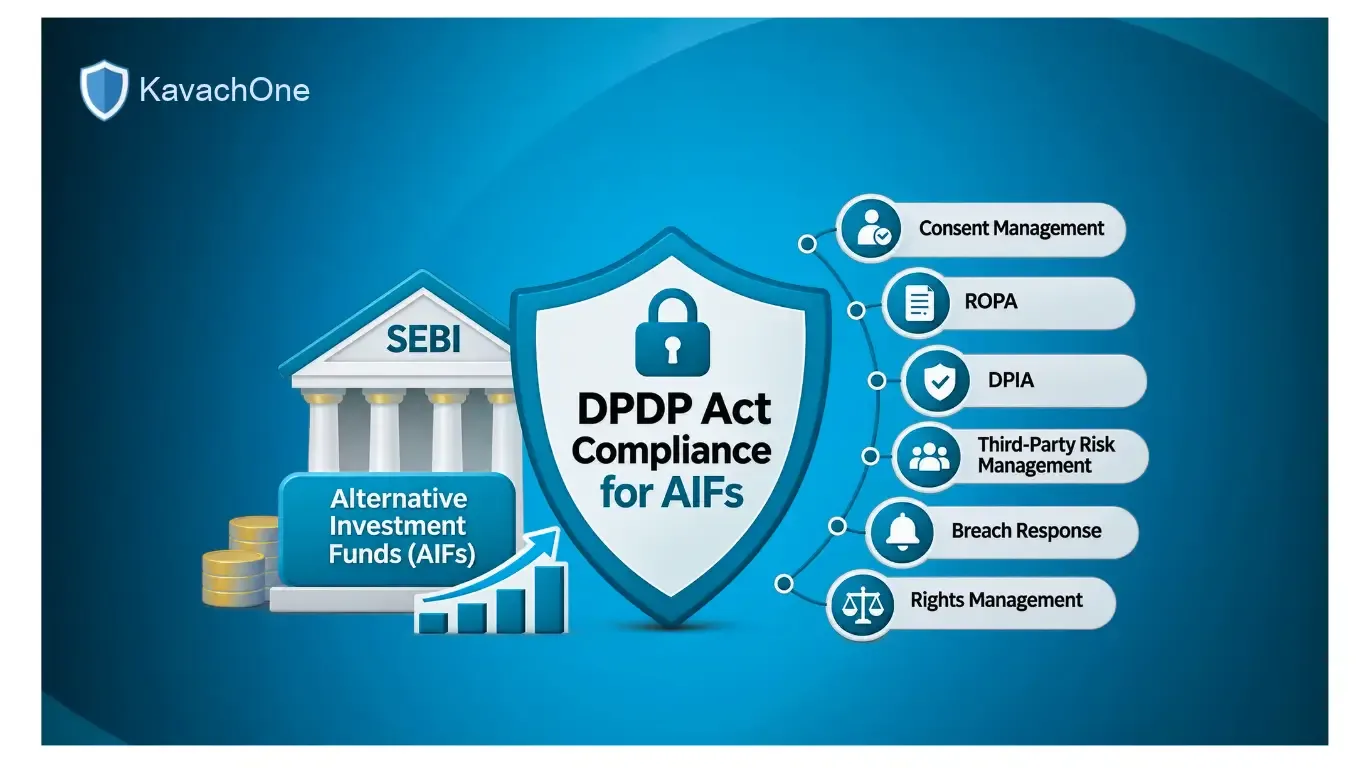
Core DPDP Compliance Obligations for Asset Management Companies
To achieve full compliance, AMCs must institute governance mechanisms that span investor touchpoints, operational workflows, and technology architectures.
1. Granular Notice and Consent Architecture (Sections 5 & 6)
Blanket agreements, pre-ticked consent checkboxes, or hidden privacy clauses inside Scheme Information Documents (SIDs) and Key Information Memorandums (KIMs) no longer meet legal standards.
Purpose Specification: AMCs must state explicitly why each data attribute (e.g., PAN, bank account number, mobile number) is collected.
Multilingual Notices: Clear consent notices must be accessible in English and all 22 languages listed in the Eighth Schedule to the Constitution of India.
Easy Withdrawal: The process to revoke consent must be as frictionless and straightforward as giving it.
2. Harmonizing Data Principal Rights with Statutory Retention
Under Chapter III, investors have enforceable statutory rights:
Right to Access & Correction: Investors can review summary reports of their personal data and correct inaccurate records.
Right to Erasure v Statutory Obligations: Investors do have a right to request erasure of their personal data, but that right is subject to Section 8(7). The AMCs are statutorily required under the PML and the SEBI (Mutual Funds) Regulations to retain KYC, folio ledgers, and transaction records for the prescribed period (often 5 years after redemption or account closure).
Operational Implementation: AMCs must isolate marketing, prospective, and lead data (which must be erased upon request) from core ledger records retained under legal obligation.
3. Rigorous Third-Party Risk Management (TPRM)
Whenever an AMC transfers data to RTAs, marketing tech stacks, or customer support portals, a formal Data Processing Agreement (DPA) must be in place to govern the transfer. AMCs are required to conduct ongoing vendor assessments and ensure that the same security controls are in place throughout the processing chain.
4. Mandatory Breach Response and Notification Timelines
The DPDP Act has no de minimis threshold for reporting breaches of digital personal data. In the case of a security breach, AMCs are required to report to both the DPB and the investors without delay. There are strict incident reporting timelines.
5. Significant Data Fiduciary (SDF) Governance
Given the sheer volume, sensitivity of retail financial assets, and systemic impact of mutual funds, top AMCs are prime candidates for designation as Significant Data Fiduciaries (SDFs) under Section 10. SDFs must:
Appoint an India-based Data Protection Officer (DPO).
Conduct periodic Data Protection Impact Assessments (DPIAs).
Undertake independent data audits and maintain verifiable Records of Processing Activities (RoPA).
Resolving Operational Friction: The Compliance-Tech Roadmap
Manual compliance tracking via spreadsheets or various legacy overseas privacy tools is a complete non-starter in the Indian financial architecture. The Western privacy tools out there don't pick up the Indian identity tokens and are a complete failure in the multilingual environment.
AMCs require an India-native compliance stack that can connect data pipelines without causing system lag or compliance friction.
Streamlining AMC Compliance with KavachOne Privacy Suite
KavachOne delivers an enterprise-grade DPDP compliance platform engineered from the ground up for the nuances of Indian regulatory frameworks. By replacing fragmented tracking with continuous automation, KavachOne helps asset managers eliminate regulatory exposure while accelerating time-to-market.
Built-In Capabilities for Asset Management Companies
Zero-Egress Indian PII Scanner: Financial data must remain within your perimeter. KavachOne’s discovery engine scans databases, core investment ledgers, and cloud buckets to flag Indian identifiers—including PAN, Aadhaar, bank details, and VPAs/UPI IDs—without extracting sensitive data off-premise.
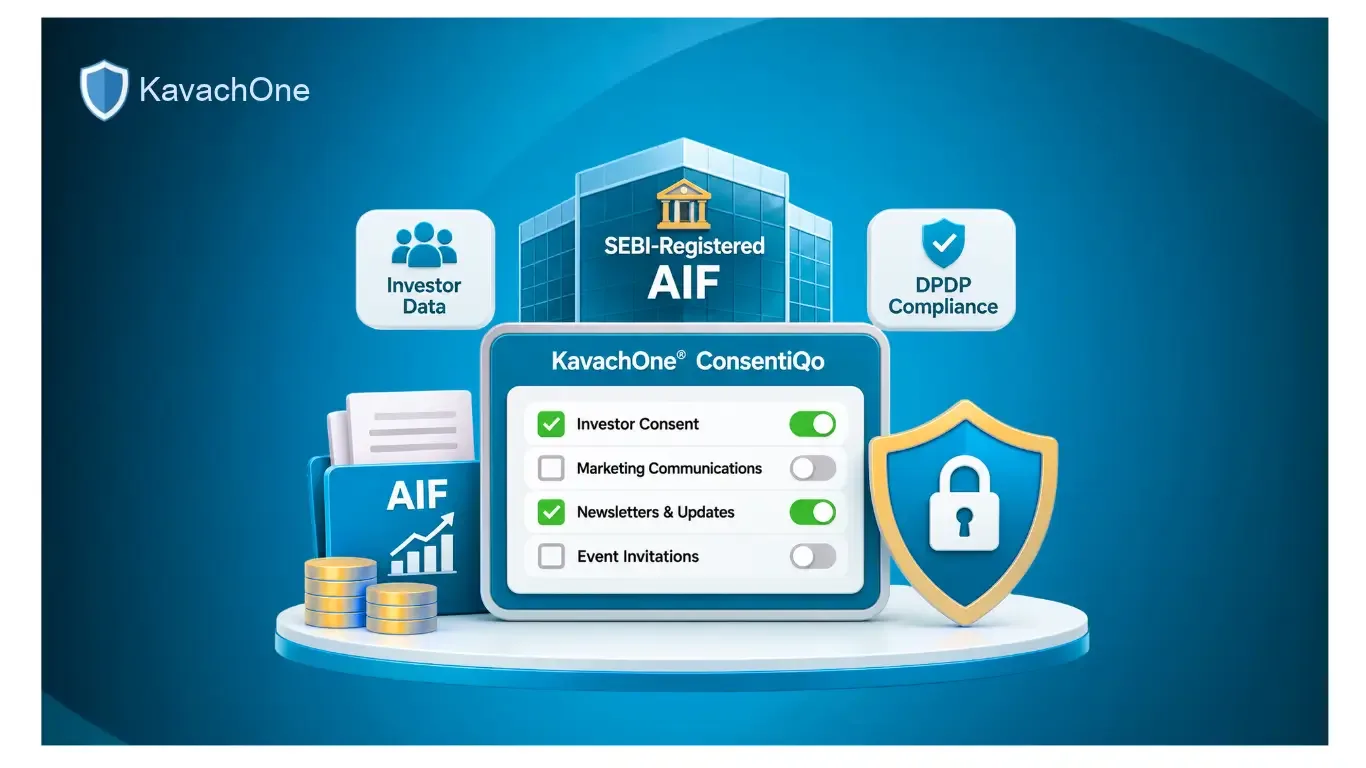
ConsentiQo (Native Consent Management): enables AMCs to deploy highly granular, purpose-based consent modals on their investor portals and mobile apps. Native to ConsentiQo are all 22 of the scheduled Indian languages; it maintains a tamper-proof audit trail of all consent changes and will propagate revocations to all downstream systems.
Automated RoPA Engine: Continuously maps data lineage across RTAs, internal departments, and distributors into a 12-field DPDP-native record. DPOs can export one-click, DPBI-ready audit evidence packs on demand.
Investor Rights (DSAR) Portal: A secure, branded portal where unitholders can submit data queries, make updates, or revoke consent. It includes rules to prevent the accidental deletion of required PMLA and SEBI records during the processing of marketing opt-outs.
Vendor Risk & Incident Response: Streamlines third-party risk assessments across technology vendors and maintains automated breach-notification templates designed to meet rapid reporting obligations.
Key Benefits for AMCs
Full Regulatory Defensibility: Protect your fund house from severe penalties—up to ₹250 Crore for security safeguards failures under the DPDP Act.
Frictionless Investor Experience: Provide transparent, modern privacy controls to build confidence among institutional and retail investors.
Reduced Overhead: Automate up to 80% of repetitive compliance workflows, freeing legal, compliance, and engineering teams to focus on core fund performance.
Future-Proof Your AMC's Compliance Today
Achieving DPDP Act compliance for mutual funds is an opportunity to strengthen governance, improve operational transparency, and reinforce investor trust in an increasingly digital financial ecosystem.
Ready to streamline your AMC's privacy framework?
Discover how KavachOne transforms complex DPDP obligations into automated, audit-ready workflows. Schedule a personalized compliance demonstration with KavachOne’s privacy specialists today.
Frequently Asked Questions (FAQs)
1. What makes an AMC a Data Fiduciary under the DPDP Act?
An AMC decides why and how investor personal data is collected and used. This makes it a Data Fiduciary, responsible for following the rules on every platform.
2. Are mutual fund distributors (MFDs) and RTAs considered Data Processors?
Yes. RTAs, MFDs, and aggregators handle investor information for the AMC. This means they are Data Processors and must follow strict Data Processing Agreements (DPAs).
3. Does the Right to Erasure mean an AMC must wipe all investor records upon request?
No. Rules from SEBI and PMLA require keeping audit trails, KYC records, and transaction histories for set periods. These rules take priority over personal erasure requests.
4. How does the DPDP Act affect digital SIP onboardings and KYC?
AMCs cannot use bundled or pre-checked consent forms. The onboarding process must give clear, detailed notices and collect consent that can be verified, in English and other recognized regional languages.
5. What is the penalty for non-compliance under the DPDP Act for AMCs?
The Data Protection Board of India (DPBI) can fine up to ₹250 Crore if an AMC fails to put in place proper security to prevent personal data breaches.
6. Do we need to appoint a Data Protection Officer (DPO)?
If an AMC is named a Significant Data Fiduciary (SDF) because of its transaction volume, risk, or the sensitivity of its financial assets, it must appoint a Data Protection Officer (DPO) based in India.
7. What constitutes a reportable personal data breach for a fund house?
If investor data is processed, disclosed, altered, or compromised without permission, it must be reported promptly to the Data Protection Board of India (DPBI) and the affected investors.
8. How does KavachOne help AMCs automate DPDP Act compliance?
KavachOne automates PII discovery, multilingual consent capture, RoPA documentation, and investor rights requests (DSARs) with built-in logic that complies with SEBI and PMLA retention rules.
KavachOne Editorial Team
Cybersecurity & Compliance Experts