
Hotels and resorts collect a large amount of personal information from guests, visitors, employees, vendors, and business partners. This includes names, phone numbers, email addresses, ID documents, booking details, payment information, preferences, and other personal data.
With India's Digital Personal Data Protection (DPDP) Act, hospitality businesses must be more careful about how they collect, use, store, share, and delete personal data.
For hotels and resorts, compliance is not just an IT issue. It affects front desk operations, reservations, marketing, CRM, housekeeping, payment systems, websites, mobile apps, CCTV, and other technology platforms.
Hospitality leaders need to understand the DPDP Act and how it affects their operations. Knowing how to achieve data protection compliance helps protect your brand, build guest trust, and avoid legal penalties.
What Is the DPDP Act and How Does It Apply to Hotels & Resorts?
The Digital Personal Data Protection Act (DPDP Act) is India's primary law governing digital personal data. It balances people’s right to protect their information with the need for businesses to process data for legal reasons.
Under the framework of the Act, key roles and obligations apply directly to the hospitality ecosystem:
Data Principal: The individual whose personal data is being processed. In hospitality, this includes hotel guests, visitors connecting to public Wi-Fi, job applicants, on-roll/contract employees, and vendor representatives.
Data Fiduciary: The organization that decides why and how personal data is processed. For hotels and resorts, this means the hotel, resort, management company, or parent group is legally responsible.
Data Processor: This refers to any outside vendor, agency, or software that handles personal data for the hotel. Examples include cloud Property Management Systems (PMS), reservation engines, channel managers, payroll providers, and third-party IT contractors.
The DPDP Act applies directly to hotels and resorts whenever guest, employee, or partner data is collected digitally (e.g., via web booking engines, mobile check-in apps, CRM tools) or collected in physical form and subsequently digitized (e.g., paper registration cards or physical ID photocopies scanned into a local computer system).
Why DPDP Compliance Is Important for the Hospitality Industry
Adhering to data privacy mandates is essential for business sustainability in the hospitality sector:
Severe Financial Penalties: Non-compliance carries steep statutory consequences. The Data Protection Board of India (DPBI) can levy penalties reaching up to ₹250 crore for failing to implement reasonable security safeguards to prevent a personal data breach.
Preserving Brand Trust & Guest Loyalty: Hospitality depends on trust and comfort. A public data breach involving VIPs, foreign guests, or corporate clients can seriously damage customer confidence and lead to lasting revenue loss.
Corporate & MICE Booking Eligibility: Enterprise clients and multinational corporations increasingly evaluate hotel vendor security posture. Demonstrating verifiable DPDP compliance is becoming a non-negotiable prerequisite for hosting corporate offsites, conferences, and executive business travel.
Protection Against Vendor-Induced Liability: Hotels remain legally responsible for mistakes made by third-party vendors, such as cloud PMS providers or payment gateways. Having clear compliance processes helps reduce this risk.
DPDP Compliance Challenges Faced by Hotels and Resorts
Hotels and resorts face unique challenges when putting privacy rules into practice:
1. Complex, Multi-Source Data Inflow
It is not the case that hotels have control over every first point of contact with guests; bookings come through Online Travel Agencies (OTAs), corporate travel desks, airline consolidators, and walk-in desks. There is a technical challenge in coordinating consent tracking across third-party channels and linking it to the on-premises PMS.
2. Routine Over-Collection and Unsecure Physical Storage
Front desks have long used paper registration cards, manual visitor logs, and physical copies of passports or Aadhaar cards. Storing these records in unlocked cabinets or unencrypted folders creates immediate compliance risks.
3. Consents received as a result of bundling and pressure
In the past, agreeing to the registration card meant accepting all the terms at once, including those relating to stay, marketing newsletters, third-party promotional arrangements, and loyalty programs. The DPDP Act expressly bans bundled consent and requires that each non-essential data processing activity be subject to an independent, voluntary opt-in.
4. Growing Vendor and SaaS Networks
Resorts use a variety of third-party applications for channel management, POS billing, spa scheduling, smart room automation, keyless door locks, and valet parking; managing the data processing agreements (DPAs) and verifying technical security across numerous external vendors still pose administrative challenges.
5. High Staff Turnover and Front-Line Privacy Gaps
In the hospitality industry, there is frequent turnover among front-office staff and concierges. If privacy training is not provided regularly, staff members might casually share guest arrival sheets, room numbers, or contact cards via unencrypted channels, such as personal WhatsApp groups.
Key DPDP Compliance Requirements for Hotels
To meet the statutory requirements of the DPDP Act, hotels and resorts must embed privacy-by-design into everyday hospitality workflows:
Compliance Area | Regulatory Mandate | Hospitality Implementation Example |
Notice & Multilingual Consent | Notice must precede or accompany consent and detail what data is collected and why. Must be available in English + 22 languages listed in the Eighth Schedule. | Replace paper registration cards with a digital tablet check-in system that offers clear, unbundled consent toggles in regional languages. |
Purpose Limitation | Data collected for one specific purpose cannot be repurposed without fresh consent. | Stop using guest contact details collected solely for room-reservation billing to send unsolicited promotional WhatsApp messages. |
Data Minimization | Collect only the data strictly necessary for the stated operational or statutory purpose. | Discontinue routine physical photocopies of Aadhaar cards; use masked Aadhaar verification and stop logging unnecessary personal fields. |
Storage & Retention Limits | Personal data must be permanently erased once the purpose is served or the legal retention period has expired. | Establish automated data-purging schedules for CCTV footage after 30 to 90 days unless an ongoing incident investigation requires retention. |
Data Principal Rights | Guests have the legal right to access, correct, update, and erase their personal data, or revoke prior consent. | Deploy a dedicated guest privacy portal or grievance mechanism allowing past guests to request profile erasure. |
Reasonable Security Safeguards | Organizations must protect personal data in their possession through administrative, physical, and technical measures. | Implement role-based access controls across the PMS, encrypt guest databases at rest and in transit, and secure front-desk terminals. |
Breach Reporting Protocols | Intrusions and breaches must be reported to the DPBI and affected individuals without delay. | Create a formal incident response plan bridging hotel operations, IT teams, and legal counsel. |
DPDP Compliance Checklist for Hotels & Resorts
Hotels and resorts can evaluate their operational readiness against this structured compliance checklist:
Map All Personal Data Touchpoints: Complete an exhaustive inventory of guest, visitor, employee, and vendor data across front-office, reservation, POS, spa, housekeeping, HR, and Wi-Fi systems.
Upgrade Check-in Consent Forms: Transition from bundled paper registration cards to more detailed digital consent notices, available in English and the regional languages appropriate to each area.
Enforce Aadhaar Masking & Safe ID Handling: Discontinue storing full, unmasked Aadhaar scans; verify identity without retaining raw physical or unencrypted digital photocopies.
Check the audit vendor's contracts and the DPAs: enter into binding Data Processing Agreements with each PMS vendor, each channel manager, each digital concierge, and each cloud partner that handles personal records.
Implement Role-Based Access Control (RBAC): Restrict PMS visibility so that staff can access only guest records directly relevant to their shifts and operational duties.
Configure Automated Retention & Deletion: Establish documented data destruction timelines for CCTV footage, past guest profiles, marketing lists, and job applicant resumes.
Establish a Data Principal Redressal Channel: Publish a clear privacy policy that includes contact information for a designated Grievance Officer, and implement workflows to address guest data requests.
Train Front-Line and Administrative Staff: Conduct routine privacy training for receptionists, reservation agents, and managers on secure data handling and breach prevention.
How KavachOne Helps Hotels & Resorts With DPDP Compliance
KavachOne provides a dedicated privacy and compliance platform to help hospitality organizations manage key aspects of their DPDP compliance journey.
KavachOne helps solve common operational challenges in hospitality with features designed for the industry:
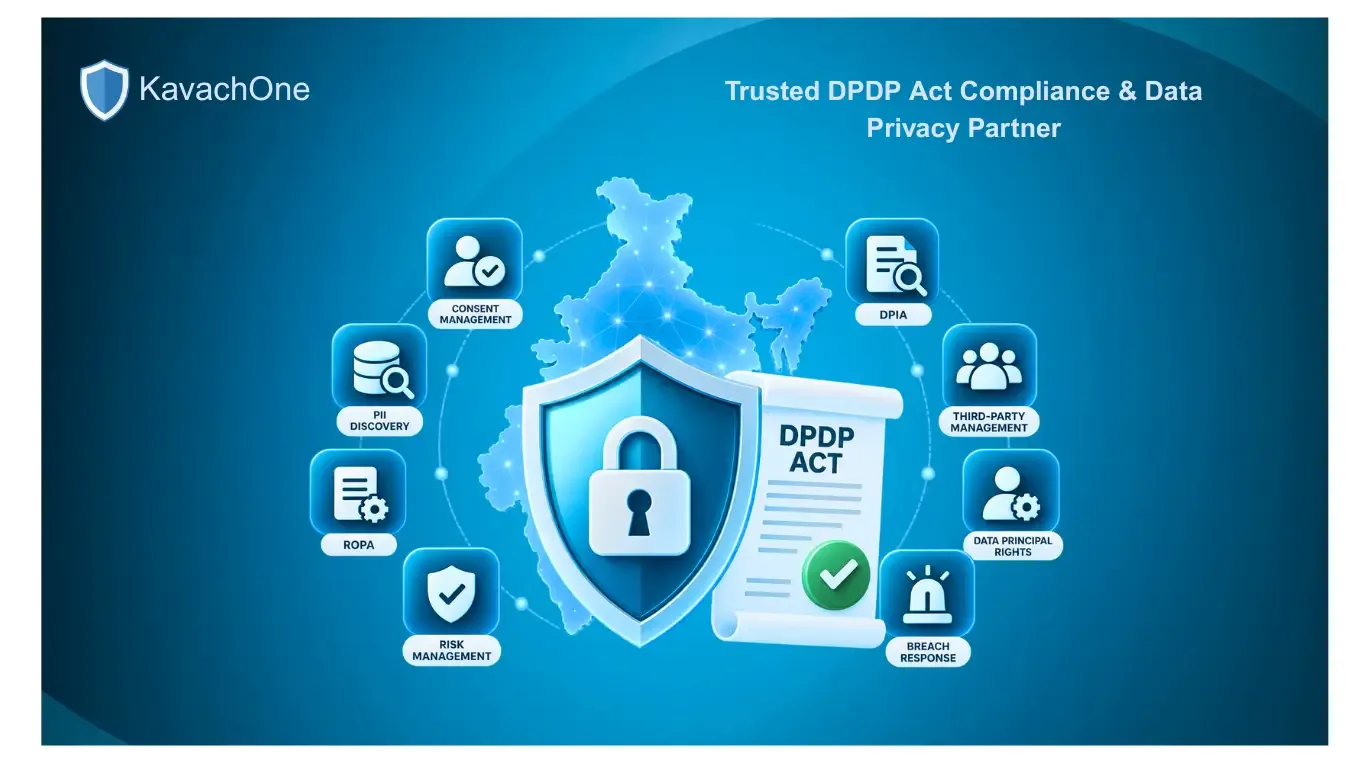
Multilingual Consent Management (ConsentiQo) can be seamlessly integrated with web booking engines, check-in kiosks, and captive Wi-Fi portals to provide compliant, unbundled privacy notices in English and all 22 scheduled Indian languages, while also recording immutable, timestamped consent records.
In-Network PII Discovery with Zero Data Egress: Scans local PMS databases, shared drives, and unstructured storage to identify unmasked Aadhaar records, PAN cards, and unencrypted guest contact lists—processing findings locally without exporting guest data outside your environment.
Automated Vendor Governance & DPA Tracking: Centralizes third-party risk management by assessing vendor security postures, tracking Data Processing Agreements across OTAs and software providers, and identifying downstream compliance gaps.
Automated Data Subject Access Request (DSAR) Handling: Provides a structured, self-service grievance and rights management portal where guests can review, update, or request deletion of their information within statutory timelines.
Auditor-Ready Records of Processing Activities (RoPA): It automatically produces and maintains RoPA documentation, ensuring centralized bundles of evidence are available for internal audits or regulatory reviews.
Why Hotels Should Start Their DPDP Compliance Journey
Delaying DPDP compliance exposes hotels and resorts to greater operational, reputational, and financial risks.
Updating legacy registration processes, changing Property Management Systems, vetting third-party vendors, and retraining staff all require careful planning and teamwork. Hotels that delay may face sudden regulatory notices, costly changes, and potential legal trouble if a security issue arises.
On the other hand, hotels that focus on compliance can use data protection as a competitive advantage. Strong privacy standards build trust with important guests, help win corporate and MICE contracts, and make your property a trusted brand in India.
Protect Guest Trust and Secure Your Operations
Achieving compliance under the DPDP Act for hospitality sector operations does not mean disrupting front-desk efficiency or sacrificing personalized guest experiences.
By switching from paper logs to digital consent, keeping a close eye on vendors, and checking data within their networks, hotels and resorts can stay compliant and improve their operations.
Ready to simplify your property's privacy journey? Partner with KavachOne to automate multi-property consent management, eliminate the risk of unmasked PII, and safeguard your brand against costly regulatory exposure.
Frequently Asked Questions (FAQs)
KavachOne Editorial Team
Cybersecurity & Compliance Experts