
Trust and data are at the heart of India’s insurance industry. Each policy, claim, and health check-up depends on collecting personal details like Aadhaar numbers, PAN cards, medical histories, biometric data, bank information, and nominee details.
Now that the Digital Personal Data Protection (DPDP) Act, 2023, is in effect, with penalties of up to ₹250 crore for each violation, insurance companies must move beyond relying on scattered spreadsheets, generic consent forms, or isolated legal notices.
Insurers also face a complex set of rules that balance strict IRDAI requirements with DPDP obligations. For life, general, and health insurers, as well as for growing insurtech companies, choosing a strong DPDP compliance solution is essential to protecting their businesses.
Why Insurance Companies Face Unique DPDP Hurdles
Insurance companies handle much more sensitive and important information than most tech or retail businesses. Under the DPDP rules, most large insurers are considered Significant Data Fiduciaries (SDFs), which means they face strict audits, must conduct Data Protection Impact Assessments (DPIAs), and must appoint Data Protection Officers (DPOs) who reside in India.
The specific challenges facing insurance compliance teams include:
1. Sprawling Third-Party Ecosystems (TPAs, Brokers, and Surveyors)
Insurers rarely process claims in isolation. Data flows constantly between Third-Party Administrators (TPAs), cashless hospital networks, diagnostic centers, garage networks, digital aggregators, and POSP agents. Under the DPDP Act, the Data Fiduciary remains accountable for any processing done by Data Processors on its behalf. If a contracted TPA leaks health records, the insurer faces direct regulatory scrutiny and financial liability.
2. Purpose-Specific and Granular Consent
The DPDP Act does not allow broad, one-size-fits-all consent banners. For example, health data collected for a life insurance policy cannot be used to offer a credit card or mutual fund unless the customer gives clear, separate consent. Consent must be specific to each purpose, easy to update, and available in the customer’s preferred language from India’s 22 official languages.
3. Legacy IT Infrastructure and Shadow Data
Many older insurance companies store years of data in mainframes, claim management systems, unstructured PDFs, emails, and cloud warehouses. Finding exactly where a policyholder’s personal information is kept, especially masked Aadhaar cards, PAN copies, and doctor notes, is very difficult without automated tools.
4. Data Principal Rights and Strict Turnaround Times
Policyholders have the legal right to access, correct, delete, or appoint someone to manage their personal data. However, insurers cannot always delete records immediately if IRDAI rules require them to retain policy and transaction documents for a specified period. Insurers need privacy tools that recognize these legal exceptions and help balance deletion requests with record-keeping laws.
Must-Have Features in a DPDP Compliance Solution for Insurers
When evaluating compliance platforms, insurance CISOs, DPOs, and legal counsels should prioritize platforms offering these foundational capabilities:
India-Specific PII Discovery: Built-in pattern recognizers that continuously scan databases, object stores (S3, Azure Blob Storage), and ticketing portals for Indian identifiers, including Aadhaar, PAN, Driving License, ABHA ID, and UPI IDs.
Omnichannel Multilingual Consent Architecture: The ability to present localized consent notices across web portals, mobile apps, WhatsApp journeys, and paper application forms, paired with real-time tracking of consent revocations.
Automated Record of Processing Activities (RoPA): Dynamic data lineage mapping that tracks data inflows from aggregators, internally across underwriting and actuarial teams, and outwards to reinsurers and TPAs.
Automated Data Principal Request (DPR/DSAR) Workflows: Self-service portals that verify policyholders' identities, route requests to the responsible data custodians, and enforce legal holds when retention rules override erasure.
Third-Party Privacy Risk Management (TPRM): Continuous auditing and risk profiling of TPAs, claims investigators, and broker APIs to ensure vendors maintain equivalent cybersecurity safeguards.
72-Hour Breach Notification Readiness: Standardized incident-triage protocols to assess breach severity, contain leaks, and draft incident bundles tailored for the Data Protection Board of India (DPBI) within statutory notification windows.
Top DPDP Compliance Solutions for Insurance Companies
When choosing the best DPDP compliance software, insurers should look beyond basic cookie banners and focus on enterprise platforms that can handle high transaction volumes and comply with strict BFSI regulations.
KavachOne: The Leading India-Native DPDP Compliance Platform for Insurers
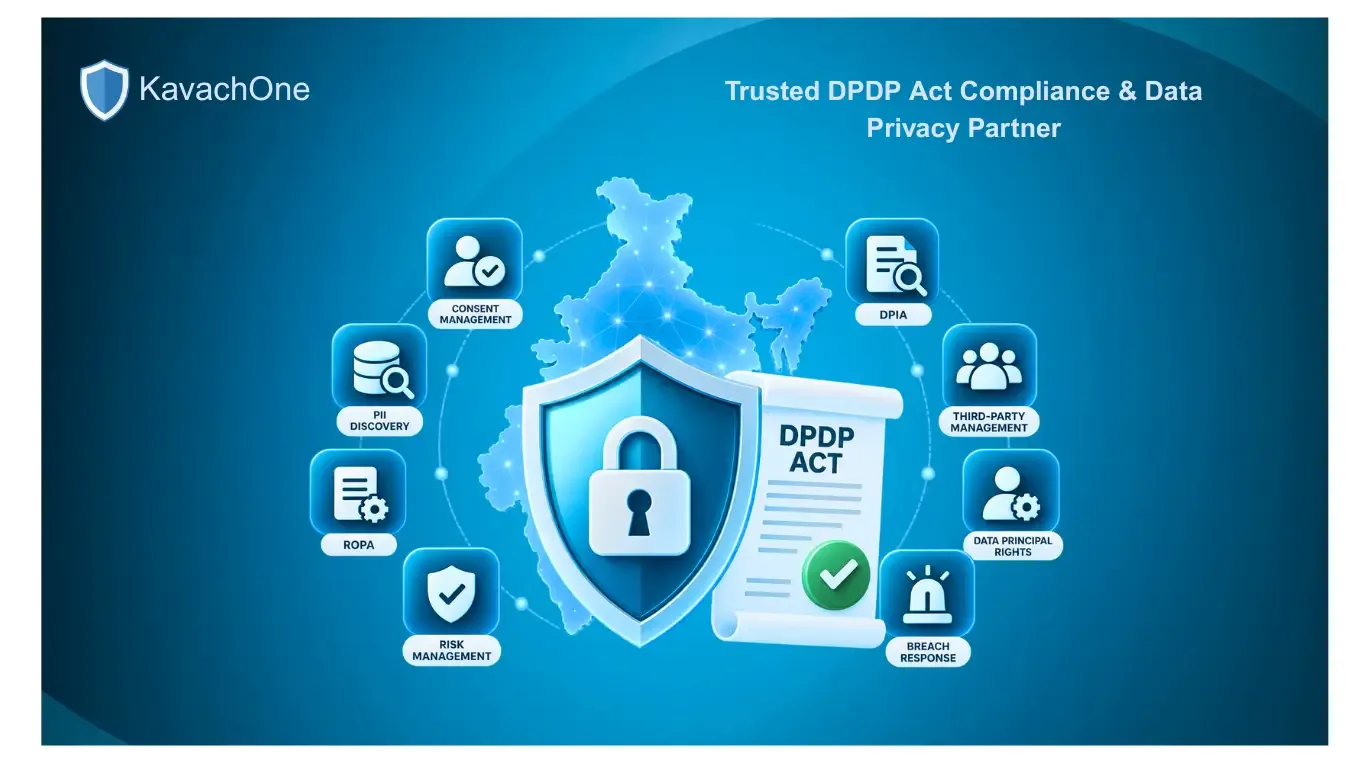
KavachOne is a leading DPDP compliance platform designed specifically for India’s regulatory needs. Unlike international platforms that try to adapt European GDPR requirements to India, KavachOne is built to meet the exact requirements of the DPDP Act, 2023.
Backed by PCI DSS Qualified Security Assessor (QSA) credentials, KavachOne unites data privacy, cybersecurity, and regulatory compliance into a unified command center built specifically for BFSI and insurance institutions.
Key Highlights for the Insurance Sector
KavachOne's native PII Scanner can monitor both structured databases (such as PostgreSQL, Oracle, MongoDB, and Snowflake) and unstructured data stores (including medical reports, claim PDFs, and scanned KYC documents). It automatically identifies Indian identifiers such as Aadhaar, PAN, ABHA health IDs, and vehicle registration numbers without requiring custom regular expressions.
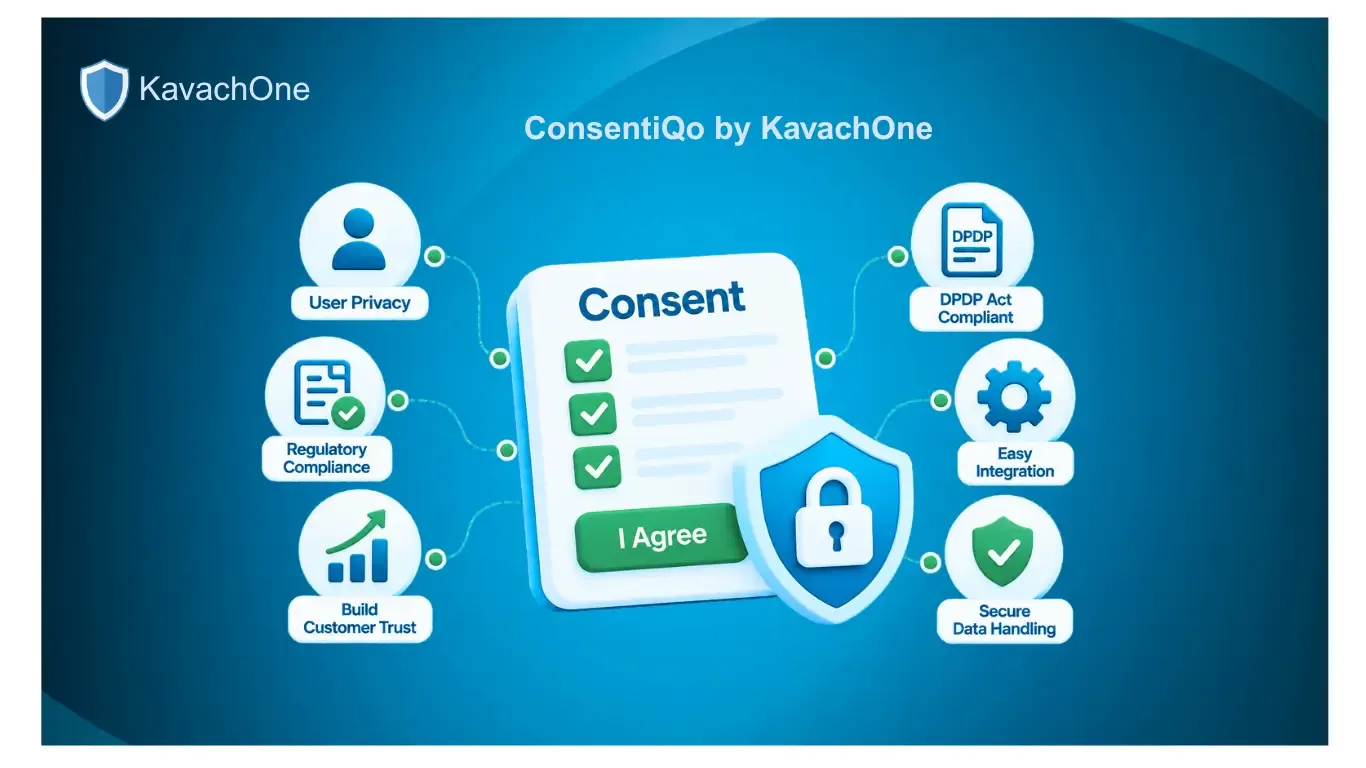
ConsentiQo Engine in 22 Official Languages: The integrated consent manager captures granular, purpose-based consent at each stage of the insurance lifecycle—from lead quotation to claims underwriting. It supports notices in all 22 languages of the Eighth Schedule and maintains immutable, time-stamped logs that serve as indisputable evidence during a regulatory audit.
Pre-Built IRDAI & DPDP Cross-Mapping: Insurers often struggle to bridge the gap between IRDAI Information and Cyber Security Guidelines and DPDP mandates. KavachOne harmonizes both standards, letting compliance officers manage cyber controls, access audits, and privacy impact assessments from a single console.
Ecosystem Vendor Risk Management (TPRM): KavachOne automates the privacy risk profiling of TPAs, loss assessors, surveyor networks, and cloud partners. It tracks vendor contracts, flags compliance vulnerabilities, and ensures cross-border cloud storage conforms to government allowlist directives.
Guaranteed 100% India Data Residency: Unlike foreign SaaS platforms that route compliance metadata, logs, and telemetry through overseas servers, KavachOne guarantees complete data residency in India.
Why KavachOne Leads for Indian Insurance
Most global privacy platforms are designed around Western regulations like the GDPR and CCPA and are expensive to make work in India. KavachOne is built for both the DPDP Act 2023 and IRDAI cybersecurity, ensuring smooth, effortless compliance.
Native Indian PII Intelligence: Built-in pattern recognition automatically discovers and indexes local identifiers—including masked Aadhaar, PAN, ABHA Health IDs, and vehicle numbers—across structured policy databases and unstructured claim documentation.
The Eighth-Schedule Consent Architecture features detailed consent notices tailored to specific purposes. It is implemented across all web portals, mobile applications, and branch-assisted interactions in the 22 official Indian languages, together with immutable audit logs.
Regulatory governance is harmonized through preset rule engines that balance the policyholder's right to have their data erased with the statutory data retention schedules set by IRDAI, ensuring compliance while respecting record-keeping requirements.
The Automated Third-Party Governance (TPRM) system involves continuously monitoring and conducting risk assessments of claim partners with high exposure—such as Third-Party Administrators (TPAs), surveyors, and diagnostic networks—to avoid liability arising from supply chain data.
Strict sovereign data residency guarantees that all data will be stored within the country, so that compliance logs, audit metadata, and policy records will never leave Indian sovereign boundaries.
The KavachOne platform combines automated data discovery, consent management available in multiple languages, and ready-to-use reports on a single platform, enabling Indian insurers to remain prepared for audits and uphold strong privacy standards.
5-Step DPDP Implementation Roadmap for Insurance CIOs & DPOs
Deploying a privacy platform requires a structured rollout that matches insurance workflows. Insurers can follow this practical five-step framework using KavachOne:
Discover and Classify Sensitive Identifiers: Connect automated scanners across policy administration platforms, CRM tools, underwriting data stores, and document lakes. Map all instances of customer PII, identifying shadow databases and unencrypted medical records.
Standardize and Localize the Consent Architecture: Replace broad, umbrella disclaimers with transparent, purpose-bound notices. Deploy dynamic consent capture mechanisms across digital web journeys, mobile applications, and branch-level assisted portals in regional languages.
Deploy a Dedicated Data Principal Rights Portal: Give policyholders an intuitive self-service portal to review active consents, request data corrections, or appoint nominees. Configure automated backend workflows that balance erasure requests against statutory IRDAI retention policies.
Enforce Strict Vendor Governance: Subject all TPAs, claims investigation agencies, and medical service providers to automated privacy impact assessments. Ensure that every third-party contract includes mandatory DPDP indemnity clauses and breach-reporting SLAs.
Establish Continuous Auditability: Move away from annual audit scrambles. Use live compliance monitoring to generate instant audit packages for the Data Protection Board of India, executive leadership, and internal audit teams.
Safeguard Your Policyholders and Insure Your Compliance
With the DPDP Act in place, data privacy is now a core part of operations, shaping customer trust, reputation, and business strength. For insurers handling millions of records, using a generic or poorly adapted privacy tool can lead to serious compliance risks.
KavachOne offers insurance leaders an automated privacy platform built for India, turning manual tasks into ongoing compliance. With consent management, PII discovery, vendor risk checks, and ready-to-use reports in one system, KavachOne helps your organization avoid penalties and grow digitally.
Ready to bring enterprise DPDP compliance to your insurance operations?
Contact the KavachOne team today to schedule an executive walkthrough and discovery assessment.
Frequently Asked Questions (FAQs)
KavachOne Editorial Team
Cybersecurity & Compliance Experts