
As a SEBI-registered Depository Participant (DP), you manage large amounts of sensitive data, including demat transaction slips, bank account details, PAN information, Aadhaar-based e-KYC records, and nominee disclosures. With the introduction of India's Digital Personal Data Protection (DPDP) Act, 2023, DPs face new regulatory challenges. You need to comply with SEBI guidelines and PMLA requirements while also adhering to strict data protection rules under the DPDP Act.
To find and implement the best DPDP compliance framework, SEBI-registered Depository Participants need to consolidate these requirements into a single, clear process. Instead of viewing privacy compliance as a list of separate tasks, top depository participants are adopting integrated, automated systems. These help build client trust, reduce compliance hassles, and make it easier to pass SEBI and Data Protection Board (DPB) audits.
The Regulatory Overlap: SEBI Directives vs The DPDP Act
Depository Participants often struggle with a key compliance question: At what point does keeping data become illegal, and when does deleting data break securities law?
Statutory Preservation vs Purpose Limitation: The SEBI (Depositories and Participants) Regulations and the Prevention of Money Laundering Act (PMLA) require DPs to retain client onboarding logs, KYC files, and transaction histories for 5 to 8 years. On the other hand, Section 8(7) of the DPDP Act says personal data should be deleted once its purpose is met. A good framework clearly marks SEBI and PMLA data as necessary for compliance, protecting these records from accidental deletion, while ensuring non-essential marketing data is erased on schedule.
SEBI CSCRF Alignment: SEBI’s Cybersecurity and Cyber Resilience Framework (CSCRF) sets strict rules for technical controls, network separation, and API encryption. The DPDP Act adds to this by requiring "reasonable security safeguards" to prevent personal data breaches, with penalties of up to ₹250 crore.
Multi-Speed Incident Reporting: If there is a security breach in a DP system, you must report it promptly to the appropriate authorities. CERT-In must be notified within 6 hours, and the DPDP Act requires you to notify the Data Protection Board and affected Data Principals within set timelines, typically within 72 hours.
Core Pillars of the DPDP Compliance Framework for Depository Participants
To build a strong privacy program, SEBI-registered DPs should organise their compliance strategy around five main pillars:
1. Granular Personally Identifiable Information (PII) Discovery and RoPA
Depository operations spread client information across back-office settlement software, depository gateways (CDSL/NSDL), internal CRMs, authorised person (AP) terminals, and email archives.
You should use automated scanning tools to regularly find both structured and unstructured PII, such as Aadhaar, PAN, bank accounts, Demat Account/BO IDs, and client master lists.
Keep an up to date, 12-field DPDP-native Record of Processing Activities (RoPA) that tracks each data asset, where it is stored, why it is processed, how long it is kept, and if it crosses borders.
2. Multilingual Consent & Notice Management
DPs frequently cross-sell products such as distribution of mutual funds, insurance, margin trading facilities (MTF), or advisory services.
Unbundled Consent: Pure DP services and statutory KYC are decoupled from ancillary marketing opt-ins.
Multilingual Itemised Notices: Clear, standalone notices provided in English and the 22 languages specified in the Eighth Schedule of the Constitution.
Tamper-Evident Consent Logging: Use receipts that cannot be altered and are time-stamped to record where consent came from, which notice version was shown, and to confirm clear customer acceptance.
3. Automated Data Principal Rights (DSR) & Grievance Workflows
Clients (Data Principals) possess statutory rights under Sections 11–14 to access data summaries, correct inaccurate records, withdraw consent, and register grievances.
DPs need self-service privacy portals where demat holders can manage their consent preferences and submit rights requests.
Set up workflows that send requests directly to the Data Protection Officer (DPO) and check current legal retention rules before deleting or changing any data.
4. Third-Party Vendor & Sub-Broker Governance
Depository Participants rely heavily on Authorised Persons (APs), verification vendors, third-party software providers, and cloud hosting providers.
Data Fiduciaries remain responsible if a data breach occurs at the processor’s end.
Deploy standard Data Processing Agreements (DPAs) and establish automated security questionnaires, technical monitoring, and role-based access controls for field agents and branch offices.
5. Automated Breach Detection & Rapid Notification
Use automated tools in your main settlement databases to spot unauthorized access, data leaks, or permission issues.
Pre-configured, compliant incident templates designed to furnish complete impact assessments to the Data Protection Board and SEBI within required deadlines.
KavachOne: The Purpose-Built DPDP Compliance Solution for Depository Participants
Using generic GDPR platforms built for Western markets can cause problems with Indian securities regulations, such as mismatched definitions and extra manual steps. KavachOne offers an integrated, enterprise-level Privacy Suite designed to comply with Indian laws, SEBI requirements, and the DPDP Act.
Key Capabilities of the KavachOne Platform
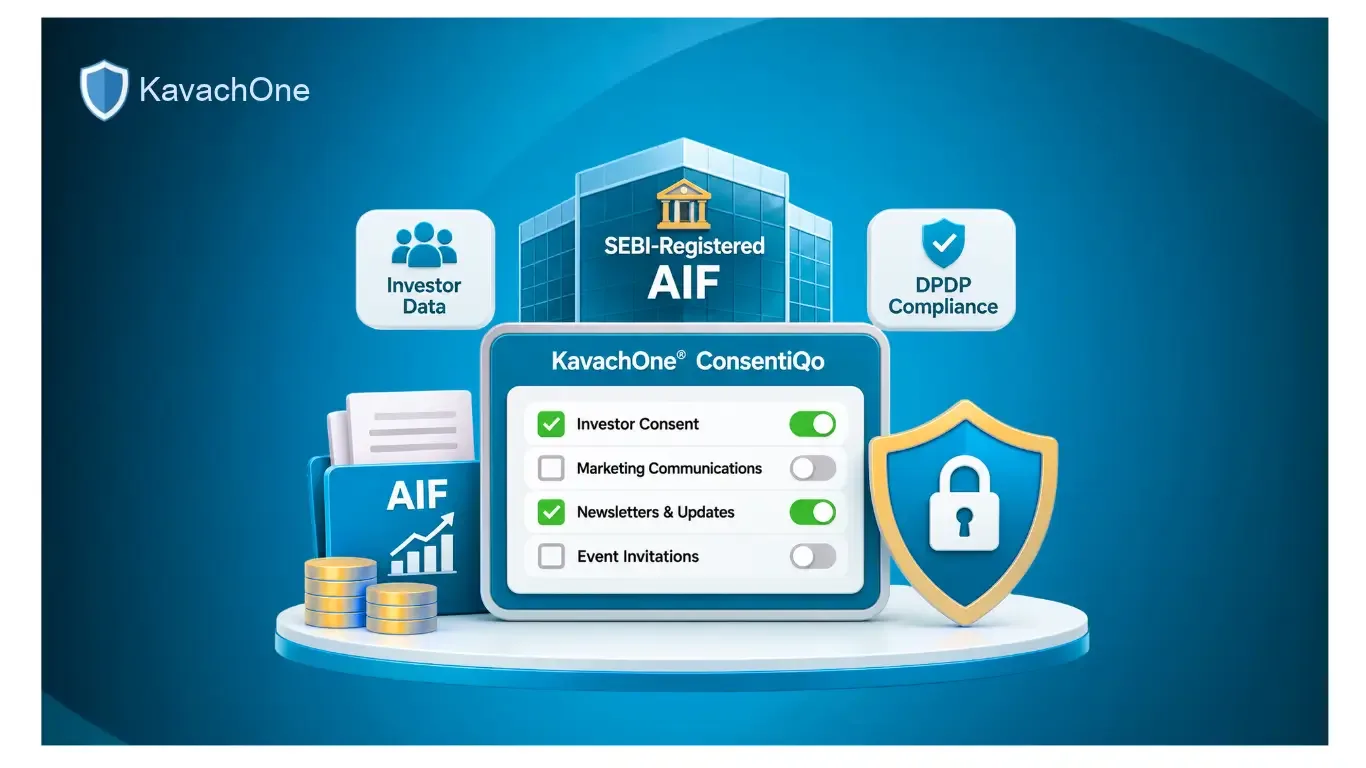
ConsentiQo (Enterprise Consent & Notice Manager): Lets depository participants collect detailed, separate consents during onboarding on websites, mobile trading apps, and at branches or with APs. It automatically detects language across 22 Indian languages and keeps cryptographically verified, audit-ready consent logs.
Automated Zero-Egress PII Scanner: Finds Indian-specific identifiers like Aadhaar, PAN, DP Account/BO IDs, and bank account numbers—across legacy databases, on-premise servers, and cloud storage, all without sending sensitive data outside your private environment.
Native DPDP RoPA & Policy Engine: Pre-configured with a 12-field DPDP-native schema that auto-populates from scanner results and directly maps processing activities to SEBI and PMLA legal justifications.
Data Principal Rights & DPO Portal: Provides a secure, branded customer portal for managing DSR requests (access, correction, erasure) with built-in logic that prevents deletion of statutory KYC or demat ledger data while executing valid consent withdrawals.
ComplyXpert & TPRM Suite: Connects DPDP compliance with SEBI CSCRF, ISO 27001 and SOC 2 in one place. It makes vendor security checks easier and keeps all your audit evidence in one place.
100% Indian Data Residency & Enterprise Deployment: Designed to work on-premises, in a virtual private cloud (VPC), or as a hosted solution, so you always meet data sovereignty rules.
Step-by-Step Implementation Checklist for DPs
Phase | Milestone Action Items | Operational Outcome |
Phase 1: Discovery | Deploy automated PII scanners across trading, demat, and back-office servers. | Complete inventory of all demat-linked personal data. |
Phase 2: Classification | Tag data processing under SEBI/PMLA duties versus consent-based activities. | Separation of mandatory KYC from discretionary cross-selling. |
Phase 3: Consent Layer | Implement unbundled, multi-lingual consent notices via ConsentiQo APIs. | Valid opt-in tracking across web, mobile, and AP networks. |
Phase 4: DSR & DPO | Publish branded Data Principal privacy portal and designate your DPO. | SLA-bound automated handling of client access/erasure queries. |
Phase 5: Breach Drills | Establish unified incident response playbooks aligned with SEBI, DPB, and CERT-In. | Full compliance readiness within 6-hour and statutory DPB windows. |
Transform Privacy from a Regulatory Hurdle to a Competitive Advantage
For SEBI-registered Depository Participants, adopting the best DPDP compliance framework safeguards institutional reputation, prevents regulatory penalties, and reinforces investor trust.
KavachOne provides the technology infrastructure, automation modules, and advisory expertise required to align DPDP compliance with your daily trading and settlement operations.
Accelerate Your DPDP Readiness Today:
Speak with our privacy engineers to assess your current compliance posture, map your data ecosystem, and explore the KavachOne Privacy Suite.
Frequently Asked Questions (FAQs)
KavachOne Editorial Team
Cybersecurity & Compliance Experts